The Highest Tomb
In 1999, a team led by Johan Reinhard discovered three frozen Inca child mummies near the summit of Llullaillaco volcano in northwestern Argentina — at 6,739 metres, one of the highest archaeological sites in the world. The eldest of the three children, a girl between 13 and 15 years old, became known as La Doncella (The Maiden).
Her Condition
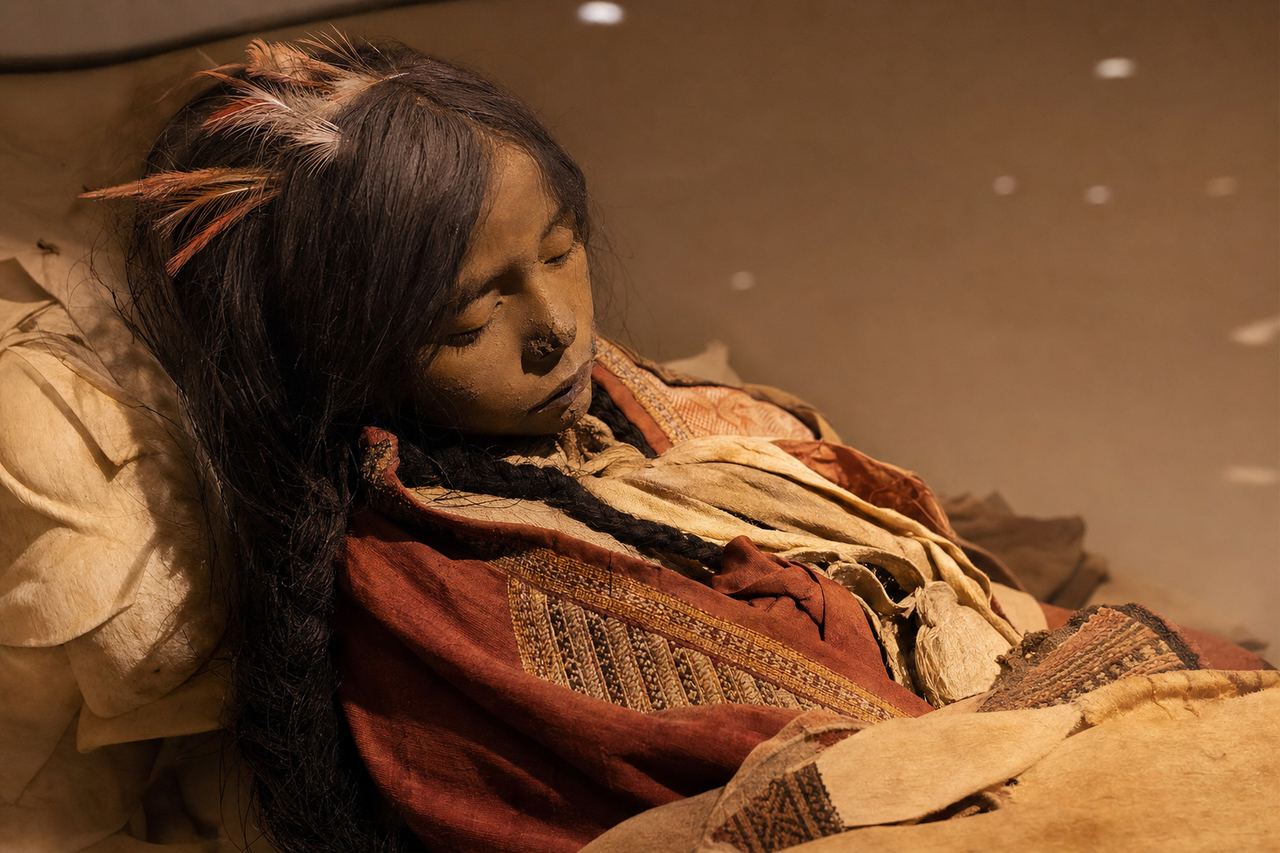
La Doncella is perhaps the best-preserved of all the Llullaillaco mummies. She was found seated cross-legged, eyes closed, head slightly bowed — exactly as she was placed 500 years ago. Her skin, hair, clothing, and the items placed with her are intact. A louse found in her hair was so well preserved that its DNA was extracted.
What Science Revealed
CT scans showed she had fluid in her lungs, suggesting she may have been sedated with coca leaves and chicha before she was placed on the summit. Hair analysis revealed her diet changed to an elite one in the year before her death, and she consumed increasing amounts of coca and alcohol in her final weeks — possibly as part of the ritual preparation.
The Capacocha Ceremony
La Doncella was sacrificed in a ritual known as Capacocha — a ceremony performed at pivotal moments in Inca history: the death of a Sapa Inca, a military victory, a coronation, or a natural disaster requiring divine intervention. Children selected for Capacocha were considered aclla — chosen women — and were regarded as a supreme offering to Inti, the sun god, and to Pachamama. The honour placed enormous weight on the child's family, who would have received significant status in return. The children chosen were required to be physically perfect: no blemishes, no injuries, no visible defects.
Preparation for the ceremony took months, possibly a year or more. Hair analysis of La Doncella confirms her diet shifted to elite foods — freeze-dried potatoes, llama meat, maize — approximately twelve months before her death, in sharp contrast to the simpler diet she had consumed previously. This dietary shift is consistent with a period of ritual preparation, possibly including a journey to Cusco to be presented to the emperor before the final ascent of the volcano.
The Final Ascent and Her Death
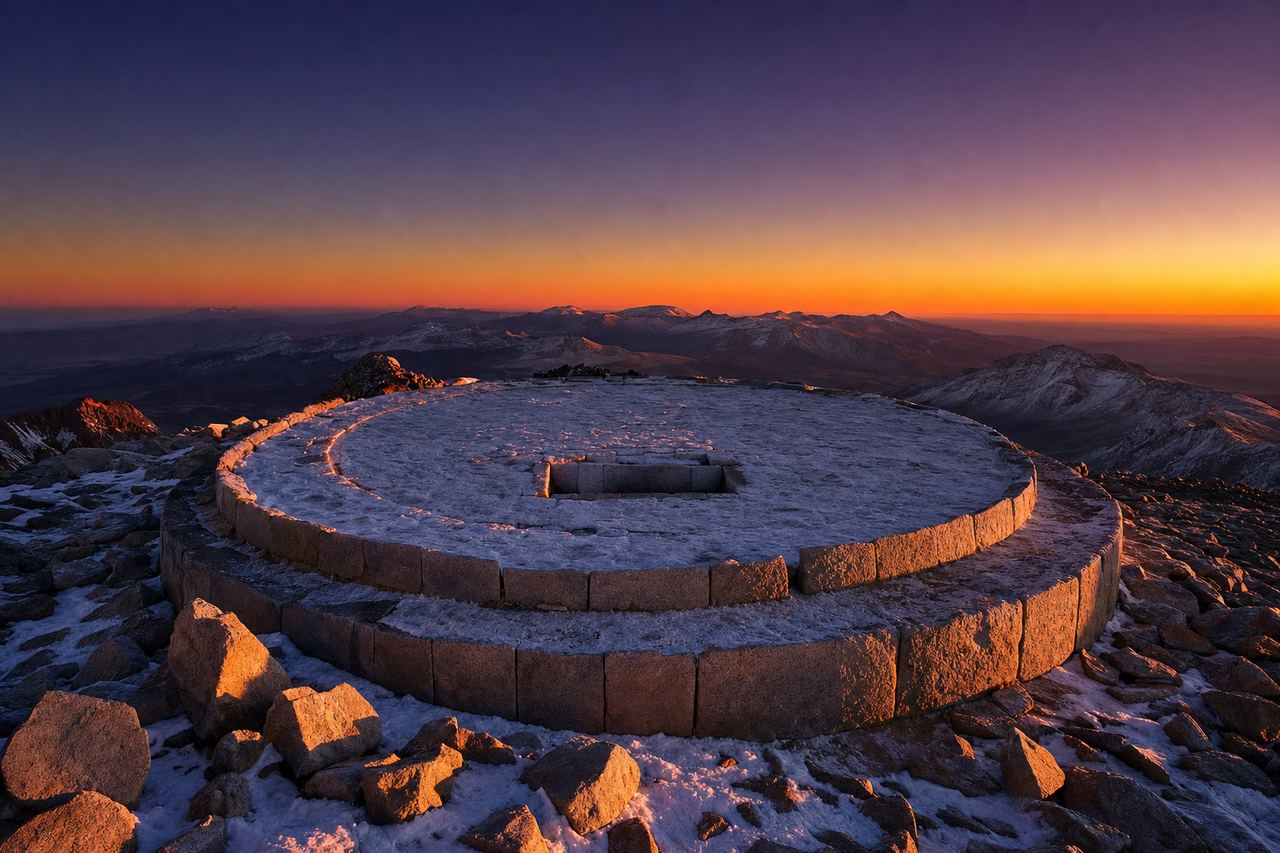
Llullaillaco rises to 6,739 metres on the border of Argentina and Chile. It is among the world's highest volcanoes and one of the most extreme environments in South America. The ascent to the summit would have taken several days and required traversing glaciers and extreme cold. By the time La Doncella was placed in the burial chamber, her coca and chicha consumption had reached levels consistent with deep sedation. She was seated cross-legged with her hands resting in her lap and her chin slightly bowed. At some point after being placed in position, she slipped sideways — found leaning rather than fully upright. She likely died of exposure while sedated, her body temperature dropping until it stopped entirely.
Her condition when found in 1999 was extraordinary. Her skin was intact. Her hair remained braided in a style consistent with high-status Inca women. She wore multiple layers of fine textiles — cumbi cloth woven from vicuña wool — along with feathered ornaments and a headdress. A louse recovered from her hair was so well preserved that researchers extracted viable DNA from it, providing a direct genetic link to the pre-Columbian population of the region.
Where She Is Now
La Doncella is displayed at the Museum of High Altitude Archaeology (MAAM) in Salta, Argentina. She is held at −20°C in a refrigerated chamber that mimics the conditions of her mountain burial. Visitors view her through a climate-controlled case. The museum rotates the display of the three Llullaillaco children to minimise cumulative exposure to light and temperature variation. La Doncella receives the most visitor attention of the three — her condition is so extraordinary that many visitors initially assume they are looking at a reconstruction rather than a human being.
Frequently Asked Questions
How old was La Doncella when she died?
La Doncella was approximately 15 years old at the time of her death, around 1500 CE. She was the eldest of three children sacrificed together on Llullaillaco. The two younger children were around four to five years old. As the eldest, she was likely the primary offering of the Capacocha ceremony.
How was La Doncella preserved so well?
She was preserved by sustained sub-zero temperatures at 6,739 metres. The extreme altitude kept the burial chamber frozen continuously for five centuries. Multiple layers of fine Inca textiles helped insulate the body, and the dry, cold air at that elevation prevented any significant bacterial activity. She is widely considered the best-preserved Inca mummy ever found.
Was La Doncella sedated before death?
Almost certainly. Hair analysis showed sharply increasing consumption of coca leaves and chicha in the months before her death, with the largest doses in the final weeks. At those quantities, the combination would have produced heavy sedation or unconsciousness. Scientists believe she was likely unaware of her surroundings when placed in the burial chamber and probably died without regaining consciousness.
Where can you see La Doncella today?
La Doncella is displayed at the Museum of High Altitude Archaeology (MAAM) in Salta, Argentina. She is kept at −20°C in a refrigerated display case. The museum also houses the two younger Llullaillaco children. The three mummies are rotated in and out of public display to reduce cumulative exposure.