What Is a Mummy?
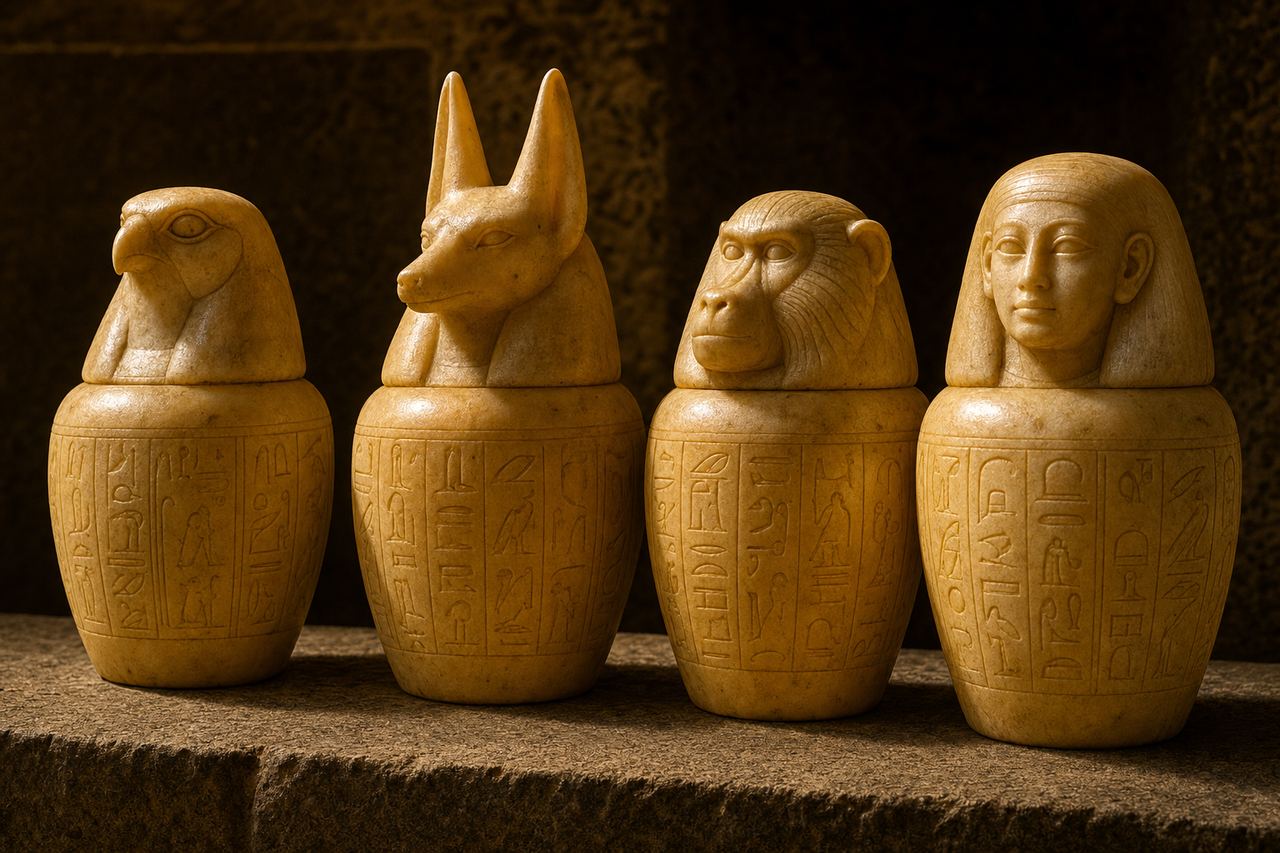
A mummy is any preserved body — human or animal — whose soft tissue has survived decomposition. The word comes from the Arabic mūmiyā, meaning "bitumen" or "asphalt," a reference to the dark resinous substances used by ancient Egyptian embalmers.
But Egyptian mummies are just one type. Bodies have been preserved by glaciers in the Alps, by acid in Irish peat bogs, by the searing heat of the Atacama Desert, by the permafrost of Siberia, and by the smothering ash of Vesuvius. The preserved dead come from every continent except Antarctica and span over 36,000 years of human and animal history.
"A mummy is not a dead person. A mummy is a person who has refused, through chemistry or chance, to stop existing." — Common observation in mummy science
How Does a Body Become a Mummy?
Decomposition requires four things: warmth, moisture, oxygen, and bacteria. Remove any one of them completely and decomposition slows dramatically. Remove all of them and it stops entirely. Every natural mummification environment achieves this by different means — extreme cold, extreme dryness, oxygen-free acidic water, or deliberate chemical intervention.
Natural vs. Intentional Mummification
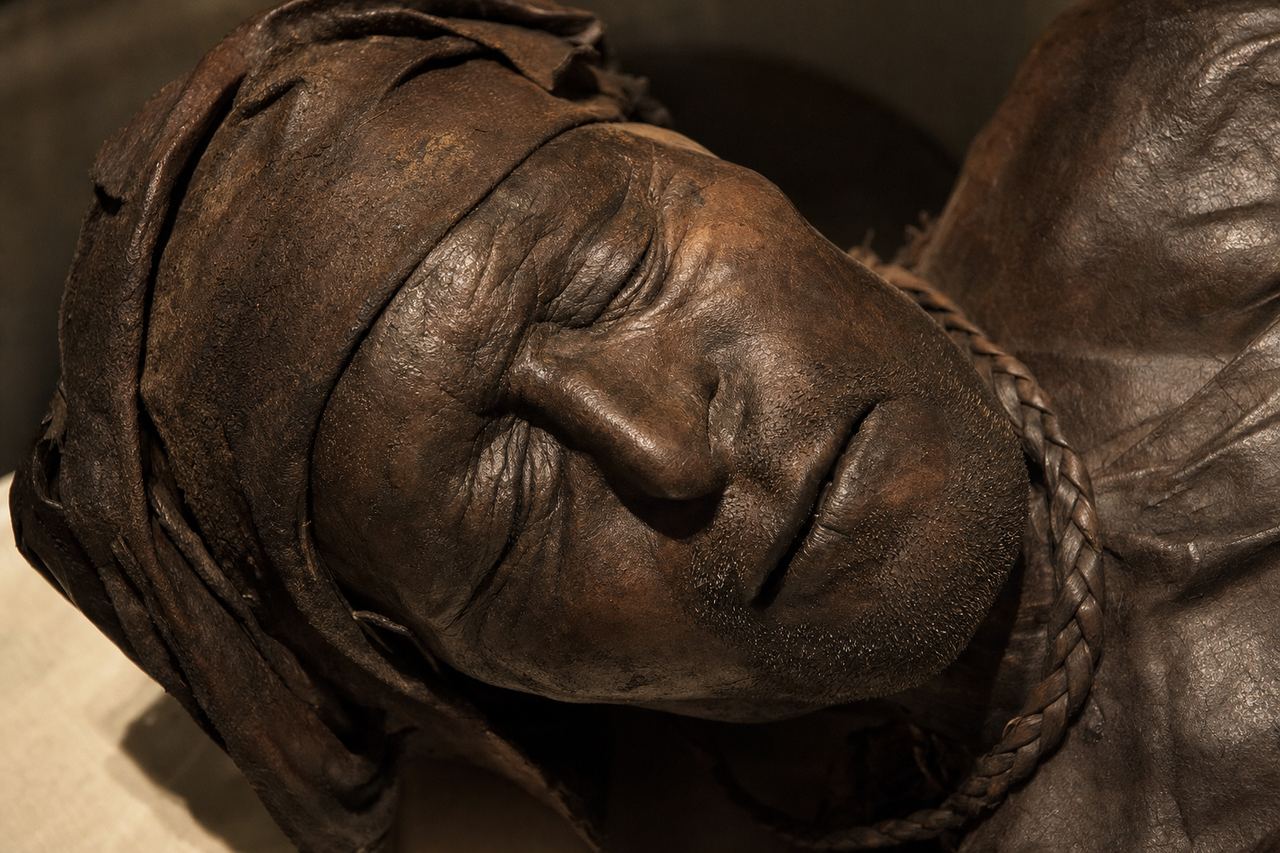
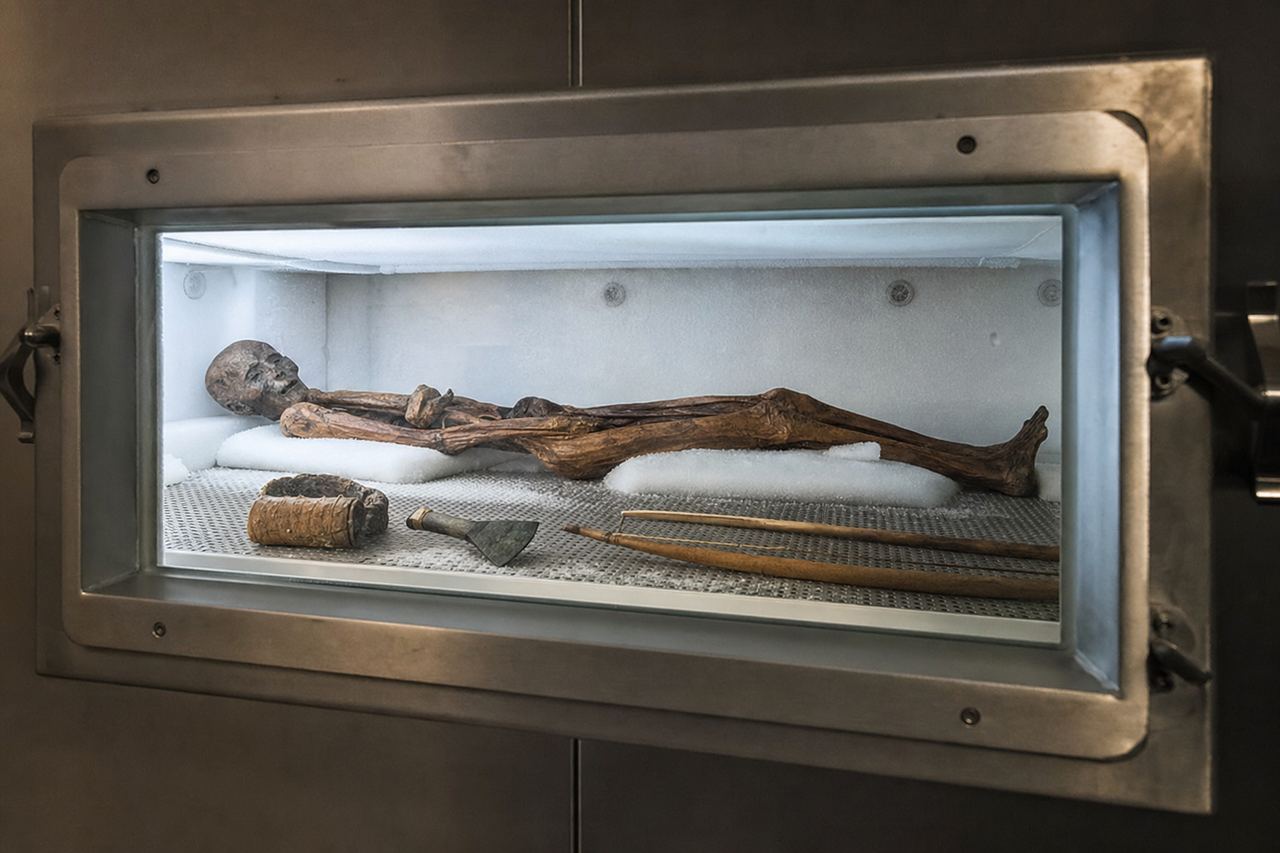
Most mummies in the world were preserved by accident. Tollund Man was not buried with preservation in mind — the bog did it. Ötzi was killed on an Alpine pass and covered by snow; the glacier did the rest. Juanita was sacrificed on an Andean summit and the cold altitude preserved her for 500 years.
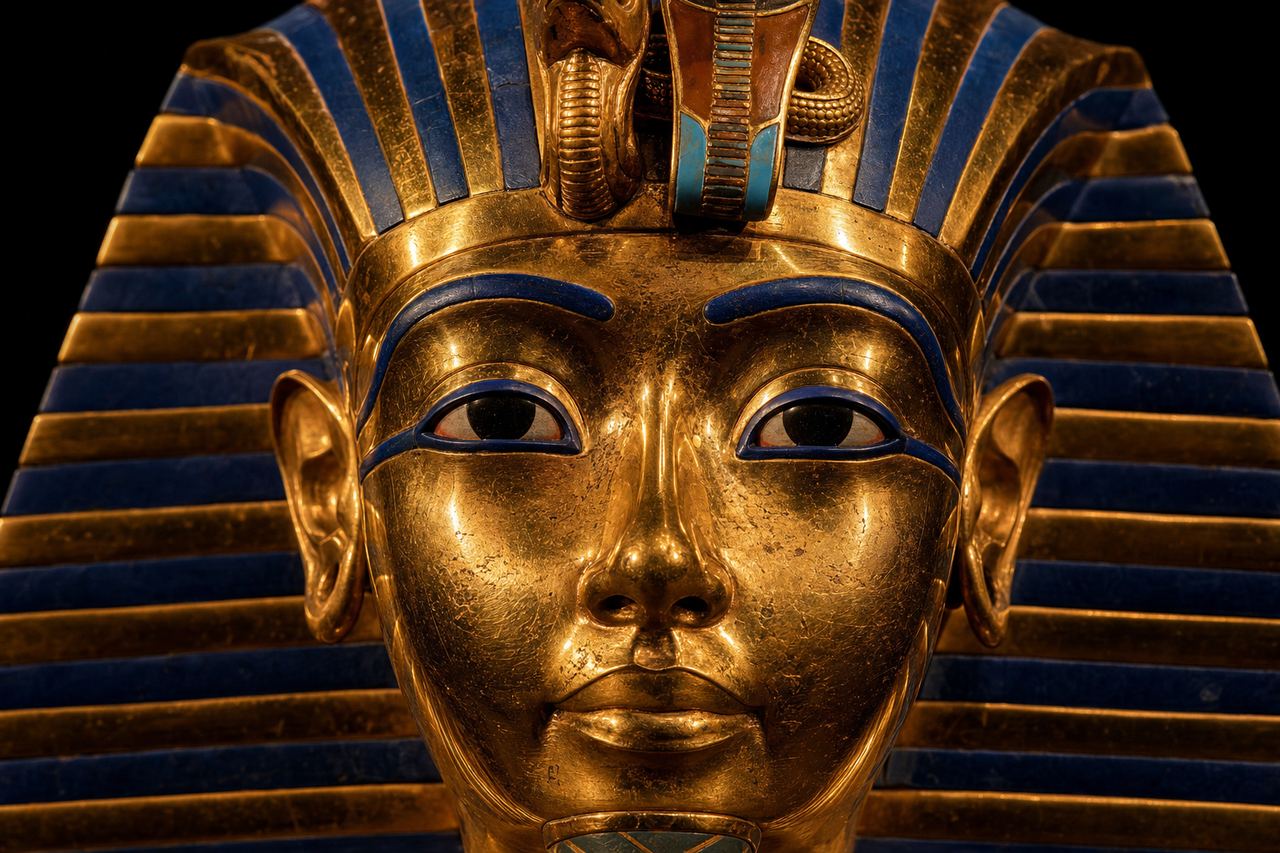
Only the ancient Egyptians — and to a lesser extent the Chinchorro of Chile — developed deliberate mummification as a systematic practice. Egyptian embalming, at its peak, was a 70-day ritual involving specialised priests, specific chemical treatments, religious texts, and elaborate funerary rites. It was the most sophisticated preservation technology in the ancient world.
Why Do Mummies Matter?
Mummies are archaeologically irreplaceable. Where bones tell us about structure and age, soft tissue preservation allows scientists to analyse DNA, determine diet from gut contents, identify diseases, read tattoos, examine the contents of a last meal, and — in many cases — reconstruct the face of a person who lived thousands of years ago.
Medical knowledge: Studies of ancient mummies have revealed atherosclerosis in Egyptian pharaohs, tuberculosis in Andean mummies, and detailed information about prehistoric parasites — providing a baseline for understanding how human health has changed.
Historical revision: The Lady of Cao proved that women held supreme military power in ancient Peru. The Tarim Basin mummies proved that European-featured people lived in western China 4,000 years ago. The Siberian Ice Maiden's breast cancer diagnosis showed this disease is not modern.
Cultural continuity: For many communities, mummies are ancestors — not museum objects. The descendants of the Qilakitsoq Inuit helped determine how those mummies should be displayed. Indigenous communities in South America are increasingly asserting cultural ownership of the Inca child mummies.
"The mummy is the only historical source that cannot lie. It is exactly as it was left. There has been no editing, no interpretation, no translation. Just the body." — Bob Brier, Egyptologist
Explore the Five Worlds
MummyTombs organises the world's mummies into five distinct worlds, each with its own preservation conditions, cultural context, and roster of remarkable individuals:
Frequently Asked Questions
What exactly is a mummy?
A mummy is any dead body — human or animal — whose soft tissue has been preserved rather than decomposing normally. Preservation can occur naturally through freezing (Ötzi the Iceman, woolly mammoths), extreme desiccation in deserts, acidic oxygen-free conditions in peat bogs (Tollund Man), or volcanic burial (Pompeii). It also occurs through deliberate human processes, primarily ancient Egyptian embalming with natron salt and resin. The word 'mummy' derives from the Arabic 'mummiya,' meaning bitumen or pitch.
Where are the oldest known mummies from?
The oldest deliberately mummified humans are the Chinchorro of coastal Chile and Peru, who began intentionally preserving their dead approximately 7,000 years ago — around 5,000 BCE. This predates Egyptian mummification by about 2,000 years. The Chinchorro removed organs, treated the skin and bones, and reassembled the body with clay and pigment. Natural mummification is even older: Ötzi the Iceman, frozen in the Alps, dates to approximately 3,300 BCE.
How many mummies exist in the world?
Estimates vary considerably, but conservative figures suggest there are more than one million known mummies worldwide across all cultures and preservation types. Egypt alone may contain hundreds of thousands — many still unexcavated. China, Peru, and Europe also hold large numbers. Bog bodies number in the hundreds in northern Europe, and frozen prehistoric animals (mammoths, woolly rhinos, cave lions) add a further major category.
Can anyone become a mummy naturally?
Yes — under the right conditions, natural mummification can occur without any deliberate preparation. Dry desert environments, permanently frozen ground (permafrost), arid mountain summits, and acidic peat bogs can all preserve soft tissue. The Atacama Desert in Chile is so dry that bodies buried there in modern times have been found decades later still partially preserved. The key conditions are the removal of moisture and/or oxygen fast enough to prevent bacterial activity from breaking down tissue.
Frequently Asked Questions
What does the word "mummy" actually mean?
The word "mummy" derives from the Arabic "mummiya," meaning bitumen or pitch — a dark, tar-like substance. Early European scholars who encountered Egyptian preserved remains believed bitumen had been used in the embalming process, and the term stuck. Over time, "mummy" expanded to describe any preserved human or animal remains, regardless of culture or method.
How old are the oldest deliberately made mummies in the world?
The Chinchorro people of present-day northern Chile and southern Peru began intentionally mummifying their dead around 7,000 years ago, making them the earliest known practitioners of deliberate mummification. This predates ancient Egyptian mummification by roughly 2,000 years. The Chinchorro mummified people of all social classes, including infants and fetuses, suggesting a broad cultural or spiritual motivation rather than an elite privilege.
Can mummies form without any human intervention?
Natural mummification happens when environmental conditions halt decomposition before it can complete. Extreme cold preserved Ötzi the Iceman in the Alps for over 5,000 years, while hyper-arid deserts desiccated bodies in the Atacama and the Sahara. Peat bogs in northern Europe created a different effect: their acidic, oxygen-poor water tanned the skin of bog bodies, preserving soft tissue while sometimes dissolving the bones.
How many mummies are known to exist worldwide?
Researchers estimate that more than one million mummies have been identified across the globe, spanning every inhabited continent. Egypt alone contains enormous numbers due to millennia of intentional mummification, but significant collections exist in South America, Europe, Asia, and even the Arctic. New discoveries continue to emerge through archaeological excavation, glacier melt, and construction projects.