Before Egypt
When most people think of mummification, they think of Egypt. But the oldest known deliberately mummified humans come from a different continent entirely: the Atacama Desert of northern Chile, created by the Chinchorro people approximately 7,000 years ago — 2,000 years before the earliest Egyptian mummies.
The Black Mummies
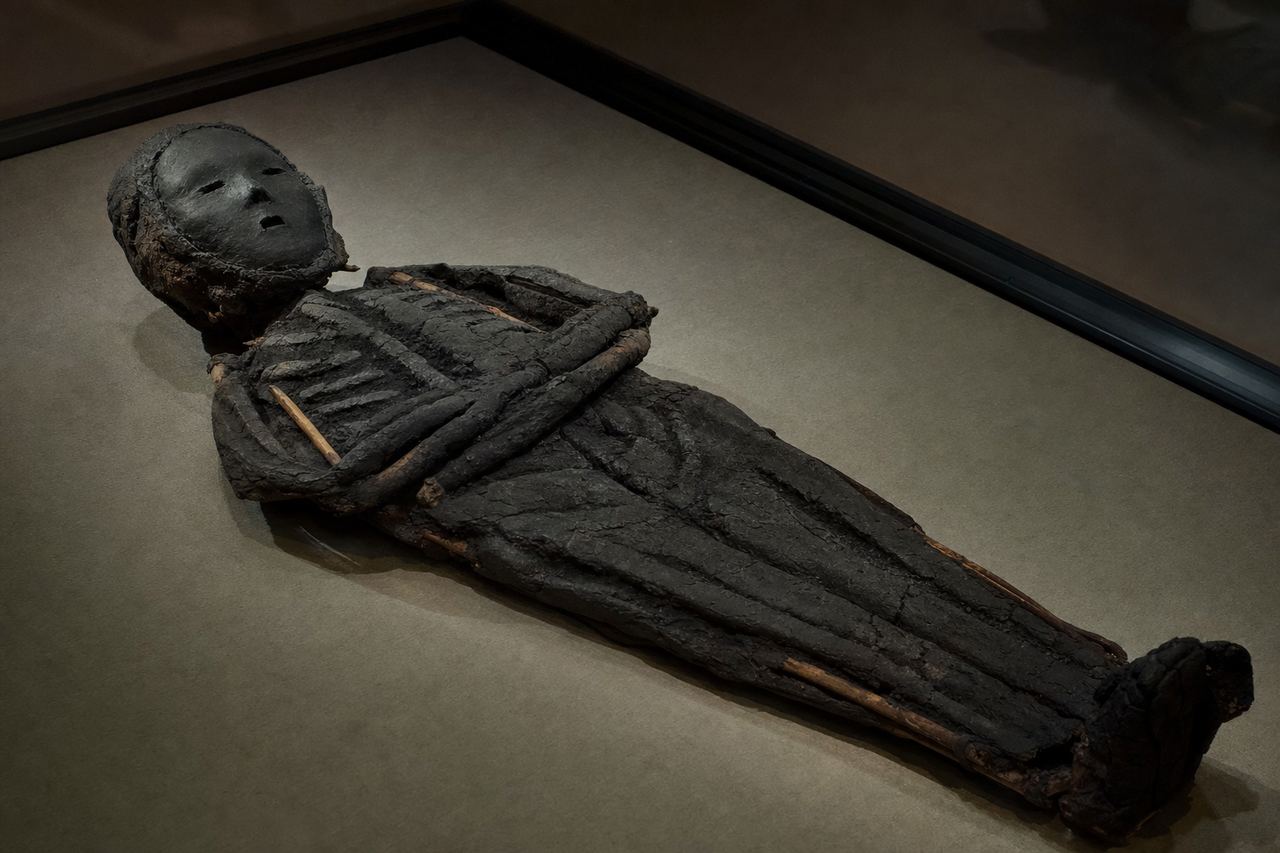
The earliest Chinchorro mummies, created around 5,000 BCE, involved a complex process: the body was completely defleshed, the organs removed, and the skeleton reassembled. The skin was replaced with clay and the body was covered in black manganese paste — giving these the name "black mummies."
Why They Did It
The Chinchorro were fisher-gatherers living in one of the world's driest environments. Their mummies were not hidden in tombs — they were kept with the community, propped up, displayed, and cared for. They were social objects, maintained across generations. The deceased remained members of the community long after death.
Interestingly, the Chinchorro mummified everyone — infants, children, adults, the elderly, even foetuses. This democratic preservation is in stark contrast to Egypt, where mummification was initially reserved for royalty alone.
Three Techniques, Three Eras
Researchers have identified three distinct Chinchorro mummification styles, each associated with a different period. The black mummies are the oldest and most elaborate: the body was completely disassembled, the flesh stripped from the skeleton, the organs removed, and the bones dried. The skeleton was then reinforced with sticks, the body cavity packed with plant material — grass, reeds, animal hair — and the whole structure reassembled and coated in a thick layer of black manganese paste. A wig of human hair was often attached. The result was more statue than corpse.
Red mummies followed a different method. Embalmers cut slits in the skin to remove organs without fully disassembling the body. The cavity was then packed with clay, reeds, and ashes. The skin was repaired and painted with red ochre, and the face was sometimes given a clay mask with incised features. The third category — mud-coated mummies — was simpler still: the body received a coating of ash paste without internal intervention. This method was applied most frequently to infants and small children.
The Climate That Made It Possible
The Atacama Desert receives less than one millimetre of precipitation per year in some locations. It is the driest non-polar desert on Earth. The combination of extreme aridity, high altitude, and cold coastal air creates conditions that naturally desiccate organic material before decomposition can begin. Many Chinchorro bodies that were never deliberately processed have survived simply because the environment preserved them. This natural preservation may have been what gave the Chinchorro their original insight — observing naturally desiccated bodies before they developed their artificial techniques.
UNESCO Recognition and Modern Crisis
In 2021, the Chinchorro mummies were inscribed on UNESCO's World Heritage List, recognising Arica and Parinacota's Chinchorro Culture as an outstanding cultural heritage site. The designation brought international attention to a collection already under serious threat. Climate change has increased humidity across the Atacama's coastal margins. Mummies that endured 7,000 years in arid conditions are now deteriorating within years of exposure. Researchers from the University of Tarapacá documented the effect in detail: specimens turn soft, then dark, then collapse into a viscous black slime. Conservators are working to stabilise at-risk mummies in controlled environments before the damage becomes irreversible.
Frequently Asked Questions
Where were the Chinchorro mummies found?
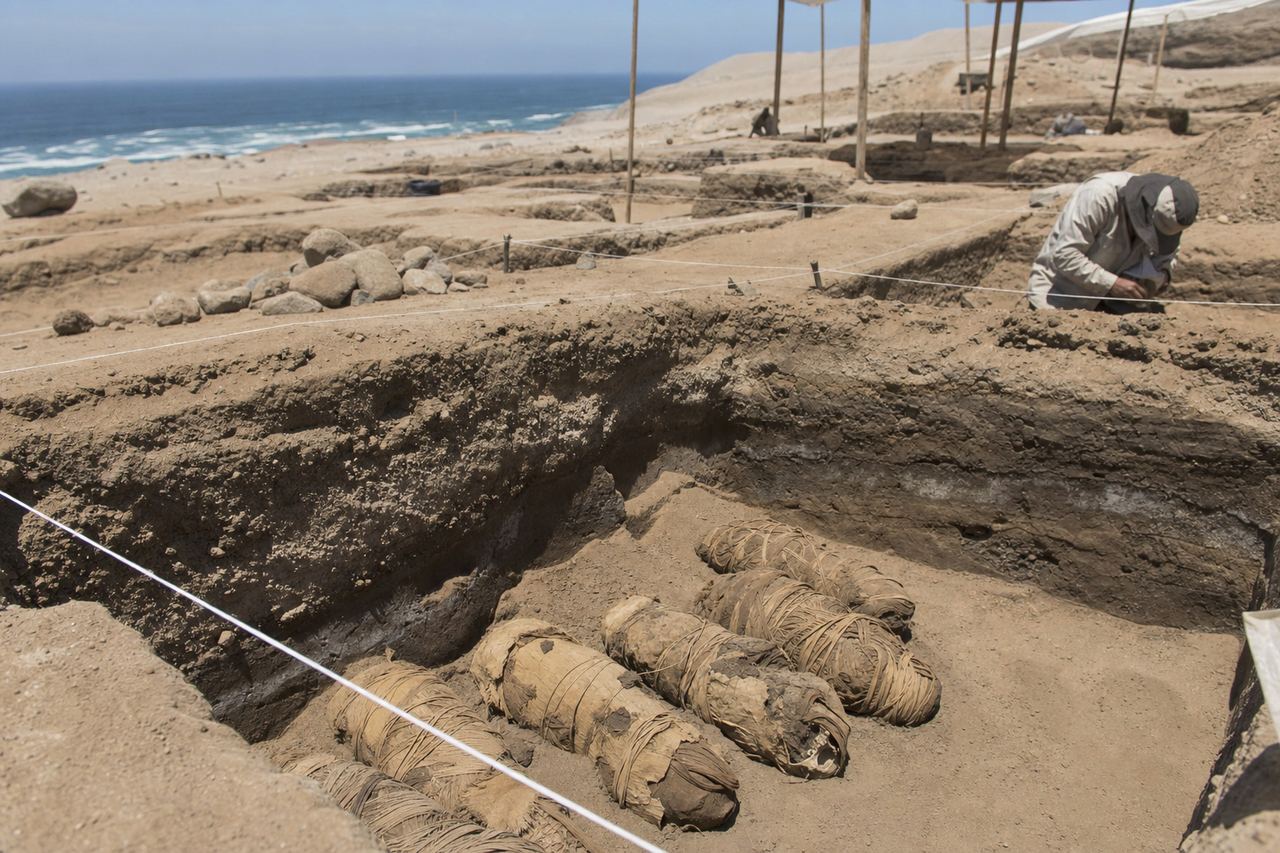
The Chinchorro mummies were found along the Pacific coast of northern Chile and southern Peru, primarily near Arica, Chile. Mummies have been excavated from coastal hillsides, river valleys, and burial sites revealed by erosion, construction, and archaeological surveys conducted over more than a century.
Why did the Chinchorro mummify their dead?
The evidence points to ancestor veneration. The Chinchorro kept their mummies above ground, repaired them when they deteriorated, and displayed them within the community. The dead functioned as ongoing social presences rather than absent relatives — maintained, tended to, and incorporated into communal life for generations after burial.
How old are the Chinchorro mummies?
The oldest confirmed Chinchorro mummies date to approximately 5050 BCE — roughly 7,000 years old — predating the first Egyptian mummies by around 2,000 years. The tradition appears to have spanned at least 3,500 years, from around 5050 BCE to roughly 1500 BCE, making it one of the longest-running mortuary traditions in human history.
What is happening to the Chinchorro mummies today?
Climate change is actively destroying the oldest specimens. Rising humidity along Arica's coast, caused by shifting weather patterns, accelerates microbial growth in mummies that survived for millennia in arid conditions. Some specimens are deteriorating into dark slime within years of exposure. Conservators are racing to stabilise the collection before irreplaceable material is lost permanently.