An Accidental Museum
The mummies of Guanajuato were never intended to exist. Between 1865 and 1958, the city charged families a burial tax. Those who could not pay had their relatives exhumed. What gravediggers found was extraordinary: bodies that had not decomposed but mummified naturally in the mineral-rich volcanic soil.
The Collection
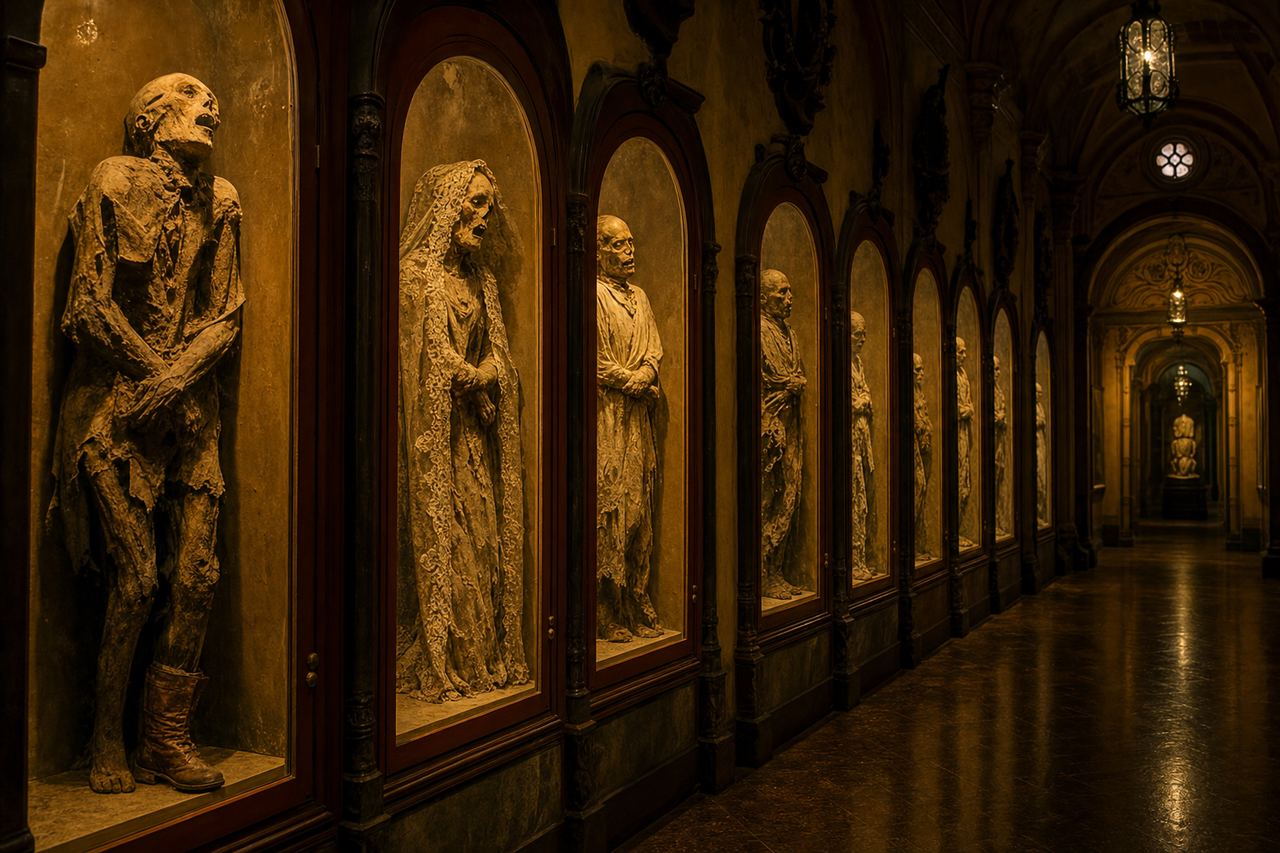
The Museo de las Momias now displays 111 mummies — ordinary 19th-century citizens: a butcher, a merchant's wife, a pregnant woman, children. They are not pharaohs or Inca princesses. They are working people, preserved by geological accident, staring at visitors across two centuries.
Cultural Impact
Ray Bradbury visited in 1945 and was so disturbed he wrote The Next in Line. The collection became a touchstone of Mexican horror cinema. For locals, the mummies are both attraction and ancestor — part of a culture that, through Día de los Muertos, maintains an unusually intimate relationship with its dead.
How Preservation Happened
The cemetery of Guanajuato occupies ground with an unusual geological profile. The soil is dry, mineral-saturated, and rich in compounds — including potassium nitrate and other salts — that inhibit the bacterial processes responsible for decomposition. Bodies buried here were not treated in any way. No resins, no wrappings, no deliberate desiccation. The earth did it alone, and it did it consistently enough that gravediggers began to expect it. The same conditions that preserved a merchant's wife also preserved her dress, her hair, and the expression on her face.
Notable Individuals
Among the 111 mummies on display, several have attracted particular attention. One body — a woman found with her mouth stretched wide and her hands positioned inward against her chest — is widely believed to have been buried alive. Forensic examination cannot rule it out. Her expression is frozen in what appears to be agony, and the positioning of her hands is consistent with someone who regained consciousness inside a sealed space. A second remarkable specimen is a pregnant woman whose naturally mummified fetus remains attached, visible through the abdominal region. Both figures have become focal points of the museum's darker reputation.
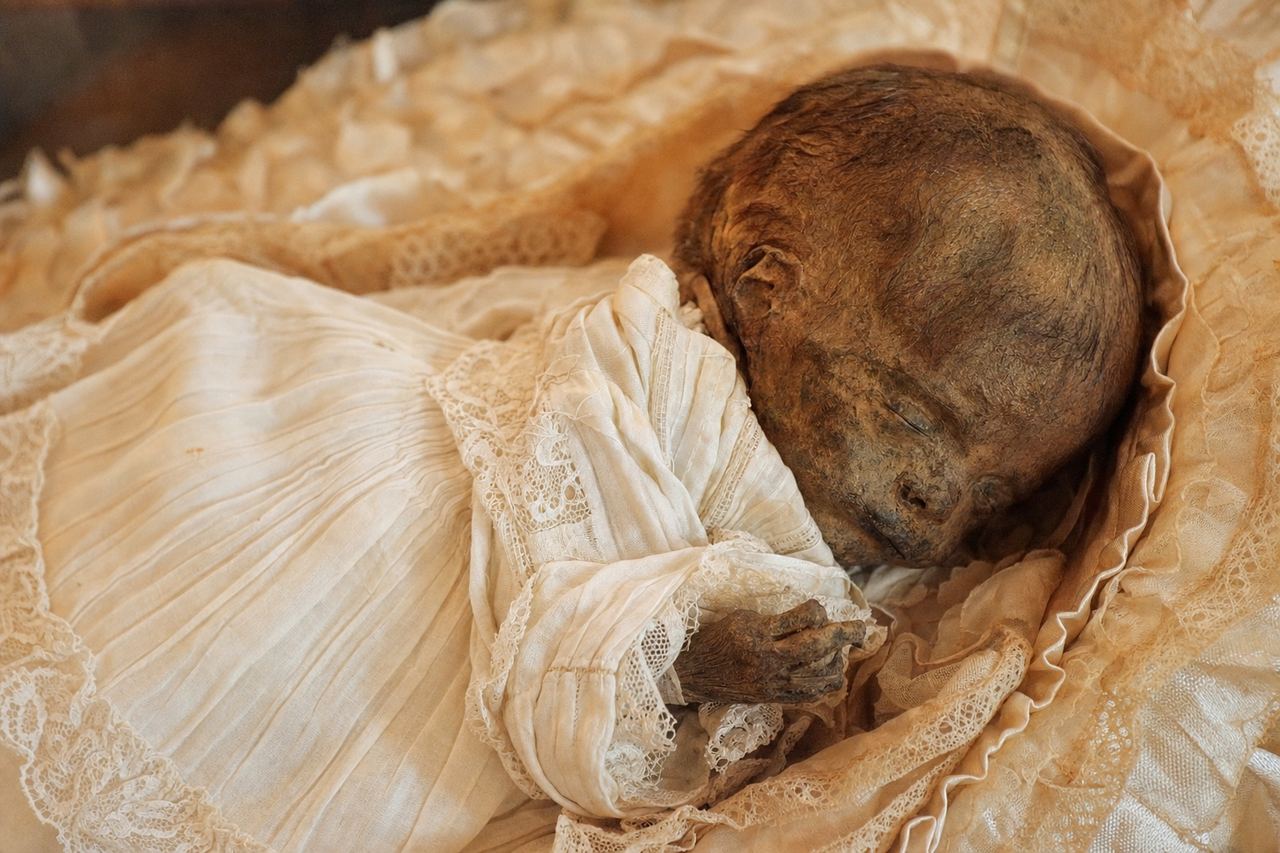
The collection also includes what the museum claims is the world's smallest mummy: a premature infant, barely the size of a human hand, preserved with the same accidental completeness as the adults around it. The range of the collection — from newborn to elderly — reflects the democratic indifference of the soil. The mineral conditions preserved whoever was buried there, regardless of age, wealth, or circumstance.
Diego Rivera and the Artists
Mexican muralist Diego Rivera reportedly visited the Guanajuato mummies as a child and was so disturbed by what he saw that the experience stayed with him for decades. He later described the encounter in his autobiography, crediting it with shaping his relationship to mortality and to Mexican identity. American author Ray Bradbury had a similar reaction: his 1945 visit produced the short story The Next in Line, one of his darkest pieces, in which a tourist couple visits the collection and the experience fractures their marriage. The mummies have continued to appear in Mexican horror cinema and graphic art — functioning less as historical curiosities and more as cultural mirrors of a society that has always kept death close.
Frequently Asked Questions
Where are the Guanajuato mummies located?
The Guanajuato mummies are housed in El Museo de las Momias in the city of Guanajuato, central Mexico. The museum sits near the hilltop cemetery where the bodies were originally exhumed. It is one of Mexico's most-visited museums, drawing over 700,000 visitors each year.
How were the Guanajuato mummies preserved?
The preservation was entirely accidental. The municipal cemetery sits in mineral-rich volcanic soil with very low moisture and high concentrations of salts. These conditions halted bacterial decomposition and desiccated the bodies naturally — no wrappings, no treatment, no ritual. Just geology.
Were any Guanajuato mummies buried alive?
One mummy shows a frozen expression of agony, an open mouth, and hands positioned inward against the chest — consistent with someone who regained consciousness inside a sealed coffin. Scratch marks have been noted on the burial shroud. Medical certainty is impossible after 150 years, but the physical evidence is deeply unsettling.
When were the Guanajuato mummies discovered?
The mummies began coming to light in 1865, when the city introduced a burial tax. Families who could not pay had their relatives exhumed. Gravediggers found preserved bodies instead of skeletons. The practice continued until 1958, when the tax was abolished. Bodies accumulated in a storage building, and the museum eventually opened around them.