Three Children on the Summit
In 1999, on the summit of Llullaillaco volcano in northwestern Argentina — at 6,739 metres, one of the highest archaeological sites ever excavated — a team led by American anthropologist Johan Reinhard discovered three frozen Inca children buried in separate chambers within a stone structure. They had been there for approximately 500 years.
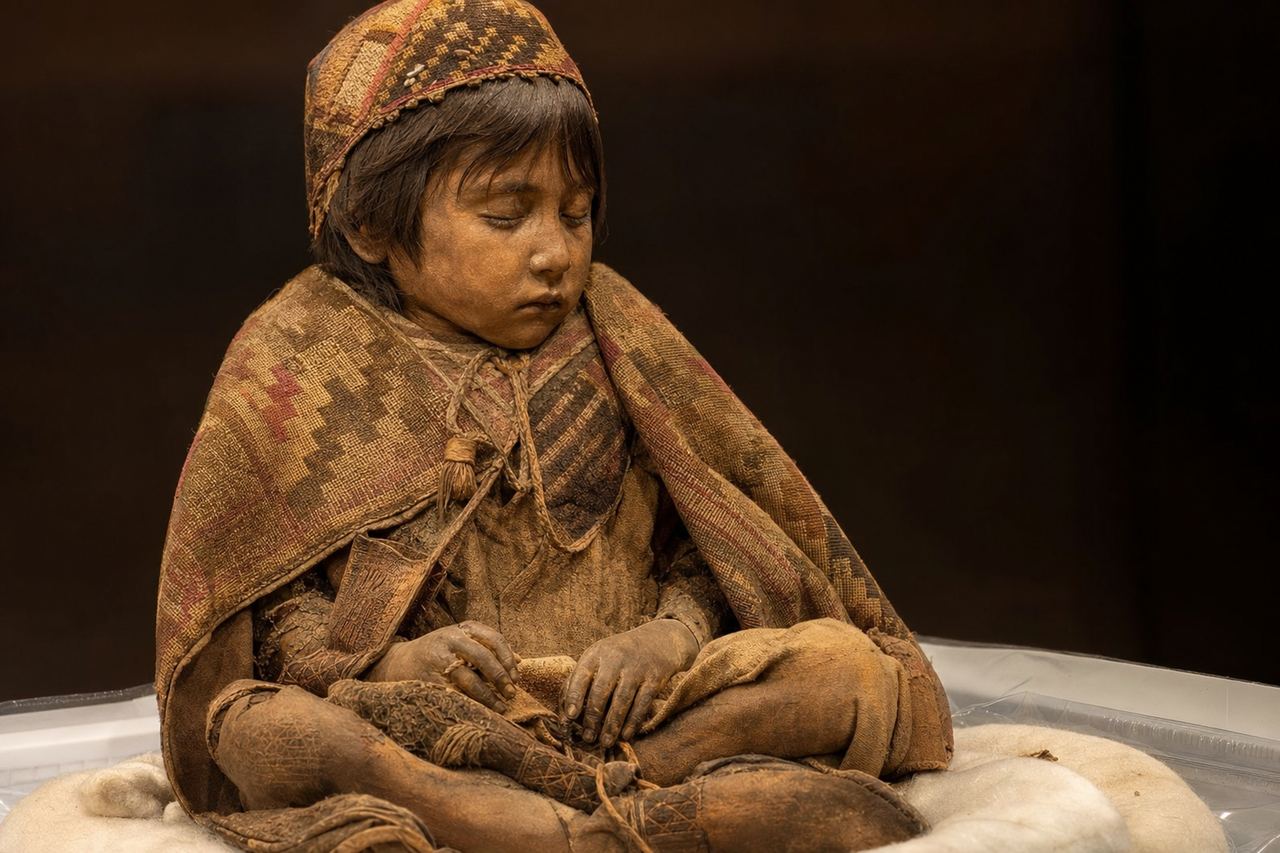
The oldest was a girl of around 13–15, known as La Doncella. The second was a girl of approximately 4–5, known as La Niña del Rayo (the Lightning Girl, because her body was struck by lightning after burial). The third was a boy of approximately 7 years old — El Niño, the child.
All three were among the best-preserved human remains ever found. All three had been sacrificed in the Inca ritual of capacocha. And all three had coca leaves in their mouths — still visible after half a millennium.
Who He Was
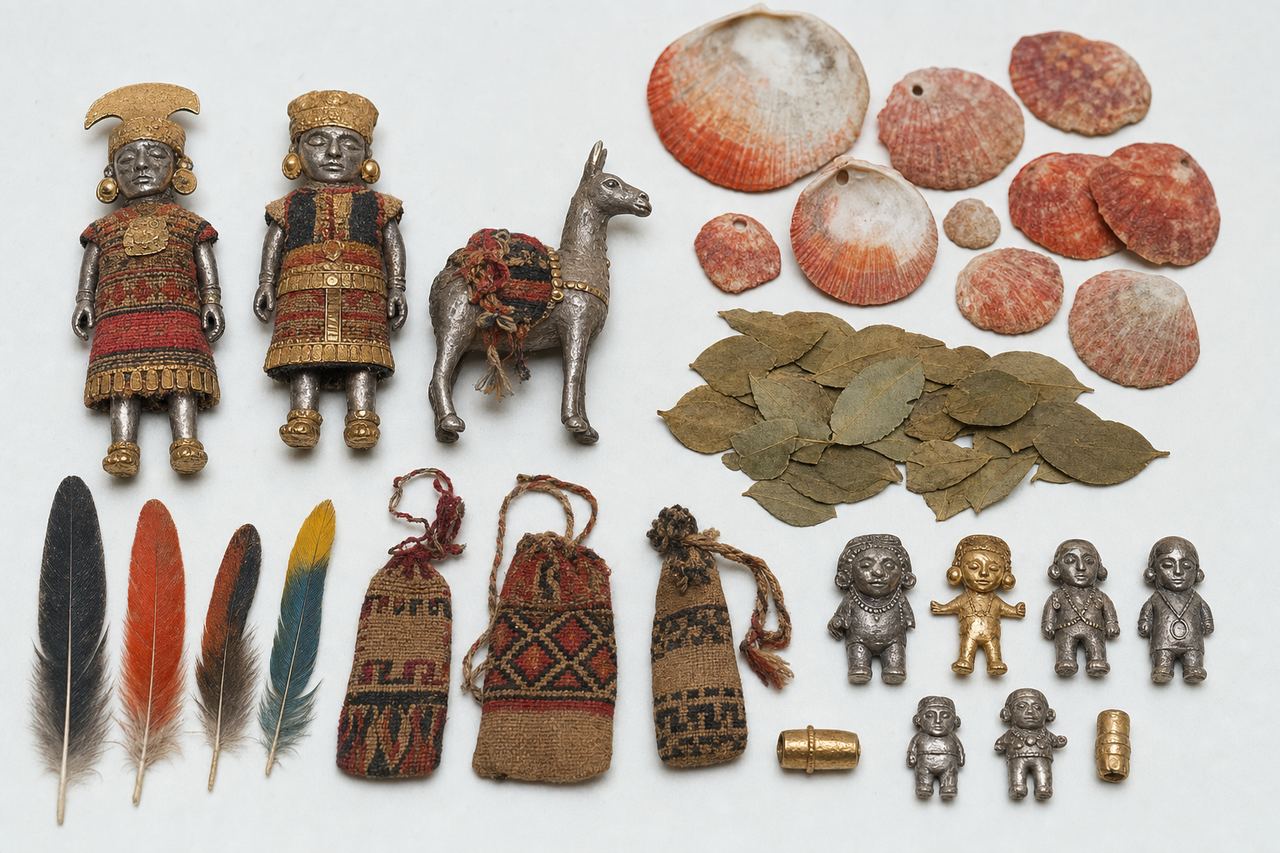
El Niño was approximately 7 years old at the time of his death. His face is round and childlike; his expression peaceful. He was dressed in a brown tunic and feathered headdress typical of Inca elite male clothing. Beside him were small figurines made of gold, silver, and Spondylus shell — ritual offerings of great value in the Inca world.
Analysis of his hair — which contains a chemical record of diet and substance use in the months before death — revealed a story similar to his companions. In the year before he died, his diet changed: he began eating more meat and maize, the foods of the Inca nobility. He was being prepared, elevated, and honoured.
"These were not unwanted children, not criminals, not the weakest. They were chosen. They were the best. That is what makes capacocha both comprehensible and heartbreaking." — Johan Reinhard, on the Llullaillaco children
The Coca and the Chicha
Like his companions, El Niño had coca leaves in his mouth at the time of his death — a plant sacred to the Inca and still used throughout the Andes today for its mild stimulant effects and altitude-sickness relief. Analysis confirmed he had been consuming coca regularly in the final months of his life.
Chemical analysis of his hair also showed elevated alcohol levels in the final weeks of his life — consistent with consumption of chicha, the fermented maize beer used in Inca religious ceremonies. The children were likely sedated before death, a mercy that the data suggests was deliberate and consistent across all three Llullaillaco mummies.
The Ritual
The capacocha ritual involved selecting children of exceptional physical perfection from communities across the Inca empire. They were brought to Cusco, the Inca capital, where they met the Sapa Inca himself in a ceremony that elevated them to near-divine status. They were then walked — sometimes hundreds of kilometres — to their designated mountain summits, accompanied by priests, llamas carrying offerings, and community members who had waited years for this honour.
The ascent of Llullaillaco — at nearly 6,800 metres — would have taken several days from the nearest permanent settlement. The children, sedated with coca and chicha, were placed in their chambers in the stone burial structure at the summit. The priests descended. The cold and altitude did the rest.
The Lightning Strike
While El Niño and La Doncella were found in remarkable condition, the third child — La Niña — had been struck by lightning at some point after her burial, causing burning to her clothing, displacement of some of her remains, and damage to her right side. Yet even she was identifiable, her face preserved, her clothing recognisable.
The Inca interpreted lightning strikes on burial sites as a sign that the gods had chosen to receive the offering — the struck victim becoming a huaca, a sacred place of divine contact. It is possible that the lightning strike on La Niña was viewed by the Inca, if they knew of it, as confirmation that the sacrifice had been accepted.
Where He Is Today
El Niño de Llullaillaco is kept in climate-controlled storage and occasionally displayed at the Museo de Arqueología de Alta Montaña (MAAM) in Salta, Argentina. The museum rotates the display of the three children — only one is shown at a time, out of respect for their dignity. He is displayed at −20°C in a sealed chamber that replicates the conditions of his burial.
Frequently Asked Questions
What is the capacocha ritual and why were children chosen as sacrifices?
Capacocha was an Inca state ritual in which children were sacrificed at mountain summits, during coronations, or following significant events such as the death of a Sapa Inca. Children were selected because they were considered pure and therefore the most valuable offering to the mountain deities known as Apus. The chosen children often traveled to Cusco for ceremonies before making the arduous journey to the sacrifice site.
How did the extreme altitude preserve these mummies so well for 500 years?
The summits of the Andes where capacocha burials took place — some exceeding 6,700 meters — maintain near-constant sub-zero temperatures that froze the bodies rapidly and prevented the bacterial decomposition that destroys soft tissue. This freeze-drying effect preserved not only skin, hair, and internal organs but also the children's clothing, woven textiles, coca leaves, food offerings, and carved figurines placed with them in the burial chamber.
What have DNA and scientific studies revealed about these Inca ice children?
Genomic analysis of capacocha mummies, including the three children found on Llullaillaco in 1999, has confirmed they were of Andean ancestry consistent with Inca-era populations and unrelated to one another despite being buried together. Hair isotope analysis revealed dietary changes in the months before death, showing the children consumed increasing amounts of chicha (maize beer) and coca leaves — substances associated with elite status and ritual preparation — as the ceremony approached.
Where are the best-known capacocha mummies currently held, and can the public see them?
The three Llullaillaco children — known as the Maiden, the Boy, and the Girl of Lightning — are housed at the Museum of High Altitude Archaeology (MAAM) in Salta, Argentina, where they are displayed one at a time in a climate-controlled chamber that replicates the conditions of their original burial. Juanita, the Ampato Ice Maiden discovered in 1995, is held at the Andean Sanctuaries Museum (Museo Santuarios Andinos) in Arequipa, Peru, and is displayed to the public in a refrigerated case.