The Warriors of the Cloud Forest
High in the cloud forests of northern Peru — in the region now known as Amazonas — lived a civilisation that the Inca, when they finally conquered it in the 1470s, called the Chachapoya: "cloud people," or possibly "warriors of the clouds." They were fierce, independent, and technologically sophisticated. They built some of the most dramatic architecture in the pre-Columbian world. And they were terrified of the Inca.
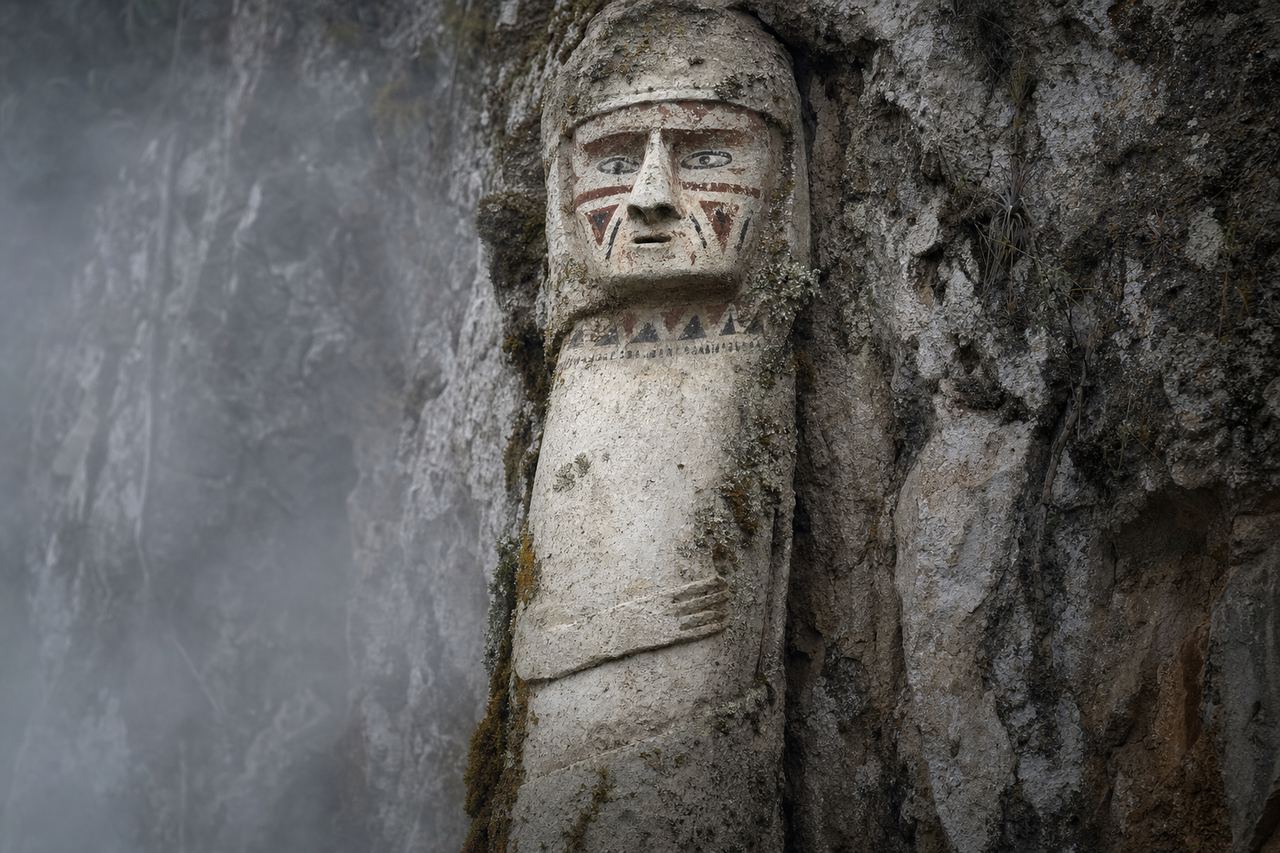
The Chachapoya are remarkable among ancient Andean civilisations for being described by Spanish and Inca sources alike as unusually tall, with light skin and fair hair — descriptions so unexpected that they spawned a century of controversy about their origins. Modern DNA analysis has largely settled the question: they were indigenous South Americans, but possibly from a different genetic lineage than the surrounding Andean peoples.
The Cliff Tombs
What makes the Chachapoya archaeologically extraordinary are their tombs. Rather than burying their dead underground, the Chachapoya built chullpas — small stone mausoleums constructed on sheer cliff faces, sometimes hundreds of metres above the valley floor. Accessible only by rope from above or by impossibly dangerous climbing routes, these tombs protected the dead from interference and placed them symbolically between the earth and the sky.
The most famous site is the Laguna de los Cóndores (Lake of the Condors), discovered in 1996 near the small town of Leymebamba. On a cliff face 150 metres above the lake, local people found six chullpas containing over 200 mummies, hundreds of quipus (knotted record-keeping strings), textiles, ceramics, and everyday objects.
Sitting Up, Looking Out
Chachapoya mummies were buried in a distinctive posture: seated upright, knees drawn to the chest, wrapped in layers of textiles secured with rope. The wrapping technique created a roughly conical bundle with the face — or a fabric face covering — looking outward. In their cliff tombs, the Chachapoya dead sat facing the valleys and lakes they had inhabited in life.
The bundles — fardos — were sometimes enormous, layers of textile wrapped around the seated body until it reached nearly a metre in diameter. The outer layer was often decorated with a false head or face, giving the bundle a vaguely human appearance. The Chachapoya dead were present, visible, and watchful.
"When the mist clears at dawn, you can see them in their niches — hundreds of years old, still sitting, still looking down at the lake. It's not frightening. It feels like being watched over."— Local community member, Leymebamba
After the Inca Conquest
When the Inca conquered the Chachapoya in the 1470s, they destroyed many cliff tombs as an act of cultural suppression. They also took Chachapoya warriors — renowned fighters — as soldiers in the Inca army. Spanish colonial accounts describe the Chachapoya as enthusiastically allying with the Spanish conquistadors against their hated Inca overlords when Pizarro arrived in 1532.
The mummies at Laguna de los Cóndores were found in remarkable condition precisely because the site was unknown to the Inca and Spanish. When local farmers stumbled upon them in 1996, they found 200 people sitting in the dark of their cliff tombs, exactly as they had been placed five centuries earlier.
Where They Are Today
The Leymebamba Museum, opened in 2000, was purpose-built to house the Laguna de los Cóndores mummies and artefacts. It is one of the finest small archaeological museums in South America, displaying the mummies in climate-controlled cases designed to replicate their original environment. The museum is managed in partnership with the local community — many of whom are descended from the Chachapoya — and places indigenous cultural ownership of the collection at its centre.
Frequently Asked Questions
Who were the Chachapoya?
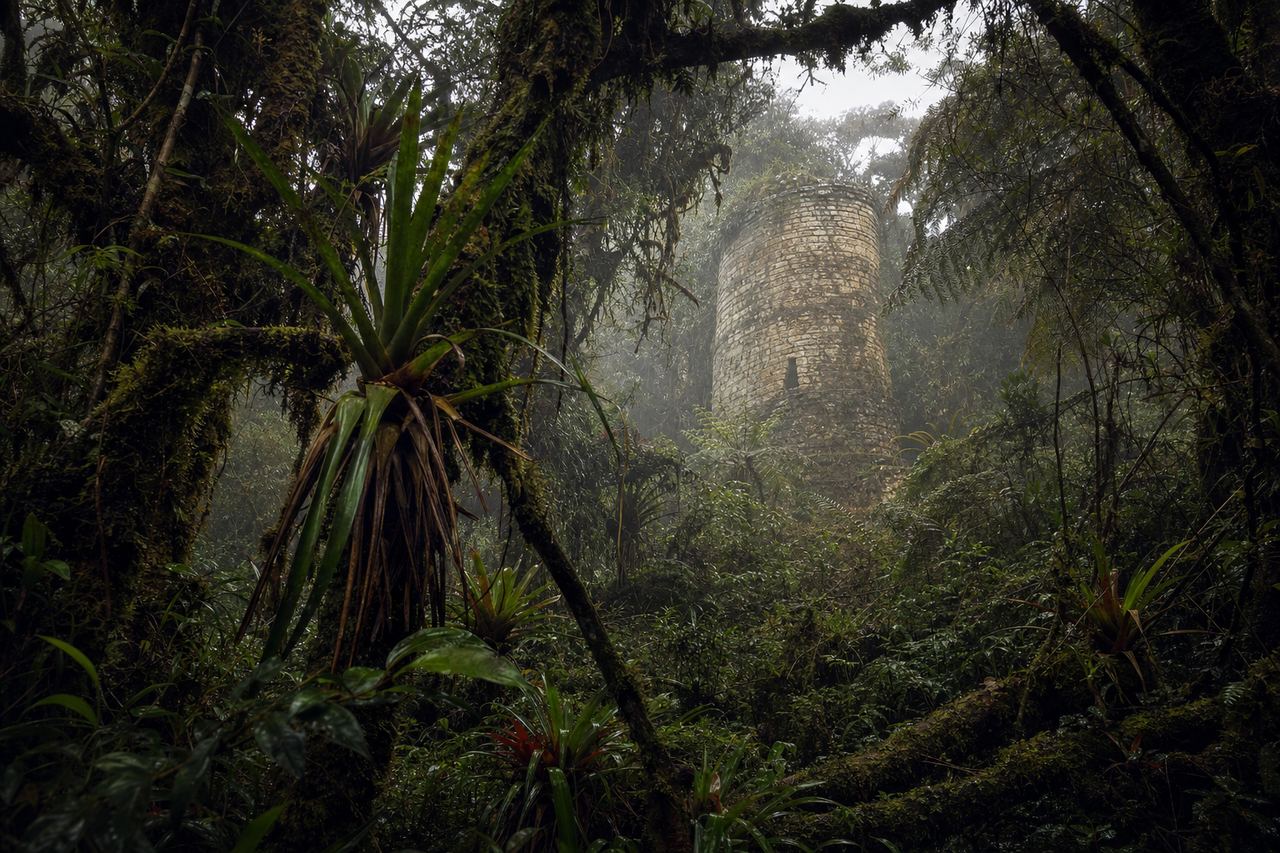
The Chachapoya (meaning 'Warriors of the Clouds' in Quechua) were a pre-Inca Andean civilisation that inhabited the high cloud forest of northeastern Peru, primarily the area of the Amazonas region, from around 900 to 1470 CE. Known for their distinctive round stone towers and cliff-side burial tombs, they were conquered by the Inca under Topa Inca Yupanqui around 1470 CE. Chachapoya warriors later sided with the Spanish against the Inca, contributing to the fall of the Inca Empire.
What are Chachapoya mummies and why are they unique?
Chachapoya mummies are bundle mummies — bodies placed in a foetal position, wrapped in multiple layers of textiles, and sometimes given a false head. They were interred in chullpas (funerary towers) or directly in rock niches on cliff faces in locations so inaccessible that many survive undisturbed for centuries. Unlike Egyptian mummies, Chachapoya preservation was entirely natural, achieved through the cool, dry, and well-ventilated conditions of high-altitude cliff sites.
What was found at Laguna de los Condores?
In 1996, local farmers discovered 219 Chachapoya mummies in six chullpas at a site above Laguna de los Condores in the Amazonas region. The site had been partially disturbed by previous looters but yielded an extraordinary collection of mummies, quipus (knotted cord records), wooden statues, ceramics, and textiles. The mummies and artefacts are now housed at the Leymebamba Museum, which was built specifically to preserve and display the collection.
What do Chachapoya people look like today?
Some communities in the Chachapoyas region still identify with Chachapoya ancestry. Historical accounts by early Spanish colonists describe Chachapoya people as notably fair-complexioned compared to Andean neighbours — descriptions reflected in some of the mummies' preserved features. Modern genetic studies have shown the population has significant genetic continuity with pre-Inca Andean groups but has also incorporated Inca, Spanish, and other Andean lineages over the centuries since conquest.
Frequently Asked Questions
Where did the Chachapoya bury their dead, and why in such remote locations?
The Chachapoya placed their dead in cliff tombs called chullpas, built into sheer rock faces at high altitude in the cloud forests of northeastern Peru. The inaccessible locations served a protective purpose, keeping remains safe from looters and rival groups. The dramatic vertical landscape of their territory — the Andes meeting the Amazon — made these cliff-face sites a natural extension of a culture that had long mastered living in difficult mountain terrain.
What makes the 1996 discovery at Laguna de los Condores so significant?
The Laguna de los Condores site, rediscovered in 1996 near Leimebamba, contained 219 mummies along with thousands of artifacts including ceramics, textiles, and knotted quipus. It is one of the largest and best-preserved Chachapoya burial assemblages ever found. The remote location had shielded the site from looting for centuries, making it an extraordinary window into Chachapoya funerary practices, material culture, and their complex relationship with the Inca who conquered them in the 1470s.
How were Chachapoya mummies prepared differently from Egyptian or Andean coastal mummies?
Chachapoya mummies are bundle mummies: the body was placed in a flexed, fetal position and tightly wrapped in layers of textile, rather than being chemically treated or elaborately eviscerated. Preservation was achieved primarily through the cold, dry conditions of the high-altitude cliff tombs rather than intentional embalming techniques. This textile wrapping, sometimes built up into a large rounded bundle, is characteristic of Andean burial traditions but is particularly well documented among the Chachapoya.
What do Chachapoya mummies reveal about the people's appearance and origins?
Physical examination of Chachapoya remains has shown that many individuals had lighter skin pigmentation and, in some cases, facial features distinct from neighboring Andean populations, prompting long-running debate among anthropologists about their origins and genetic relationships. The Chachapoya occupied a transitional zone between highland and Amazonian cultures, and their material culture reflects influences from both directions. These physical characteristics were noted even by early Spanish chroniclers, who described the Chachapoya as notably fair among the peoples of the Andes.