The Sacred Obligation
Capacocha was the most solemn ritual in the Inca religious calendar — a ceremony conducted at moments of supreme importance: the death of a Sapa Inca, the birth of a royal heir, a military victory, a natural catastrophe, or the dedication of a major temple. Its purpose was to communicate directly with the most powerful forces of the Andean cosmos.
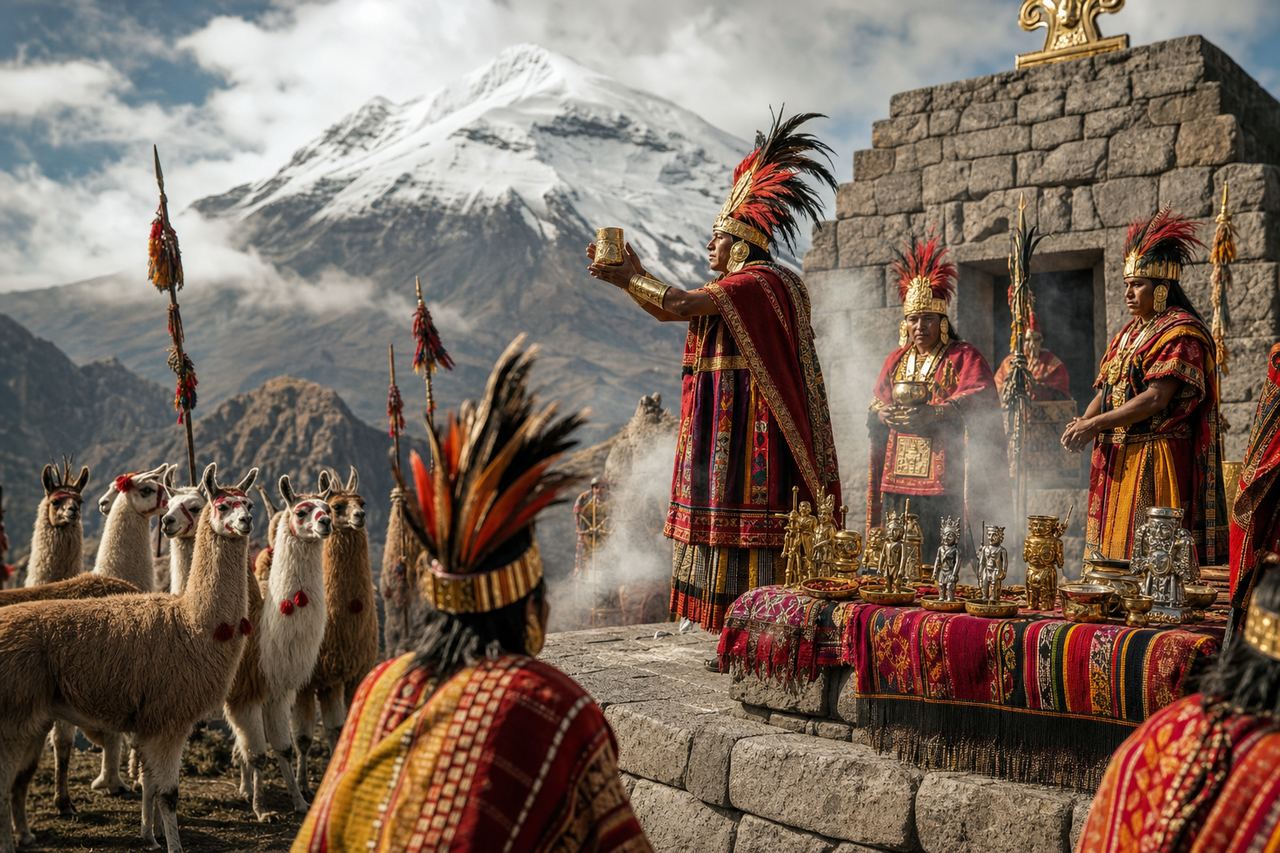
The children selected for capacocha were not chosen because they were unwanted or expendable. Quite the opposite: they were the best. The most physically perfect, the most beautiful, the highest-born. To be selected was an honour of the highest order — for the child and for their community. Their death was considered a transformation, not an ending.
The Selection
Provincial administrators throughout the Inca empire maintained lists of exceptional children — boys and girls between approximately 8 and 15 years old — who might qualify for capacocha. Selection criteria included physical perfection: no blemishes, scars, or defects of any kind. The children had to be born of legitimate Inca parentage (though not necessarily royalty) and free of illness.
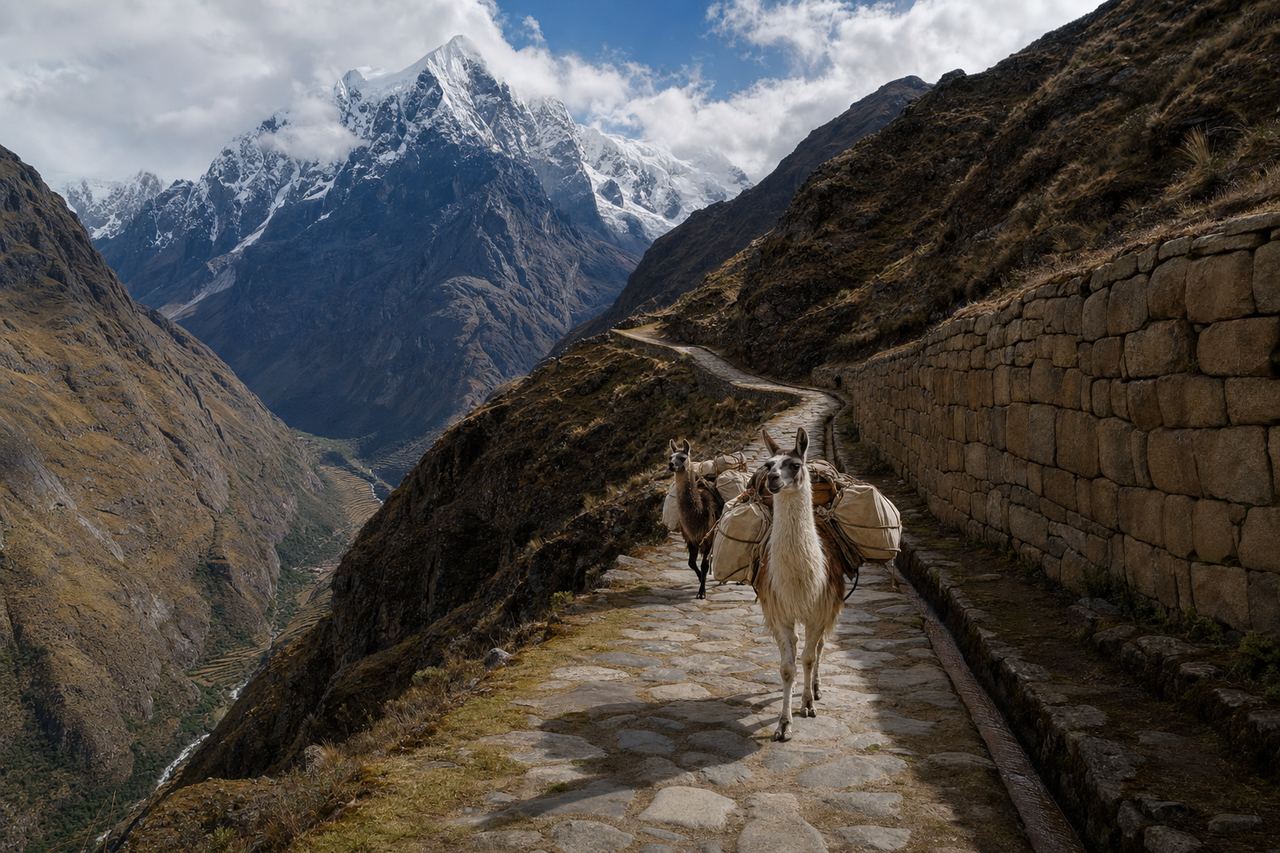
When the Sapa Inca commanded a capacocha, the chosen children were gathered from their home regions and walked — sometimes hundreds of kilometres — along the Inca road network toward Cusco.
The Journey to Cusco
The journey to Cusco was itself part of the ritual. The children were dressed in the finest textiles, fed the highest-quality foods — llama meat, freeze-dried potato, maize — and accompanied by their families, local priests, and a full retinue of attendants. They were treated as living gods: people bowed before them on the road.
In Cusco, the Sapa Inca himself received the children. Ceremonies were conducted in the great plaza of Haucaypata. Offerings were exchanged. The children danced, ate, and drank with the emperor. Their elevation was complete.
"The children of capacocha did not go to their deaths. They went to live with the gods. Their families wept not from grief but from pride — and perhaps from relief that they had been chosen."— Cieza de León, Spanish chronicler, 16th century
The Ascent
After the Cusco ceremonies, the children were taken to their designated mountain summits. The Inca believed that high peaks — apus — were sacred beings, divine intermediaries between the human world and the realm of the gods. The higher the mountain, the more powerful the apu, and the more valuable the offering.
The ascent could take days. At altitude, the children were given increasing quantities of coca leaves and chicha. Both are mild sedatives; at high altitude, where the lack of oxygen already impairs consciousness, they were effective sedatives. The children, by the time they reached the summit, were likely in a state of calm semi-consciousness.
The Burial
At the summit, a stone structure was built — sometimes an entire miniature shrine complex. The child was placed inside, seated cross-legged, wrapped in the finest textiles, surrounded by statues, food, coca, and ritual objects. The structure was sealed. The priests descended. The child died quietly, from cold and altitude, in a state of deep sedation.
At Llullaillaco volcano in Argentina, the three children sacrificed in the 1480s were found in exactly this configuration 500 years later — the oldest still seated, eyes closed, as perfectly preserved as the day she was placed there.
The Scientific Evidence
Modern analysis of capacocha victims has confirmed many aspects of the historical accounts. Hair analysis of the Llullaillaco children shows the gradual dietary change and increasing coca and alcohol consumption in the months before death. Bone analysis confirms elite nutritional status. Forensic examination shows no signs of struggle or trauma in most cases — death came peacefully, from the cold.
Frequently Asked Questions
What is capacocha?
Capacocha was an Inca ritual of child sacrifice, performed during major imperial events such as the death or coronation of a Sapa Inca, military victories, or natural disasters requiring divine intervention. Children were selected from across the empire for their physical perfection — no blemishes, scars, or deformities. They were brought to Cusco for ceremonies before the Sapa Inca, given the status of deities, and then walked to the high mountain summits chosen as burial sites.
Who are the Llullaillaco children?
The Llullaillaco children are three Inca sacrificial victims — a 13-year-old girl known as the Maiden, a 7-year-old girl, and a 7-year-old boy — found in 1999 at the summit of Llullaillaco volcano in Argentina, at an altitude of 6,739 metres. They were buried around 1500 CE and are the best-preserved Inca mummies ever found. Hair analysis revealed their diets changed dramatically in the year before death, shifting to elite foods including maize and coca, consistent with ceremonial preparation.
Did the children know they were going to be sacrificed?
The archaeological and bioarchaeological evidence suggests the children were treated as honoured deities rather than unwilling victims. They were given the finest food and clothing for at least a year before death, and toxicological analysis of their hair shows significantly elevated coca and alcohol (chicha) levels in the months leading up to burial — consistent with ritual consumption. The Maiden was likely seated and given chicha until she lost consciousness before being left to die from exposure.
How were capacocha mummies preserved?
The extreme altitude — often above 6,000 metres — provided natural freeze-drying conditions. At these elevations, temperatures stay well below freezing for most of the year, and the low humidity and intense UV radiation create highly desiccating conditions. The children were buried with their offerings and food, wearing elaborate textiles. Preservation is often so complete that soft tissue, internal organs, hair, eyelashes, and even stomach contents survive after more than 500 years.
Why were children chosen for Capacocha sacrifices instead of adults?
Children were considered the purest offering available to the gods, untouched by the moral and physical corruption associated with adult life. The Inca specifically selected children of outstanding physical perfection — no blemishes, disabilities, or imperfections were permitted — because only the finest gift was worthy of the deities and the Sapa Inca. This purity was believed to guarantee the ritual's effectiveness in securing divine favor for the entire empire.
How did the Inca prepare children for the sacrifice?
Selected children were brought to Cusco, the imperial capital, where they participated in elaborate ceremonies alongside the Sapa Inca himself before beginning the journey to their sacrifice site. During the final hours, they were given large quantities of chicha — fermented corn beer — and coca leaves, which sedated them and reduced their awareness of what was happening. Analysis of the Llullaillaco children's hair confirms a marked increase in coca and alcohol consumption in the months leading up to their deaths.
Where were Capacocha sacrifices carried out, and why on mountain summits?
Sacrifices were performed on the highest reachable Andean peaks, some exceeding 6,000 metres above sea level, because mountains — called Apus — were venerated as living deities in Inca cosmology. The summit of Llullaillaco in northwestern Argentina, at 6,739 metres, held three children buried in 1500 CE and is among the highest archaeological sites ever excavated. The extreme altitude and freezing temperatures preserved the bodies so well that internal organs, skin, and even hair remained intact when they were discovered in 1999.
What occasions triggered a Capacocha ritual?
Capacocha was reserved for moments of supreme imperial significance: the death or coronation of a Sapa Inca, the birth of a royal heir, major military victories, or widespread disasters such as famine and epidemic that threatened the empire's stability. Because the ritual required assembling children from across the empire and transporting them to Cusco before the long mountain march, the entire process could take months or even years to complete. Its rarity and scale reinforced its role as the highest possible act of devotion to the state religion.