Two Plinys, One Catastrophe
The eruption of Vesuvius in 79 CE produced the most famous eyewitness account in ancient history — two letters written decades later by a Roman lawyer and writer named Gaius Caecilius Secundus, known to history as Pliny the Younger. He was 17 years old in August 79 CE, staying with his uncle at Misenum on the northern shore of the Bay of Naples, approximately 30 kilometres from the volcano.
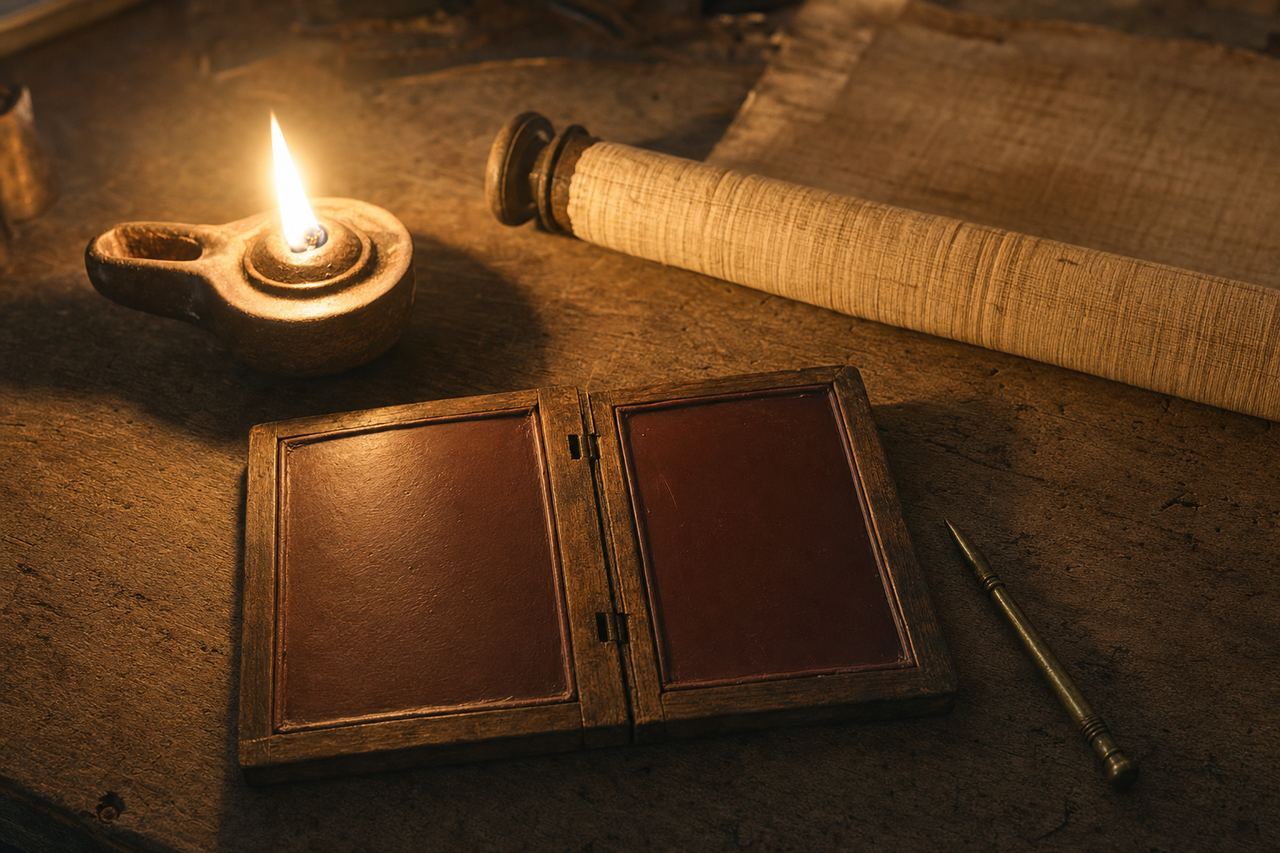
His uncle — Gaius Plinius Secundus, known as Pliny the Elder — was the commander of the Roman fleet at Misenum and one of the most learned men of his era, the author of the encyclopaedic Naturalis Historia. He did not survive the eruption. His nephew watched him sail toward the disaster and never return.
The Elder Pliny's Last Journey
When Vesuvius began erupting on the afternoon of 24 August 79 CE, Pliny the Elder was at Misenum. As a man of scientific curiosity, he ordered a fast warship prepared to sail closer for observation — and, as word reached him that people were trapped on the shore, ordered the fleet to rescue them. His nephew declined to join him, preferring to continue studying.
The Elder Pliny sailed south, past the volcano, to the home of a friend named Pomponianus at Stabiae. He spent the evening encouraging his panicked hosts, bathing, dining, and — reportedly — sleeping soundly, snoring loudly enough to be heard in the corridor. In the morning, with conditions worsening, he walked to the beach to assess the sea. There, he collapsed and died. The cause is uncertain: he had a weak constitution and a history of respiratory problems; the sulphurous gases from the surge clouds may have killed him.
"He stood still, then lowered himself to the ground. Two slaves helped him up. Immediately he collapsed again and died. He was suffocated, I believe, by the density and darkness of the fumes."— Pliny the Younger, Letter to Tacitus, c. 107 CE
What the Younger Pliny Saw
The younger Pliny remained at Misenum with his mother. His letters to the historian Tacitus describe what he witnessed from across the bay with extraordinary precision: the eruption column rising like a pine tree; the darkness at midday as the ash cloud blocked the sun; the earthquake tremors shaking the ground; the panic of the population.
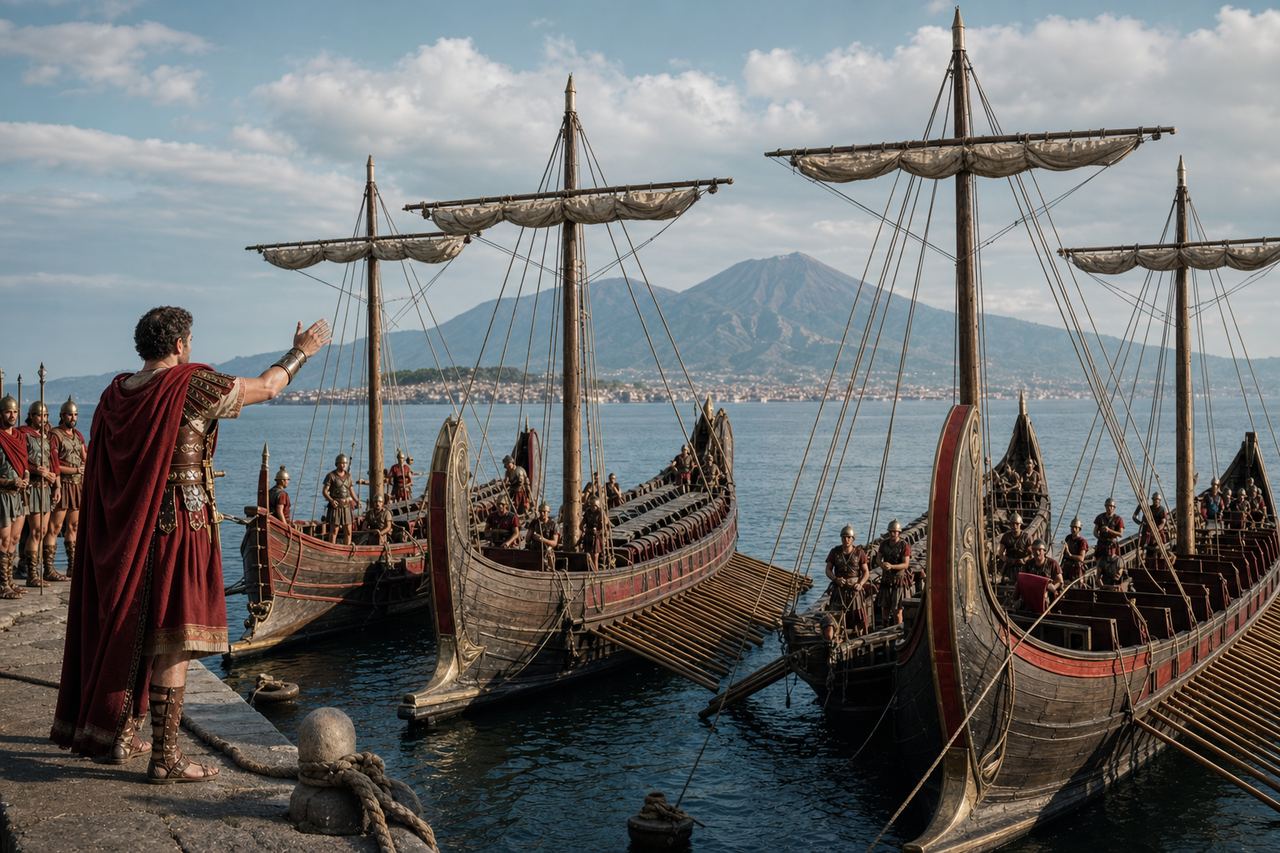
He describes the appearance of the eruption cloud in terms that modern volcanologists immediately recognise as a correct description of a Plinian eruption column — rising vertically, then spreading horizontally at altitude in the characteristic umbrella shape. His account has been used by vulcanologists to reconstruct the precise timeline and progression of the eruption.
The Literary Significance
Pliny the Younger's letters to Tacitus are the only surviving contemporary written account of the 79 CE eruption. They are remarkable documents: personal, vivid, and precise, written by a trained lawyer with an eye for detail who understood the importance of recording exactly what happened. They have been translated into dozens of languages and used by scientists, novelists, and historians for two millennia.
The Elder Pliny himself left a different kind of legacy. His Naturalis Historia — a 37-volume encyclopaedia of natural knowledge — was the most comprehensive work of natural science in the Roman world and remained a standard reference in Europe for over a thousand years. He died, characteristically, in the pursuit of knowledge about natural phenomena.
Finding the Elder Pliny
In 2019, archaeologists excavating near Stabiae announced that they had possibly identified the beach where Pliny the Elder died. Skeletal remains of a tall man of the approximate right age, with a sword at his side — consistent with a senior Roman military officer — were found in circumstances matching the description in the younger Pliny's letter. The identification cannot be confirmed, but the evidence is intriguing.
Frequently Asked Questions
How did Pliny the Elder die during the eruption of Vesuvius?
Pliny the Elder died on the beach at Stabiae on August 25, 79 CE, the day after Vesuvius erupted. He had sailed from Misenum to rescue stranded people and to observe the eruption firsthand. His nephew Pliny the Younger, who remained behind, recorded that he collapsed and died, most likely from inhaling the dense sulfurous gases that accompanied the pyroclastic surges.
What was Pliny the Elder's role in the Roman military?
Pliny the Elder held the rank of praefectus classis, commanding the Roman fleet stationed at Misenum on the Bay of Naples. This was one of the most powerful naval commands in the Roman Empire. His military and administrative career also included service in Germany and posts in various Roman provinces, and he was personally acquainted with several emperors, including Vespasian.
What is the Naturalis Historia and why does it matter?
Naturalis Historia, or Natural History, is a 37-book encyclopedia that Pliny the Elder completed around 77 CE and dedicated to the Emperor Titus. It covers an enormous range of subjects including astronomy, geography, zoology, botany, medicine, and mineralogy, drawing on over 2,000 source works. It remains one of the largest single works to survive from the Roman world and served as a foundational reference text throughout the Middle Ages.
How do we know the details of Pliny the Elder's final hours?
The primary source for Pliny the Elder's death is his nephew, Pliny the Younger, who wrote two detailed letters to the historian Tacitus describing the events of the eruption. In the letters, the younger Pliny recounts that his uncle ordered ships launched for rescue, landed at Stabiae, tried to calm survivors, and died the following morning. These letters are among the most precise eyewitness accounts of a natural disaster to survive from antiquity.