The Discovery
On 9 October 1972, two brothers — Hans and Jokum Grønvold — were hunting near the settlement of Qilakitsoq on the west coast of Greenland when they noticed a pile of stones on a rocky ledge. Beneath the stones, in two separate graves tucked under an overhanging rock, they found eight human bodies. They were dressed in perfectly preserved seal-skin clothing. They looked as though they had simply lain down to sleep.
The brothers reported the find but kept quiet for years, uncertain of the reception. It was not until 1977 that Danish archaeologist Jens Rosing was told about the discovery and launched a formal investigation. The bodies were carefully removed and transported to Copenhagen for analysis.
The Eight People
The eight mummies consisted of six women and two children. They were buried in two groups, probably representing two related family units, around 1475 CE — approximately 500 years before their discovery. The permafrost of the rocky ledge, combined with cold, dry Arctic winds, had preserved them almost perfectly.
"We found people who had been alive perhaps fifteen generations ago, their faces still recognisable as individuals, their clothing as carefully made as the day it was sewn." — Jens Rosing, archaeologist, 1977
The Baby in the Hood
The most heart-rending of the eight mummies is the youngest: a six-month-old baby boy, so small that he was placed not in the grave proper but in the hood of his dead mother's anorak. In Inuit tradition, an infant too young to survive without its mother would be buried with her — placed in the hood as if still being carried.
CT scanning later showed the baby was healthy at the time of death, with no signs of malnutrition or disease. He had simply been buried alive with his mother. This practice, though devastating to modern sensibilities, was a pragmatic necessity in a society where an infant without a nursing mother had no means of survival in the Arctic winter.
Their Clothing
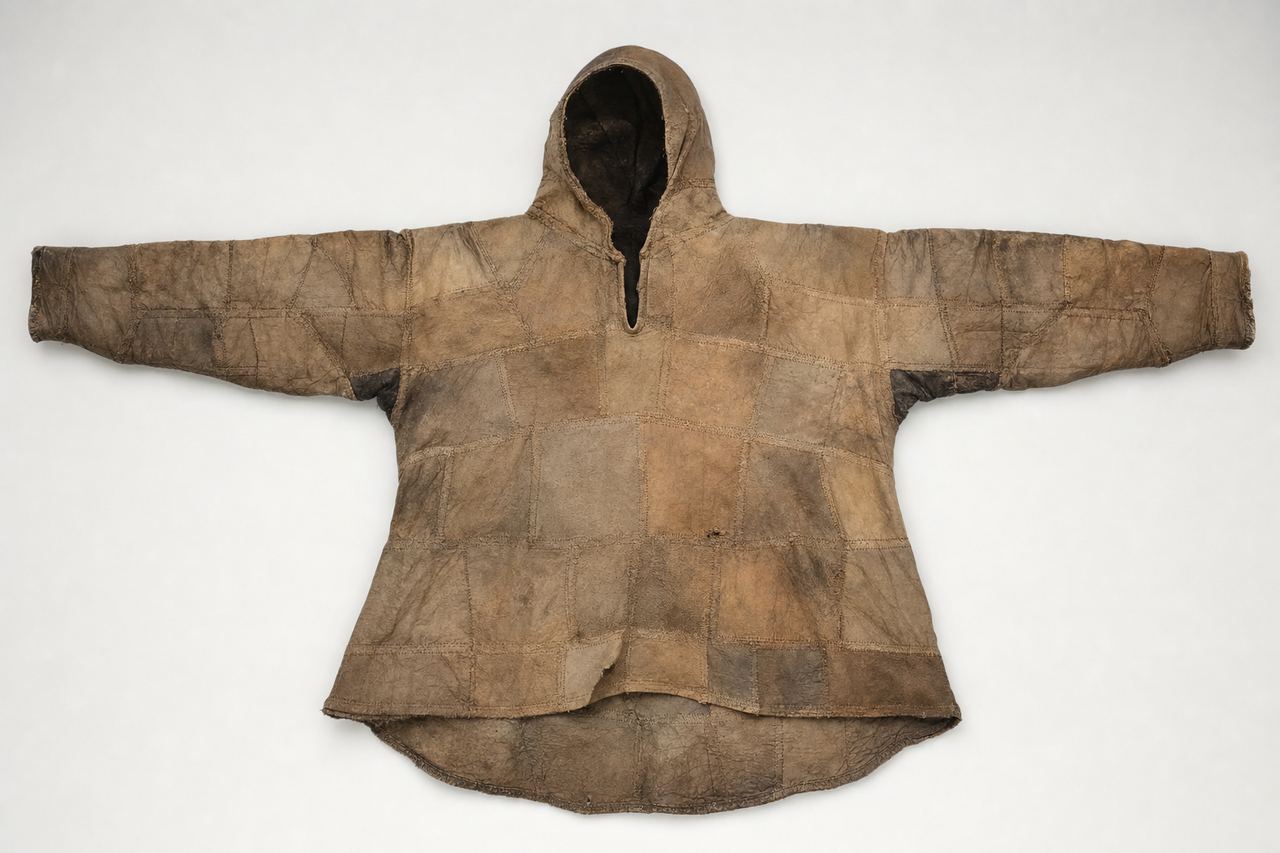
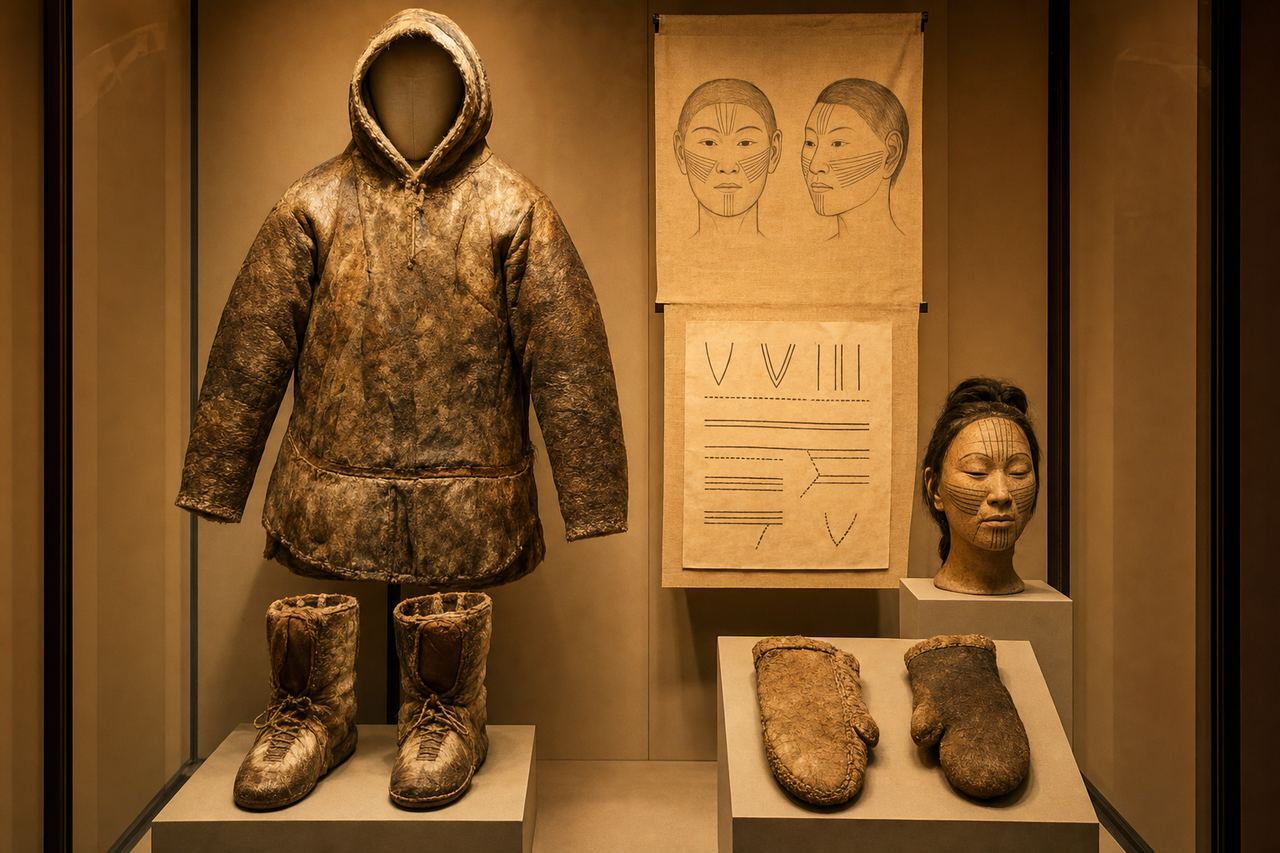
The clothing of the Qilakitsoq mummies is considered among the finest examples of Inuit textile art ever found. The garments — parkas, trousers, boots, and mittens — were made from seal skin, caribou hide, and bird feathers. Each piece was carefully tailored, the seams sewn with sinew thread in techniques that professional seamstresses today find extraordinarily complex.
The anorak of the oldest woman, estimated to be in her 50s, was made from 78 individual pieces of skin sewn together. Some garments showed repairs — patches sewn over worn areas — evidence of careful maintenance across years of use.
The Tattoos
Several of the women bore facial tattoos — parallel lines running from the forehead down across the nose and chin, and across the cheeks. These tattoos, traditional among Inuit women, were made by drawing a sooty thread through the skin with a needle. They indicated adult female status and were also believed to ease the passage into the afterlife.
What Science Revealed
Medical examination of the mummies revealed a community in reasonable health but facing difficult conditions. One woman had a tumour of the jawbone that would eventually have been fatal. Another had a hip condition that severely limited her mobility — she had likely been carried or supported by others for years, suggesting a community that cared for its disabled members rather than abandoning them.
DNA analysis confirmed that at least some of the eight were closely related — the group appears to have been an extended family.
Their Identity
The Qilakitsoq mummies are from the Thule culture — the ancestors of all modern Greenlandic Inuit and the forebears of today's indigenous Greenlandic population. They lived approximately 500 years before their discovery, in a period of significant climatic challenge in the Arctic. Their careful burial suggests a society with strong spiritual beliefs about death and the afterlife.
Where They Are Today
Six of the eight mummies are displayed at the Greenland National Museum in Nuuk. Two were repatriated and reburied in accordance with the wishes of their descendant communities. The woman and baby are among the most visited and most emotionally affecting exhibits in the museum — a silent record of a family, a community, and a way of life that endured in one of the harshest environments on Earth.
Frequently Asked Questions
How were the Qilakitsoq mummies preserved so well for 500 years?
The eight individuals were naturally mummified through freeze-drying in a sheltered rock cleft on the west coast of Greenland. Cold, dry air circulated through the cleft while an overhanging rock shielded the bodies from snow and moisture. This combination of subfreezing temperatures and low humidity gradually drew moisture from the tissues, preserving skin, hair, and clothing in remarkable detail without any deliberate human intervention.
Who was the youngest person found among the Qilakitsoq mummies?
The youngest individual was an infant estimated to be around six months old at the time of death, around 1475 CE. The baby was buried fully dressed in miniature Inuit garments alongside an adult woman, most likely the child's mother. The cause of the infant's death remains unknown, though researchers have speculated the child may have been buried alive according to Inuit custom when no nursing mother survived to care for them.
What makes the clothing found with the Qilakitsoq mummies historically significant?
The 49 garments recovered with the mummies form the most complete and well-preserved collection of traditional Inuit clothing ever discovered. The items include anoraks, trousers, boots, and inner garments, all sewn from seal and bird skin using techniques that reveal sophisticated knowledge of Arctic survival dressing. Because the clothing was preserved alongside the bodies rather than stored separately, researchers can study how multiple layers were combined and worn together in practice.
Did any of the Qilakitsoq mummies show signs of disease or disability?
One of the adult women in the group shows skeletal features consistent with Down syndrome, making this one of the earliest identified cases of the condition in an archaeological individual. She appears to have survived to adulthood, which indicates she was cared for by her community. Examination of the mummies also revealed evidence of other conditions including intestinal parasites and osteomyelitis in some individuals, providing a rare window into the health challenges of 15th-century Greenlandic Inuit life.