A Reindeer Herder's Discovery
In May 2007, a reindeer herder named Yuri Khudi was crossing the banks of the Yuribei River in the Yamal Peninsula of northwestern Siberia when he noticed something unusual in the melting permafrost. It was a small mammoth — a calf, less than a metre high, lying on her side as if asleep. She had been there for 42,000 years.
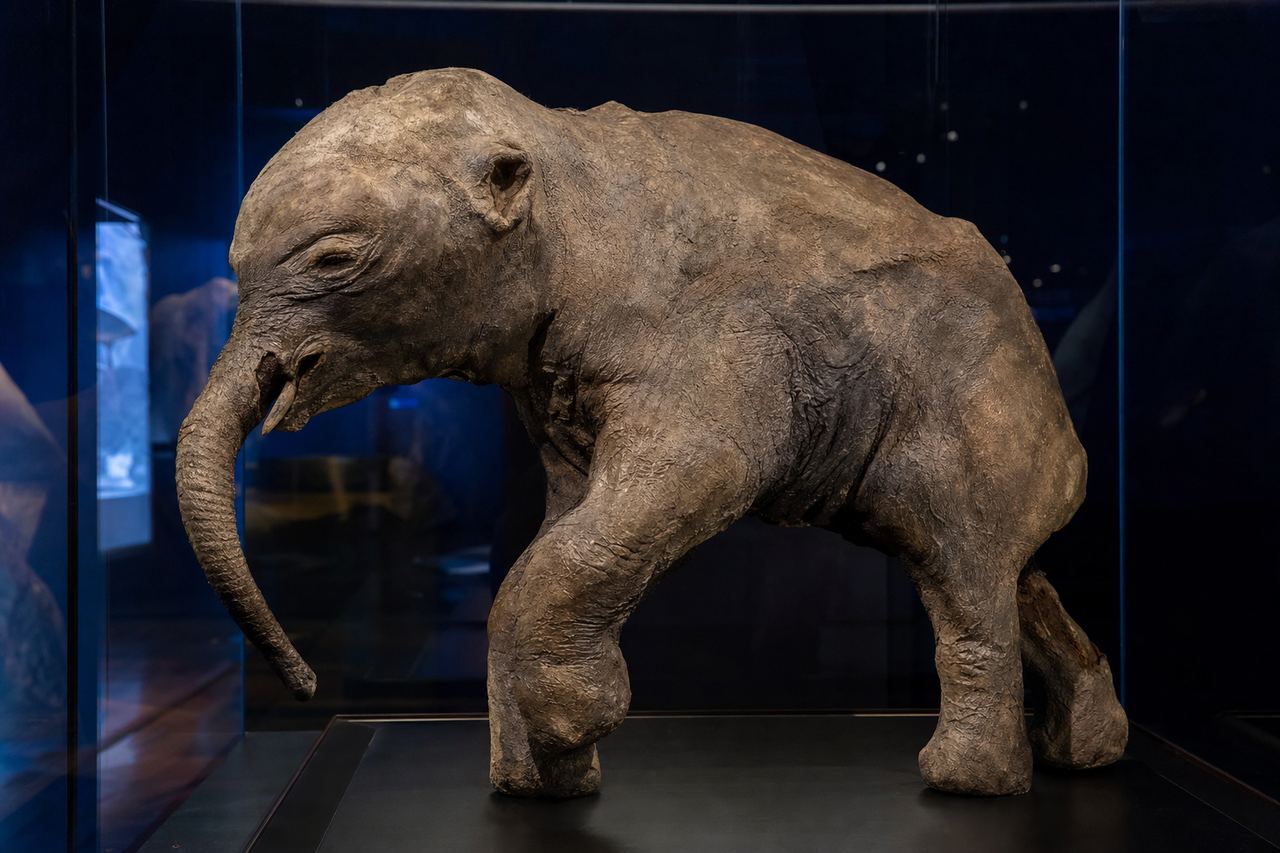
Yuri named her Lyuba, after his wife. She was rushed to a laboratory in St Petersburg for analysis. What scientists found exceeded all expectations.
The Most Complete Mammoth Ever Found
Lyuba was approximately one month old when she died, and she is the most completely preserved woolly mammoth ever discovered. Her skin is intact across her entire body. Her trunk, ears, and eyelashes are present. Her internal organs are preserved. In her trunk, scientists found a plug of clay — which she appears to have inhaled while struggling in mud, suggesting she died by drowning or suffocation in soft ground near a river bank.
Most remarkably: her mother's milk was still in her stomach. Analysis confirmed it was mammoth milk — providing the first direct nutritional data about the diet of a nursing mammoth calf. The milk was rich in fat, similar to modern elephant milk but with subtle chemical differences.
"She is perfect. Absolutely perfect. In forty years of working on prehistoric animals, I have never seen anything like her."— Daniel Fisher, University of Michigan, on first examining Lyuba
What She Tells Us
Lyuba has provided an extraordinary amount of data about woolly mammoth biology that was previously impossible to obtain from bones alone. Her gut bacteria have been analysed, giving us information about the mammoth microbiome. Her growth rings — preserved in her tusk — confirm her age. Her brain tissue has been preserved well enough to extract proteins.
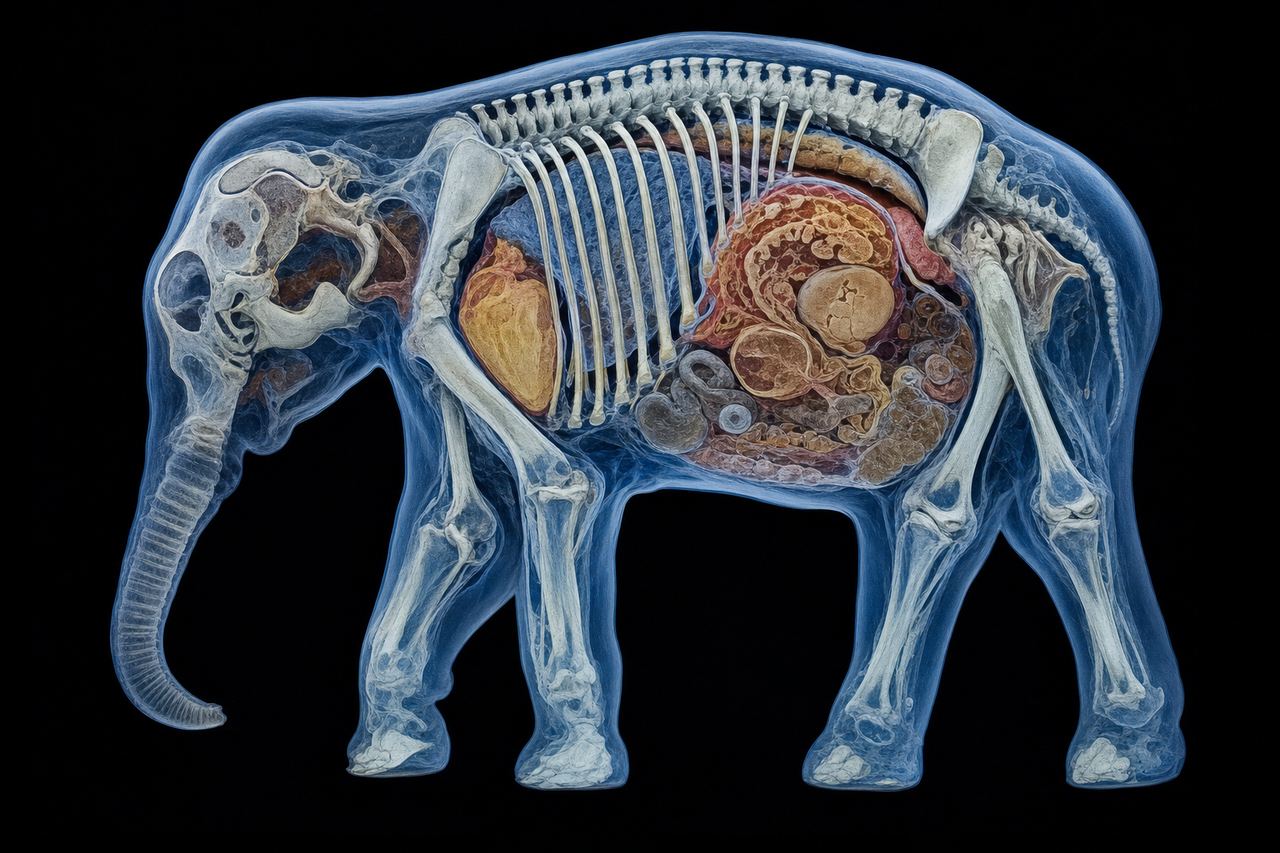
CT scanning of her skull has produced the most detailed image of a woolly mammoth brain ever obtained. The brain was compressed but intact. Its structure closely resembles that of modern elephants — confirming the evolutionary relationship between the two species and providing data on the development of early mammoth cognition.
The Mammoth Steppe
Lyuba lived on the "mammoth steppe" — a vast grassland ecosystem that stretched across northern Eurasia and North America during the last Ice Age, supporting enormous populations of woolly mammoths, woolly rhinoceroses, steppe bison (like Blue Babe), cave lions, and other Pleistocene megafauna. This ecosystem was far more productive than the modern Arctic tundra that replaced it.
Understanding Lyuba helps scientists understand why woolly mammoths went extinct between 10,000 and 4,000 years ago. Was it climate change — the collapse of the mammoth steppe as the Ice Age ended? Human hunting? A combination? The evidence in preserved animals like Lyuba contributes to an ongoing scientific debate with profound implications for our understanding of extinction and climate.
De-Extinction?
Lyuba's remarkable preservation has made her central to discussions of woolly mammoth de-extinction. Scientists have extracted fragmentary DNA from frozen mammoths; the complete mammoth genome has been sequenced from permafrost specimens. A company called Colossal Biosciences has announced plans to resurrect the woolly mammoth using CRISPR gene-editing to modify Asian elephant DNA. Whether this will succeed — and what "success" would actually mean — remains deeply uncertain.
Lyuba is currently displayed at the Shemanovsky Museum in Salekhard, Russia, and has been exhibited internationally at natural history museums around the world.
Frequently Asked Questions
How did Lyuba die, and why is her preservation so remarkable?
Lyuba most likely died around 42,000 years ago after inhaling silt while crossing a river or mudflat, which caused her to suffocate. The same sediment that killed her sealed her body from oxygen and bacteria, enabling near-perfect preservation of her internal organs, including her heart, lungs, and digestive tract. She even retained milk in her stomach from her last feeding, giving scientists a direct window into what a nursing baby mammoth consumed.
Who discovered Lyuba, and how did she get her name?
A Nenets reindeer herder named Yuri Khudi found Lyuba in May 2007 on the Yamal Peninsula in Siberia, Russia. She was named after his wife, following a tradition of honoring the person whose family made the find possible. The discovery was considered one of the most significant paleontological finds of the century, and Khudi's sons played a role in bringing the carcass to the attention of researchers.
How old was Lyuba when she died, and what does her body reveal about her life?
Lyuba was approximately one month old at the time of her death, making her a very young calf still dependent on her mother. Analysis of her teeth and bones confirmed her age, while the presence of her mother's milk in her stomach showed she had fed shortly before dying. Traces of her mother's feces were also found in her digestive tract, which is consistent with known mammoth behavior — calves ingested adult dung to acquire gut bacteria needed for digestion.
Where is Lyuba kept today, and can the public see her?
Lyuba is housed at the Shemanovskiy Museum in Salekhard, Russia, the administrative center of the Yamalo-Nenets Autonomous Okrug where she was found. She has also traveled internationally for temporary exhibitions, including displays in the United States and Japan, drawing large audiences at natural history museums. Her home institution maintains her under controlled conditions to preserve the integrity of her remains for ongoing scientific study.