Found by a Gold Miner
In July 1979, a gold miner named Walter Roman was operating a hydraulic monitor — a powerful water jet used to strip away overburden — near Fairbanks, Alaska, when the jet exposed the head and shoulders of an enormous animal protruding from a frozen bank. He called the University of Alaska Museum. Palaeontologist Dale Guthrie arrived, and what he found astonished him.
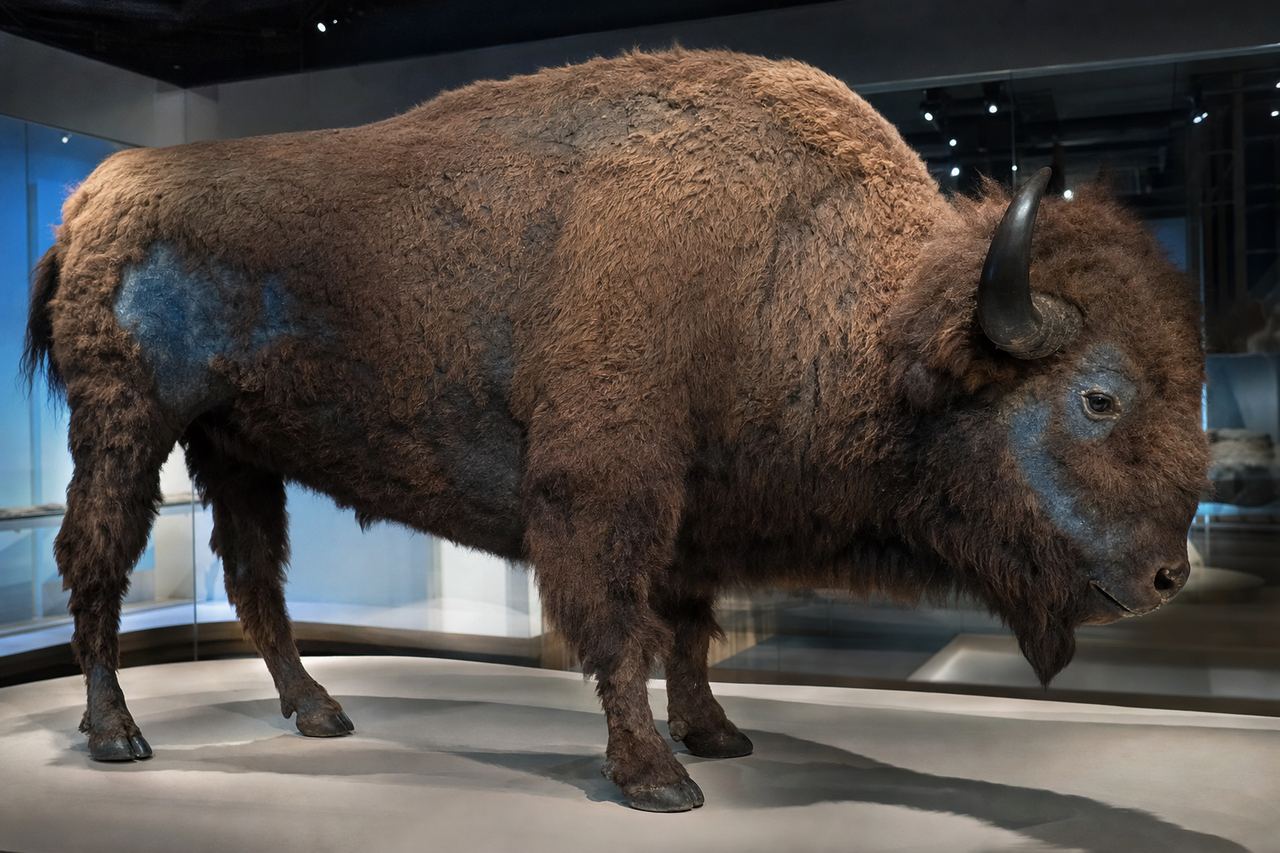
The animal was a Bison priscus — a steppe bison, a species that went extinct approximately 10,000 years ago. It had been frozen in Alaskan permafrost for approximately 36,000 years. And it was in extraordinary condition.
How Well Preserved?
Blue Babe — named for the blue vivianite mineral crystals that had formed on parts of its skin, and for Paul Bunyan's giant blue ox of American folklore — was preserved in remarkable detail. Its hide was largely intact. Its horns were present. Its tail, its facial skin, its hooves — all there.
When researchers opened the carcass, they found blood still in the heart chambers. The meat, frozen for 36,000 years, still smelled like meat. Microscopic analysis of the muscle tissue showed intact muscle fibres. The permafrost had locked out the oxygen and bacteria that would normally cause decomposition — for thirty-six millennia.
"When we opened the chest cavity, there was blood. Real blood, dark and clotted, but blood. It was one of the strangest moments of my career." — Dale Guthrie, University of Alaska Museum
How He Died
Blue Babe did not die peacefully. His skin and muscle tissue showed puncture wounds and claw marks consistent with a large predator — almost certainly an American lion (Panthera leo atrox), a now-extinct species that was larger than the modern African lion and roamed Ice Age North America.
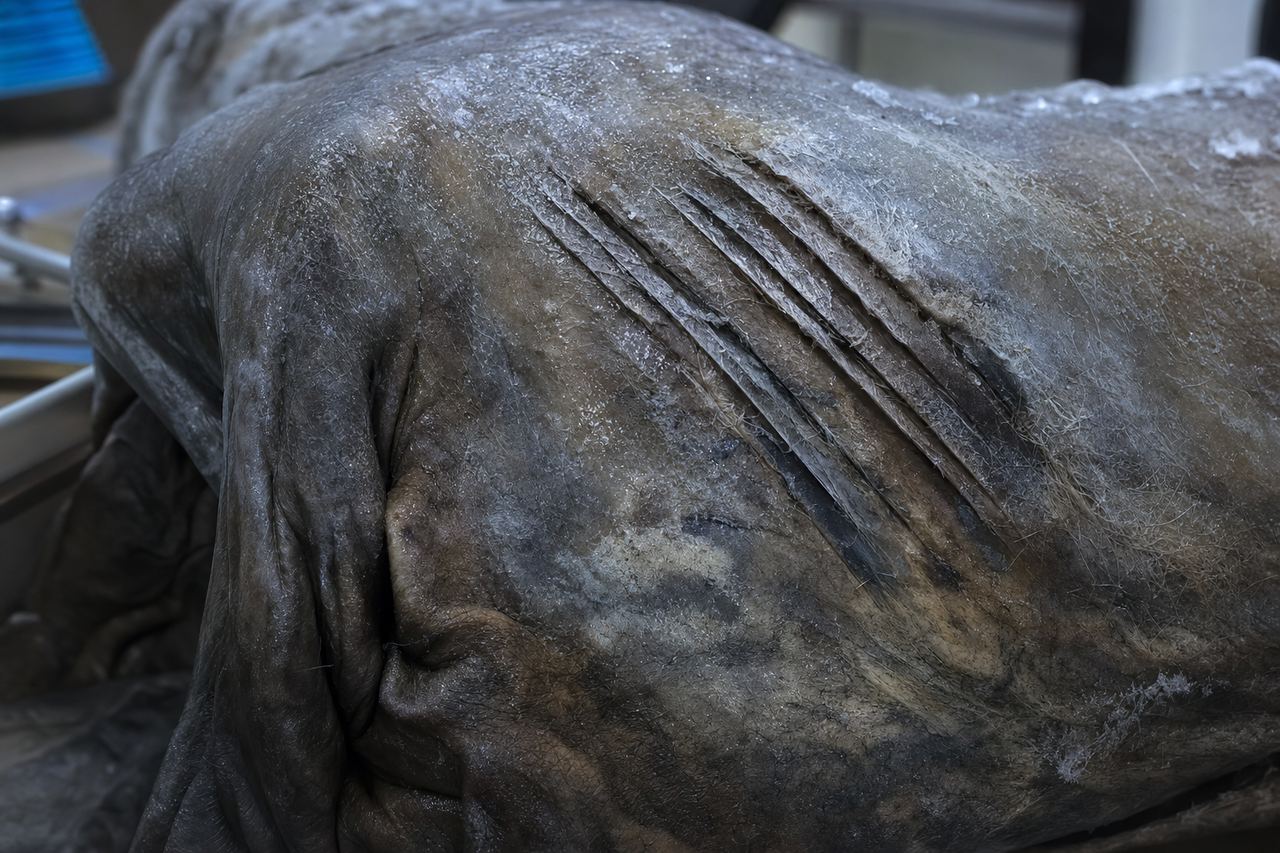
The injuries suggest Blue Babe was attacked, brought down, and partially consumed before the predator was driven off or the carcass froze. He was a mature male, approximately 8 years old at death. His hide showed the distinctive muscle definition of a healthy, well-nourished animal — he was in good condition when he was killed.
The Dinner
The most remarkable footnote to Blue Babe's story is what happened at the celebratory dinner held by the excavation team after his analysis was complete. A small piece of meat was cut from the neck — the one part of the animal best preserved — and made into a stew with vegetables and wine.
The palaeontologists who ate it reported that it tasted distinctly gamy but not unpleasant — recognisably beef-like. They were eating a creature that had died 36,000 years ago, during the last Ice Age, that had been hunted by a species of lion that no longer exists, on a landscape that has not existed for thousands of years.
What He Tells Us
Blue Babe is one of the most significant finds in Pleistocene palaeontology. His preserved gut contents showed he had been eating grass right up to his death — confirming that Ice Age Alaska supported rich grassland ecosystems. His body condition revealed the health of steppe bison populations. The isotope ratios in his bones illuminated the food web of late Pleistocene Alaska.
He also confirms what fossil evidence had long suggested: that the Alaskan steppe was far richer and more productive than the modern tundra that replaced it. The "mammoth steppe" — a vast grassland ecosystem that stretched across Eurasia and North America during the Ice Age — supported enormous herds of large mammals. Blue Babe was one of them.
Where He Is Today
Blue Babe was carefully preserved and mounted, and is displayed in the University of Alaska Museum of the North in Fairbanks. He stands in a reconstructed setting suggesting his original Ice Age environment. He is the most complete frozen steppe bison ever found, and the only one to have been analysed so thoroughly while still retaining soft tissue.
Visitors to the museum report that seeing him in person — fully mounted, eyes open, hide intact — is unexpectedly moving. He is 36,000 years old. He looks like he might still be alive.
Frequently Asked Questions
Why does Blue Babe have a blue color?
The blue color comes from vivianite, an iron phosphate mineral that crystallized on the carcass during its 36,000 years in the frozen ground. Vivianite forms when iron from decomposing organic matter reacts with phosphate in waterlogged, low-oxygen conditions — exactly the environment created by permafrost. The mineral deposited across the bison's hide and exposed tissues, giving the specimen its distinctive blue-gray hue.
What evidence shows that Blue Babe was attacked before he died?
Blue Babe's hide bears clear claw and bite marks consistent with American lions (Panthera leo atrox), a large Pleistocene predator that shared the Alaskan steppe with steppe bison. The attack wounds indicate the lions partially fed on the carcass before the bison froze and was sealed in permafrost. This makes Blue Babe a rare direct record of predator-prey interaction from the Ice Age.
Who found Blue Babe and where is he now?
Blue Babe was discovered in 1979 by gold miners working near Fairbanks, Alaska, when their hydraulic equipment thawed the permafrost and exposed the carcass. Paleontologist R. Dale Guthrie led the scientific study of the specimen. The preserved bison is now on permanent display at the University of Alaska Museum of the North in Fairbanks.
Did scientists really eat meat from Blue Babe?
R. Dale Guthrie and colleagues made a small stew using a portion of the 36,000-year-old bison meat during the original research. The meat was reportedly edible, though its flavor was described as aged and strong. The decision was partly symbolic — a way of connecting directly with the deep past — and has since become one of the most memorable anecdotes in Pleistocene paleontology.