The Frozen Kurgans
The Pazyryk culture flourished in the Altai mountains of southern Siberia and Kazakhstan from approximately 600 to 200 BCE — a nomadic people who herded horses and cattle across the great Eurasian steppe, traded with the Achaemenid Persian empire and the Chinese Zhou dynasty, and buried their elite dead under massive mounds of stone called kurgans.
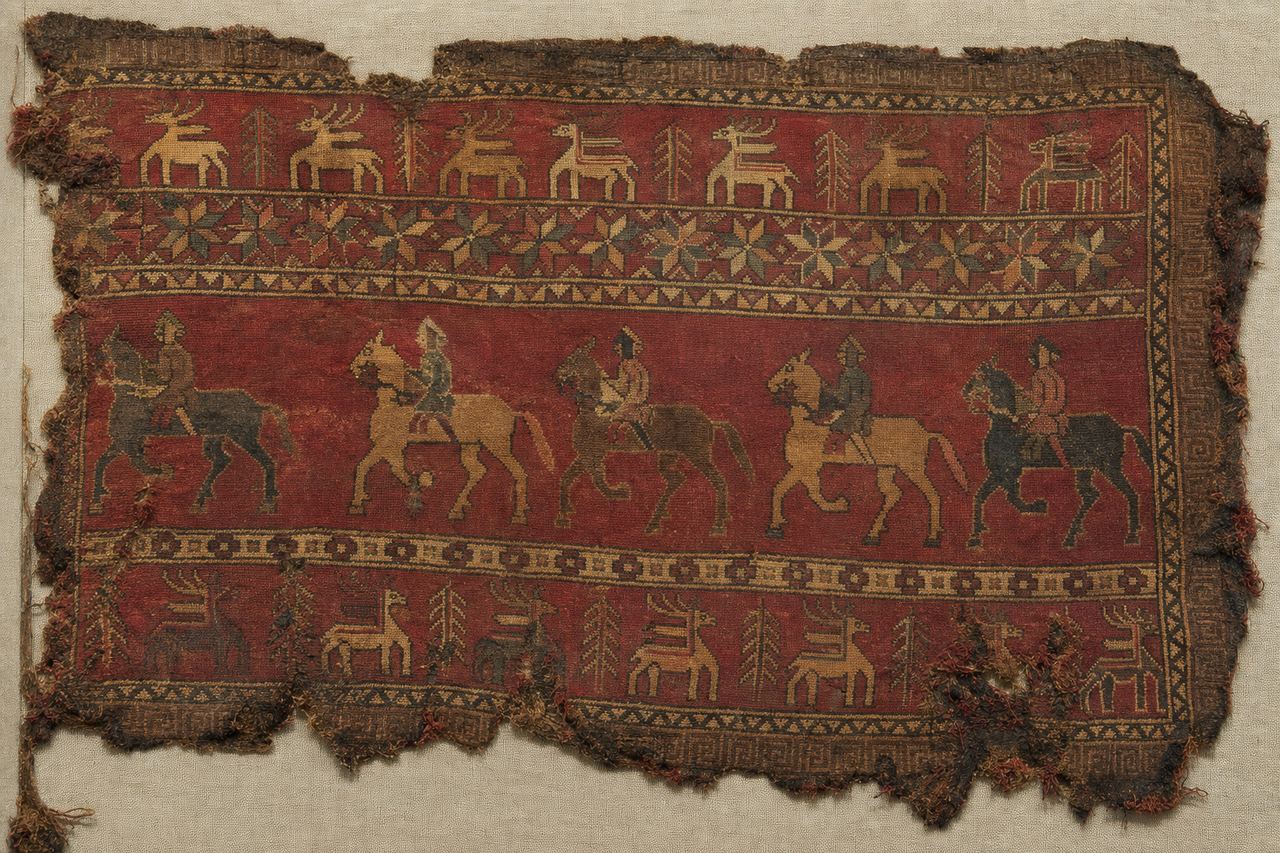
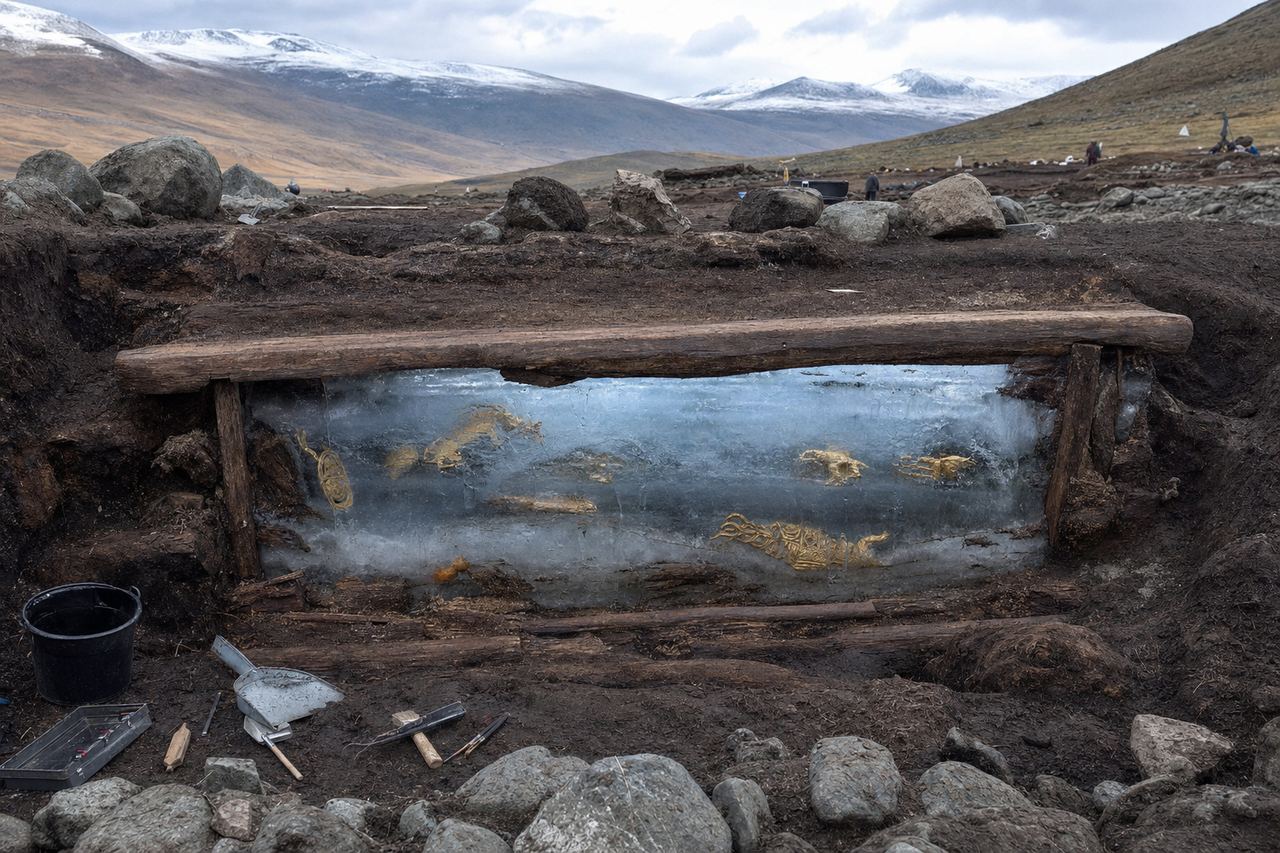
Their burial practice accidentally created one of the finest archaeological time capsules in history. The log chambers within the kurgans trapped moisture that froze to permanent ice. Over two millennia, the permafrost preserved not just bones but flesh, leather, wool, wood, fur, and the most extraordinary collection of Iron Age textiles and organic materials ever found.
The Tattoos
The most remarkable aspect of the Pazyryk dead is their skin. Several mummies preserve extensive tattoos — complex, flowing compositions of stylised animals that writhe across shoulders, arms, and legs. Stags with antlers that branch into bird-like forms. Tigers. Fish. Fantastical creatures that combine features of multiple animals. The compositions have a fluidity and sophistication that modern tattoo artists have studied and admired.
The tattoos were made by pricking charcoal under the skin — the same method used by the Siberian Ice Maiden (who was almost certainly Pazyryk). The imagery connects to a tradition of "animal style" art found across the Eurasian steppe from Hungary to China, suggesting a shared visual culture that crossed thousands of kilometres of grassland.
"These are not simple markings. They are compositions — stories told in skin, images that moved as the body moved, that signalled identity and status across the steppe."— Natalia Polosmak, discoverer of the Siberian Ice Maiden
The Pazyryk Chief
The most extensively tattooed Pazyryk mummy ever found is a man discovered in Kurgan 2 at Pazyryk in 1947 by Soviet archaeologist Sergei Rudenko. His shoulders, arms, chest, legs, and even his ankle were covered in tattoos — at least 40 individual motifs, all in the flowing animal style. He was middle-aged, powerfully built, and buried with six sacrificed horses, a complete set of weapons, and a range of luxury goods including textiles imported from Persia and China.
The range and quality of goods in his tomb identified him as a chief or high-ranking warrior. His tattoos — more extensive than any other individual found in the Pazyryk culture — may have represented his personal history of achievements, his lineage, his rank, or his spiritual affiliations.
What Else Was Preserved
The Pazyryk kurgans have yielded an extraordinary range of organic materials that would never survive in normal burial conditions: felt wall hangings with figurative scenes; wool carpets (the Pazyryk Carpet, dated to approximately 500 BCE, is the oldest surviving pile carpet in the world); leather saddles and horse trappings; wooden furniture; silk from China; hemp seeds and wooden censers suggesting ritual cannabis use.
Together, these objects paint a picture of a sophisticated, cosmopolitan culture that participated in long-distance trade networks stretching from the Black Sea to the Pacific, fought fiercely for dominance of the steppe, and buried its dead with extraordinary care and beauty.
Where They Are Today
The Pazyryk mummies and objects are primarily displayed at the State Hermitage Museum in St Petersburg, Russia, which holds Rudenko's excavated collection. The Siberian Ice Maiden — who is almost certainly Pazyryk — is displayed at the National Museum of the Altai Republic in Gorno-Altaysk. Together, they represent one of the most complete records of an ancient nomadic civilisation anywhere in the world.
Frequently Asked Questions
What preserved the Pazyryk mummies for over 2,000 years?
The Pazyryk mummies survived because groundwater seeped into their log-lined burial chambers and froze, encasing the contents in permafrost. The Altai Mountains provided the cold conditions necessary to maintain this deep freeze across centuries. When archaeologists excavate these kurgans today, they find textiles, food, wooden objects, and human remains in a remarkable state of preservation that would be impossible in a warmer climate.
Who was the Siberian Ice Maiden and why is she significant?
The Siberian Ice Maiden, also called the Princess of Ukok, was a young Pazyryk woman excavated in 1993 from the Ukok Plateau in the Altai Republic of Russia by archaeologist Natalia Polosmak. She was buried with six saddled horses, fine clothing, and a tall ceremonial headdress, suggesting high social status. Her skin bore elaborate tattoos of fantastical animal figures — among the most intricate and best-preserved tattoos known from the ancient world.
What do the Pazyryk tattoos look like, and what purpose did they serve?
Pazyryk tattoos depict stylized animals in dynamic, curving compositions — deer with exaggerated antlers, griffins, and predatory cats are recurring subjects. The designs follow the contours of the body across shoulders, arms, and fingers. Scholars interpret them as markers of identity, status, or spiritual protection, though the precise meaning is not fully established. The tattoos are preserved in such detail on the frozen skin that individual needle strokes are sometimes visible.
Why were horses buried alongside Pazyryk people?
Horses held central importance in Pazyryk culture as both practical tools and prestige symbols for a nomadic, horse-riding people of the Eurasian steppe. The animals were ritually sacrificed at burial and interred fully equipped with elaborate saddles, bridles, and decorative felt trappings. Burying horses with the dead likely reflected beliefs that the deceased would need a mount in the afterlife, and the number and quality of horses indicated the status of the person being honored.