The Father of Ramesses the Great
Seti I ruled Egypt from approximately 1294 to 1279 BCE — a reign of about fifteen years that set the stage for the long, celebrated reign of his son Ramesses II. He was a military man who campaigned successfully in Canaan, Syria, and Libya; a builder who constructed magnificent temples at Abydos and Karnak; and a king whose mummy is, by common consensus among Egyptologists, the finest example of royal preservation ever found.
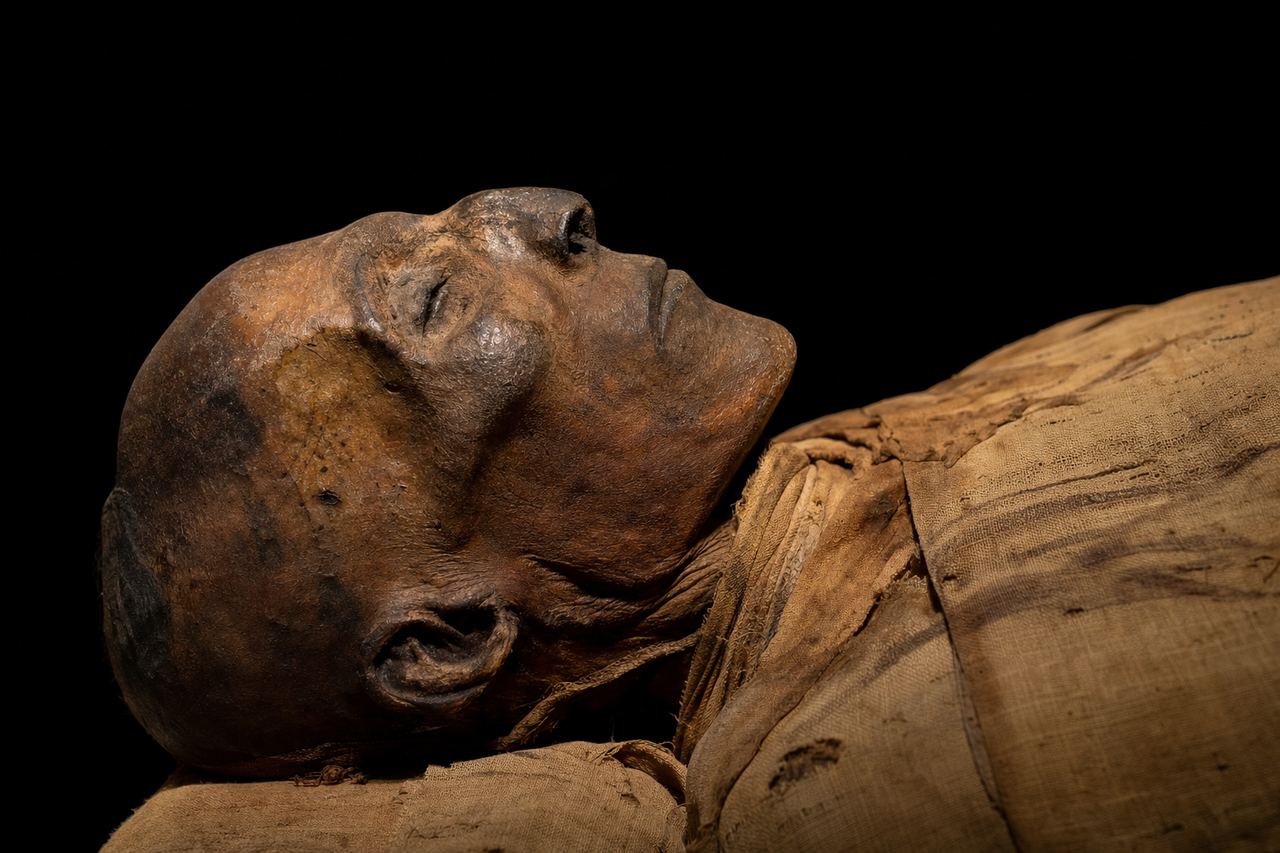
His face — strong-jawed, aquiline nose, high cheekbones — bears an expression described by generations of scholars as noble and serene. After 3,200 years, Seti I looks like a man at rest.
Discovery and Rediscovery
Seti I's tomb in the Valley of the Kings — KV17, discovered by Giovanni Belzoni in 1817 — is the longest and most elaborately decorated royal tomb ever found, stretching over 100 metres into the hillside. Its walls are covered in exquisite paintings that remain among the finest examples of ancient Egyptian art. The tomb was robbed in antiquity, but the mummy survived.
The mummy itself was found not in its own tomb but in the Deir el-Bahari Royal Cache in 1881 — the same massive group burial where Ramesses II and dozens of other royal mummies had been hidden by ancient priests to protect them from tomb robbers. Seti I had been moved there roughly 3,000 years before his rediscovery.
"Of all the royal mummies, his is the most perfect — the craftsmanship of his embalmers was without equal. He looks not like a dead man but like a man sleeping, with dignity." — Gaston Maspero, Director of the Egyptian Antiquities Service, 1886
The Quality of Preservation
What sets Seti I apart from other royal mummies is the extraordinary skill of his embalmers. The skin is intact across his face, neck, shoulders, and arms. The delicate features — eyelids, nostrils, lips — are preserved with a clarity rarely achieved. His arms are crossed over his chest in the royal position.
His white hair — he was approximately 40 years old at death — is still present and has been analysed. His teeth show minimal wear, suggesting a diet of soft, high-quality foods available only to royalty.
His Mummy's Travels
Like Ramesses II, Seti I's mummy has travelled in the modern era. He was transported to Paris in 2002 for conservation work and CT scanning. The scans revealed details impossible to see externally: the precise structure of his skull and facial bones, the condition of his vertebrae, and evidence that his neck was broken post-mortem — probably during tomb robbery in antiquity, when the mummy was dragged violently.
His Legacy
Seti I is less famous than Tutankhamun — discovered with a spectacular intact tomb — or Ramesses II — the most prolific builder and longest-reigning pharaoh. But among Egyptologists, his mummy is often cited as the most moving: a face that has looked at the world for three millennia, still carrying its original human expression.
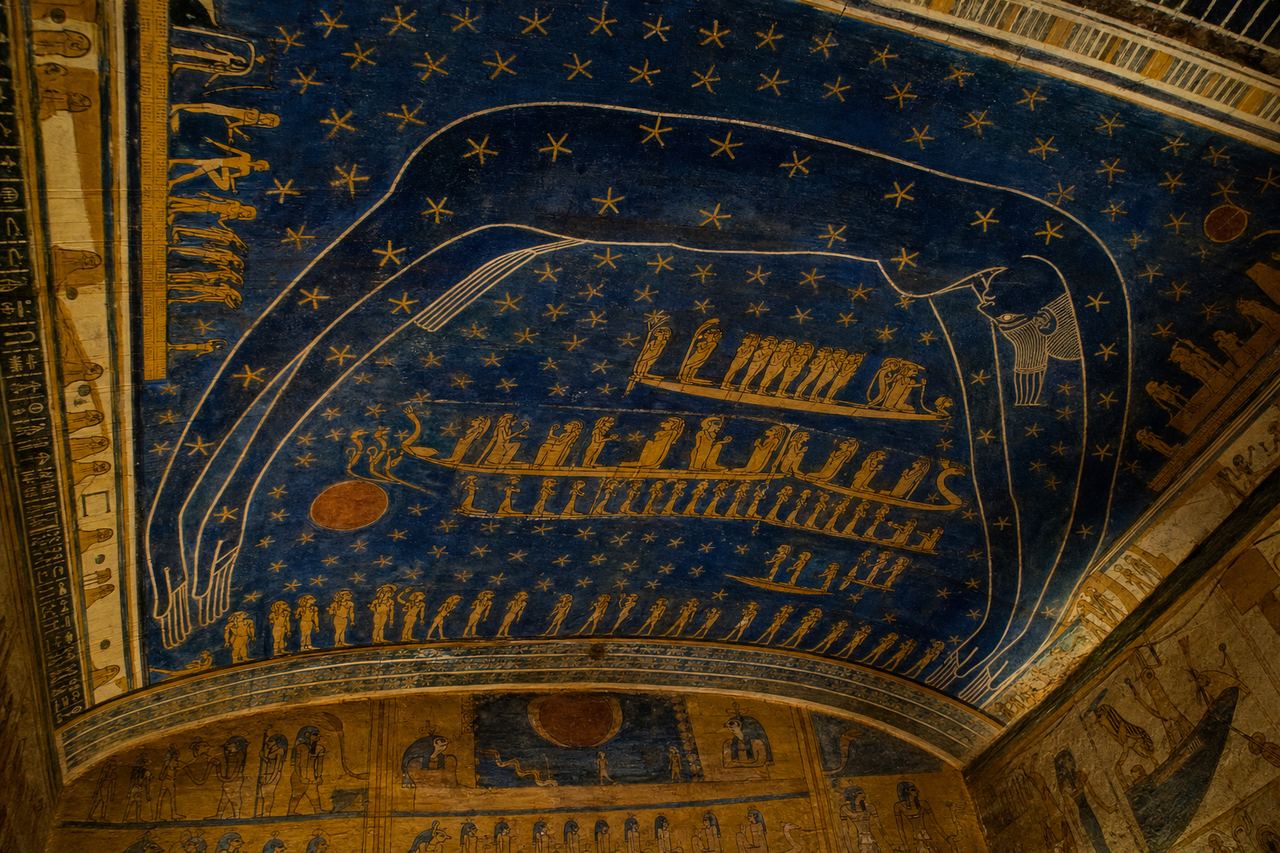
His tomb's decoration includes the earliest known complete version of the Book of Gates — a religious text guiding the soul through the twelve hours of night in the underworld. The tomb is also home to a famous astronomical ceiling depicting the stars and constellations of the ancient Egyptian sky — the earliest surviving astronomical chart from Egypt.
Where He Is Today
Seti I is displayed in the Royal Mummies Hall at the National Museum of Egyptian Civilisation in Cairo, alongside Ramesses II and over twenty other pharaoh mummies. He is one of the most frequently studied mummies in Egyptology, and new imaging technologies continue to reveal details about his life and death that were invisible to earlier researchers.
Frequently Asked Questions
Where was Seti I's mummy discovered, and when?
Seti I's mummy was found in 1881 at the Deir el-Bahari royal cache (DB320), a concealed tomb near Luxor where ancient priests had hidden dozens of royal mummies to protect them from tomb robbers. The mummy was identified by inscriptions on its wrappings. It is now housed in the Egyptian Museum in Cairo, where it remains one of the most visited royal mummies in the collection.
Why is Seti I's mummy considered exceptionally well-preserved?
Seti I's mummy retains strikingly lifelike facial features — fine skin texture, a strong jawline, and a serene expression — making it one of the most intact royal mummies from ancient Egypt. The quality of the embalming, combined with stable storage conditions in the Deir el-Bahari cache, prevented the severe deterioration seen in many contemporaneous mummies. His face is often described as among the most recognizable of any ancient Egyptian ruler.
What makes the tomb of Seti I (KV17) unique in the Valley of the Kings?
KV17 is the longest and deepest royal tomb ever cut into the Valley of the Kings, extending more than 120 meters into the bedrock. It is celebrated for its extraordinarily detailed painted reliefs, which cover virtually every wall and depict funerary texts including the Book of Gates and the Litany of Re. Discovered by Giovanni Belzoni in 1817, the tomb set a new standard for the artistic ambition of New Kingdom royal burials.
Who was Seti I in relation to Ramesses II, and how significant was his reign?
Seti I was the father of Ramesses II and the second pharaoh of the Nineteenth Dynasty, ruling Egypt around 1290 to 1279 BCE. His reign is regarded as a high point of New Kingdom power, marked by military campaigns into Canaan and Syria, the restoration of temples neglected during the Amarna period, and ambitious building projects including the Great Hypostyle Hall at Karnak. He set the political and artistic foundation that his son Ramesses II would later build upon.