The Death That Started Everything
On 5 April 1923 — just 47 days after he had entered Tutankhamun's newly discovered tomb — George Herbert, 5th Earl of Carnarvon and the financier of Howard Carter's excavation, died in Cairo. The cause was blood poisoning from an infected mosquito bite that he had nicked while shaving.
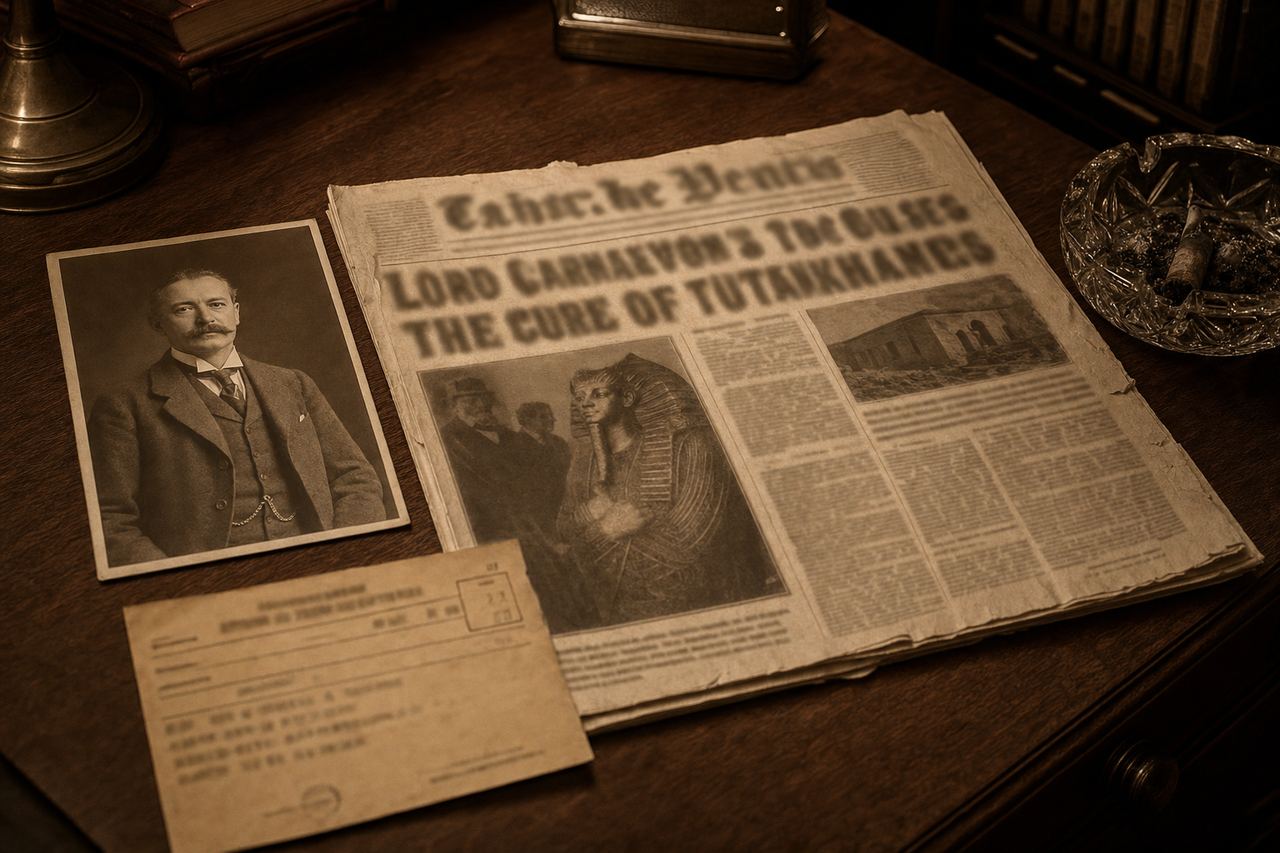
It was the kind of death that, in any other circumstances, would have been tragic but unremarkable. But this was not any other circumstance. This was the man who had funded the opening of an ancient Egyptian royal tomb, defying three thousand years of warnings. And two strange things reportedly happened at the moment of his death.
The lights of Cairo went out — a power failure that was real and documented, though mundane in a city with unreliable electricity infrastructure. And in England, at Highclere Castle, Carnarvon's dog — a terrier named Susie — reportedly howled and dropped dead at precisely the moment her owner died in Egypt, thousands of miles away.
"Death shall come on swift wings to him who disturbs the peace of the king." — Inscription supposedly found at the tomb entrance. No archaeological evidence of it has ever been found.
The "Curse" Inscription — A Fabrication
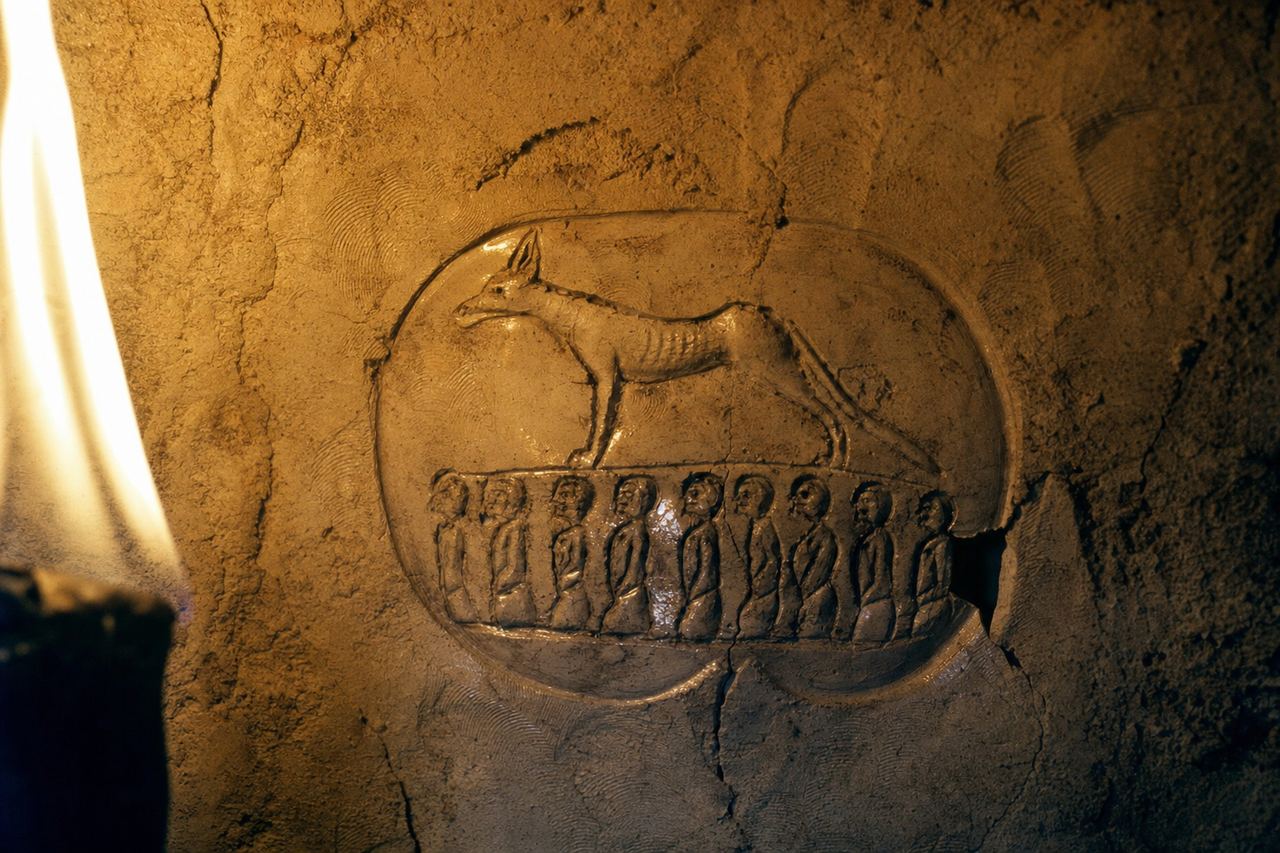
The most famous element of the Tutankhamun curse is the inscription supposedly carved above the tomb entrance: "Death shall come on swift wings to him who disturbs the peace of the king." It has been quoted in countless books and films. There is just one problem: it does not exist.
No such inscription was found at the tomb. Howard Carter — the most meticulous and careful archaeologist of his era — recorded every inscription in the tomb, and this one appears nowhere in his notes. It appears to have been fabricated by journalists seeking a more dramatic story than the actual, rather mundane facts of Carnarvon's death.
The Statistics
The "curse" gained momentum through the 1920s as deaths among people connected to the excavation were reported. But when epidemiologist Mark Nelson conducted a systematic study of all 44 people who had been present at the opening of the tomb or the sarcophagus, the statistics told a different story.
Those who entered the tomb did not die significantly earlier than those who were present in Egypt but did not enter. The average age at death for "cursed" individuals was 70 — not exactly a premature fate. The survivors of the Tutankhamun excavation lived long lives. Howard Carter himself died in 1939, aged 64.
The Scientific Explanations
Several genuine scientific mechanisms have been proposed to explain why ancient tomb-openers might experience health effects — though not supernatural ones.
Fungal spores: Ancient Egyptian tombs may contain Aspergillus and other fungal species that can cause serious respiratory illness, particularly in individuals with compromised immune systems. Lord Carnarvon had severe lung problems — the reason he originally came to Egypt's dry climate for his health.
Bat guano: Bats frequented some ancient tombs, and their droppings contain Histoplasma capsulatum, a fungus that causes potentially fatal respiratory disease.
Ammonia gases: Decomposition products in sealed spaces can produce toxic concentrations of ammonia and other compounds.
None of these explain anything supernatural. They do, however, suggest that opening an ancient sealed tomb — especially for someone already in poor health — was not entirely without physical risk.
Other Pharaonic "Curses"
The concept of pharaonic curses did not begin with Tutankhamun. Ancient Egyptians did use curses in funerary contexts — but they were directed specifically at tomb robbers and those who would disturb offerings, not at legitimate archaeologists. Inscriptions in non-royal tombs sometimes read: "As for any person who shall enter this tomb... I will seize him by the neck like a bird."
These were not magical spells in the modern sense — they were declarations of social transgression, invoking the authority of the deceased and their gods to protect the burial. Whether anyone actually believed they would work in the afterlife is debatable.
The Power of the Story
The curse of the pharaohs endures not because it is real but because it speaks to something deep in human psychology: the fear of disturbing the dead, the uneasy sense that some thresholds should not be crossed, and the very human desire for the ancient world to contain genuine mysteries that science cannot fully explain.
In that sense, perhaps the curse works exactly as intended — not as a mechanism of literal death, but as a story that keeps the pharaohs alive in the imagination of every generation that encounters it.
Frequently Asked Questions
Who was Lord Carnarvon and why is his death central to the curse legend?
Lord Carnarvon was the British aristocrat who financed Howard Carter's excavation of Tutankhamun's tomb in 1922. He died in Cairo on April 5, 1923 — just five months after the tomb's opening — from blood poisoning caused by an infected mosquito bite that he aggravated while shaving. His relatively swift death after the discovery gave the curse narrative its most famous and enduring centerpiece.
What actually happened to the other people who opened Tutankhamun's tomb?
Of the 58 people documented as present at the tomb's various opening events, 8 died within 12 years. Howard Carter himself, who had the most direct and prolonged exposure to the tomb, lived until 1939 — a full 17 years after the discovery. Epidemiologists and historians who have examined the mortality data find no statistically significant difference from expected death rates for people of similar age and background.
Have scientists found any physical explanation for the deaths associated with tomb openings?
Researchers have proposed that sealed ancient tombs can harbor dangerous microorganisms, including the mold Aspergillus niger and certain bacteria capable of causing respiratory illness or infection in people with weakened immune systems. While this is a biologically plausible mechanism, no confirmed outbreak has been directly linked to an ancient Egyptian tomb opening. The hypothesis remains scientifically interesting but unproven as a cause of the specific deaths attributed to the curse.
Did the ancient Egyptians themselves inscribe curses inside royal tombs?
Curse inscriptions do appear in some ancient Egyptian tombs, but they were far more common in the tombs of nobles and officials than in royal ones, and Tutankhamun's tomb contained no curse text. Where such inscriptions exist, they typically warn priests or tomb workers against neglecting their duties or committing sacrilege, rather than threatening outsiders with death. The dramatic, universal death-curse of popular imagination is largely a modern invention amplified by early 20th-century newspaper reporting.