The Most Famous Face in Ancient Egypt
The painted limestone bust of Nefertiti — discovered in 1912 in the workshop of the sculptor Thutmose in Amarna — is one of the most reproduced images in the ancient world. Her beauty is undeniable: the long elegant neck, the symmetrical features, the extraordinary blue crown. She has been on the cover of more magazines than almost any other ancient figure.
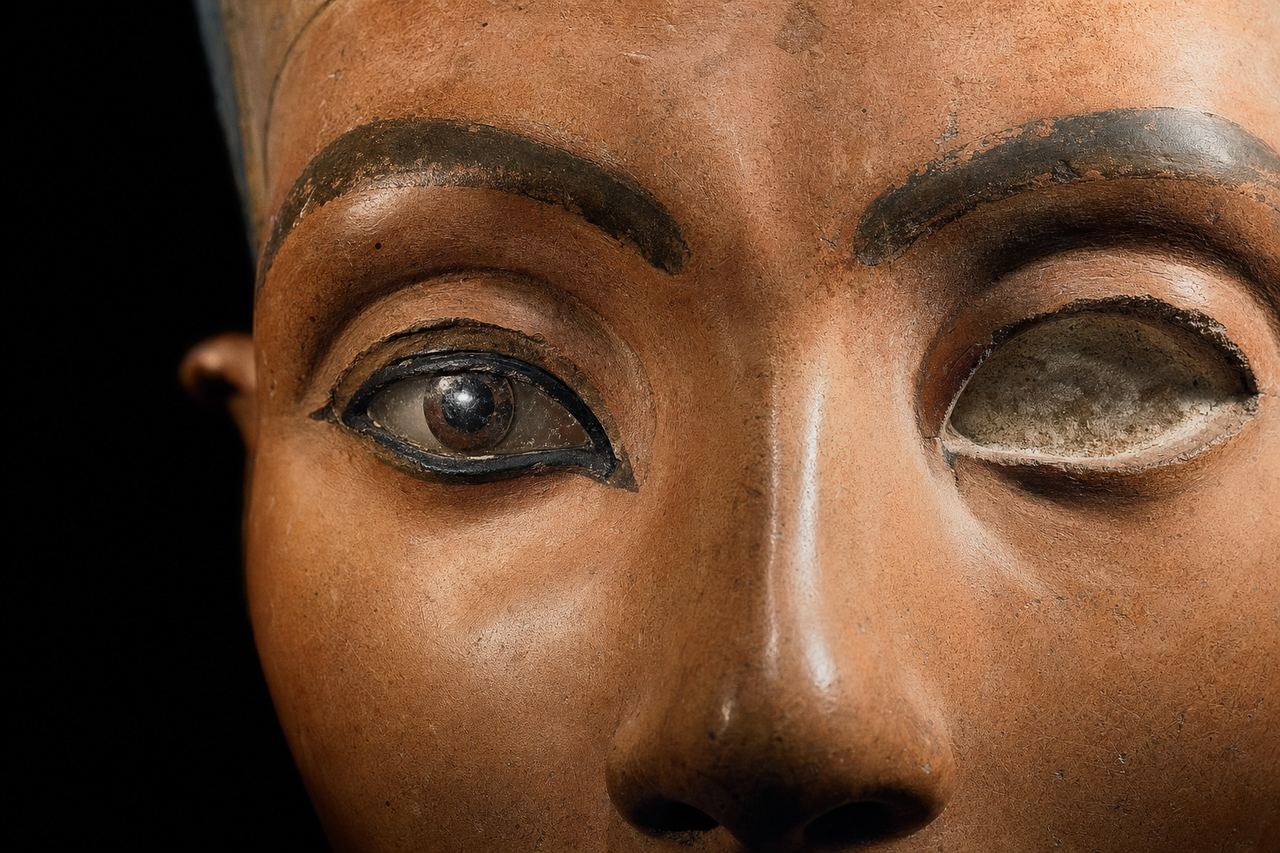
But despite her fame, and despite the extraordinary detail of her preserved portrait, we do not know where her mummy is. No body has been definitively identified as Nefertiti. Her fate after the death of her husband, the heretic pharaoh Akhenaten, is one of Egyptology's most debated mysteries.
Who Was She?
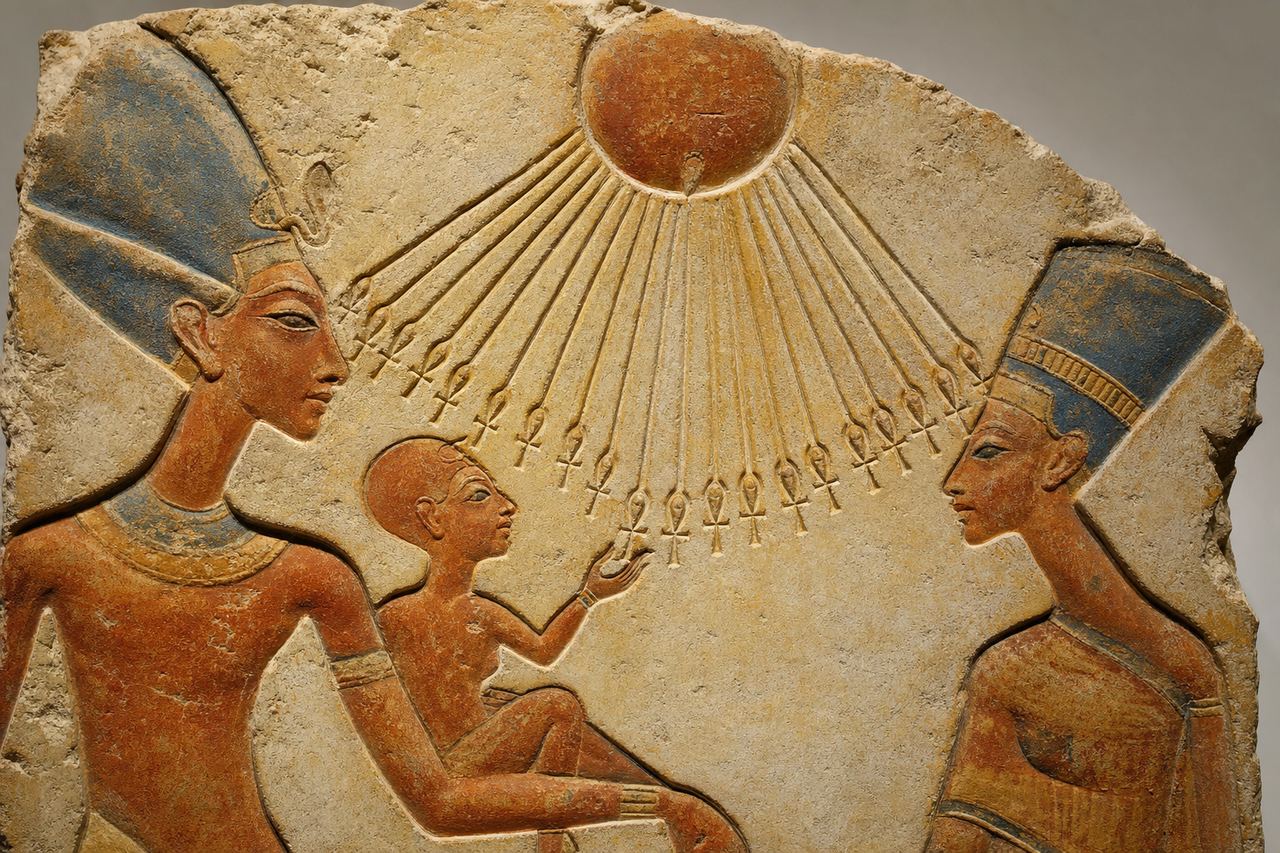
Nefertiti was the Great Royal Wife of Akhenaten, who ruled Egypt around 1353–1336 BCE and revolutionised Egyptian religion by declaring the sun disc Aten the sole god of Egypt, destroying the established priesthoods, and moving the capital to a new city at Amarna. Nefertiti appears in art and inscriptions as virtually co-regent — depicted in scenes of power usually reserved for male pharaohs, smiting enemies, wearing the kingly double crown.
Some scholars believe she may have ruled as pharaoh herself under the name Neferneferuaten after Akhenaten's death — a mysterious reign of two or three years before Tutankhamun (probably her stepson) took the throne. This theory remains contested.
The Theories
The "Younger Lady" theory: DNA testing in 2010 identified the "Younger Lady" mummy in KV35 as the biological mother of Tutankhamun. If Nefertiti was Tutankhamun's mother — which would be consistent with her being his stepmother or biological aunt — then the Younger Lady might be Nefertiti. Most Egyptologists consider this unlikely but not impossible.
The KV21 theory: Two mummies found in tomb KV21 were tested in the same 2010 study. One was identified as possibly the mother of Tutankhamun's daughters. If Nefertiti's daughter Ankhesenamun was Tutankhamun's wife (which is accepted), and this mummy was Ankhesenamun's mother... the mathematics point to Nefertiti. The evidence is indirect and disputed.
The Amarna theory: Nefertiti's body may be in one of the royal tombs at Amarna — the city her husband built and that was abandoned after his death. Most of those tombs were robbed and damaged. Her mummy, if it was there, may have been destroyed.
"She is the most famous woman in ancient Egypt, and we cannot find her. That is either a great failure of archaeology or a very good hiding place."— Joann Fletcher, University of York
Hidden Chamber Theory
In 2015, British Egyptologist Nicholas Reeves proposed a radical theory: that Nefertiti's tomb was hidden behind a plastered wall in Tutankhamun's tomb (KV62). Infrared scans appeared to show straight lines beneath the plaster suggesting a sealed doorway. Ground-penetrating radar produced ambiguous results. Japanese radar teams reported evidence of a cavity. Egyptian radar teams reported they found nothing.
The controversy has never been fully resolved. The Egyptian government has been cautious about allowing invasive investigation of the world's most famous archaeological find. Whether Nefertiti lies behind a wall in Tutankhamun's tomb — just metres from the most studied mummy in history — remains an open and tantalising question.
Frequently Asked Questions
Where is the famous bust of Nefertiti displayed, and how was it discovered?
The painted limestone bust of Nefertiti is housed in the Neues Museum in Berlin, Germany. It was unearthed in 1912 by a German archaeological team led by Ludwig Borchardt during excavations at Amarna, in the workshop of the royal sculptor Thutmose. The bust is considered one of the finest surviving examples of ancient Egyptian art and remains one of the most recognized faces from the ancient world.
What role did Nefertiti play in the Amarna religious revolution?
Nefertiti was a central figure in the sweeping religious transformation initiated by her husband Pharaoh Akhenaten, who replaced Egypt's traditional polytheistic religion with exclusive worship of the sun disk Aten. She appeared alongside Akhenaten in temple reliefs performing religious rituals — a level of prominence rarely afforded to royal women in earlier periods. Some scholars believe she was an active co-architect of the new theology, not merely a consort.
Has Nefertiti's mummy ever been found?
No mummy has been definitively identified as Nefertiti. The strongest candidate is a female mummy known as the "Younger Lady," discovered in the royal cache of tomb KV35 in the Valley of the Kings and confirmed through DNA analysis to be the mother of Tutankhamun. While this genealogical connection is consistent with Nefertiti being Tutankhamun's mother, the identification remains debated among Egyptologists and is not universally accepted.
Did Nefertiti ever rule Egypt as pharaoh in her own right?
There is credible evidence that Nefertiti ruled Egypt under the name Neferneferuaten, either as co-regent alongside Akhenaten in his final years or as sole pharaoh after his death around 1336 BCE. Inscriptions and relief carvings from the period show a female figure in the full regalia of kingship, including the double crown and the act of smiting enemies — roles reserved exclusively for pharaohs. The exact timeline and scope of her reign remain an active area of scholarly research.