The Man Who Looked Asleep
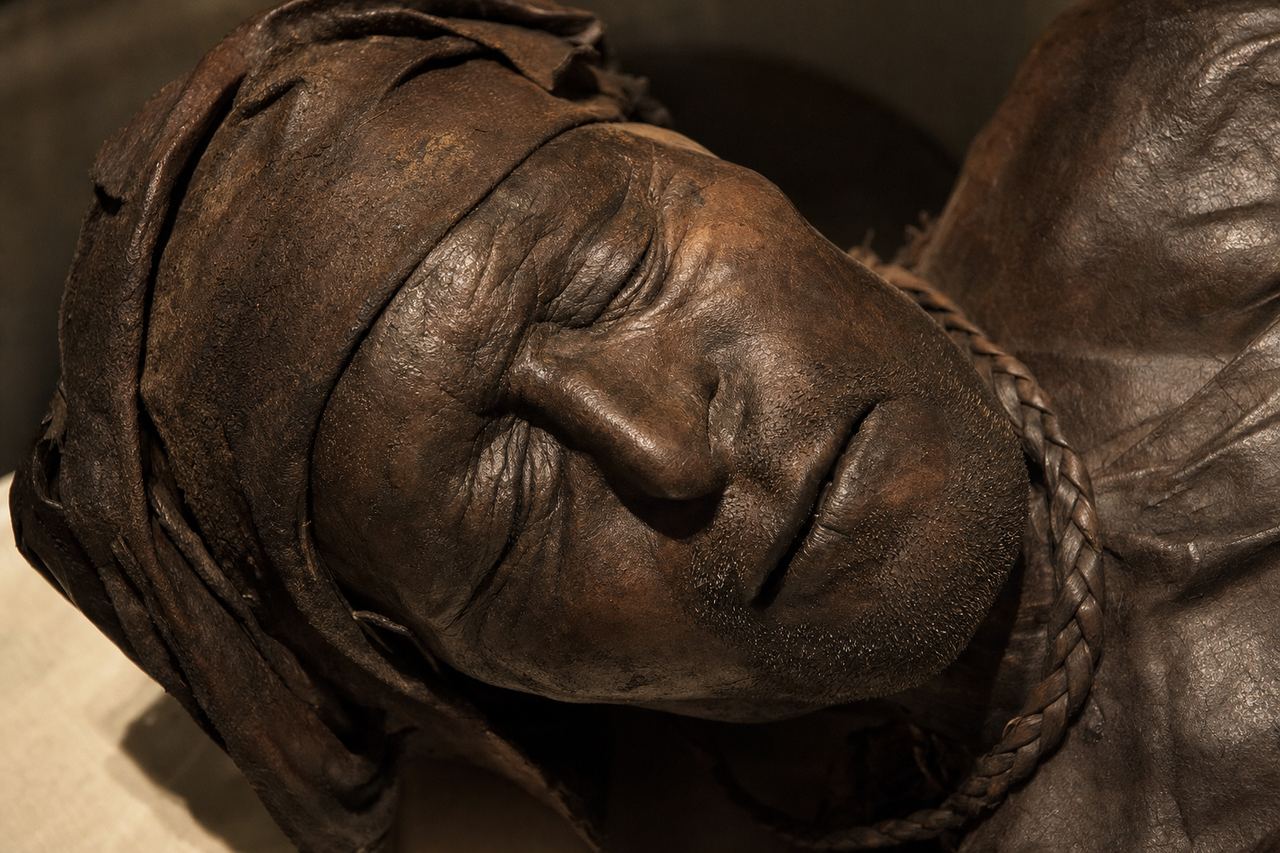
On 8 May 1950, two brothers cutting peat near Tollund, Denmark, found a face in the bog — eyes closed, expression serene. They called the police, certain it was a recent murder. The rope around his neck was still in place. Professor P.V. Glob recognised the truth: the man had been there for over 2,000 years.
His Death
Tollund Man was hanged around 400 BCE, aged between 30 and 40. His last meal was a porridge of barley, linseed, and wild seeds — an unusual ritual meal. He was placed carefully in the bog, positioned as if sleeping, in the foetal position. This deliberate, almost tender care suggests he was not executed — he was offered.
"His face wore a look of composure so perfect that even now, after two thousand years, you feel he could open his eyes at any moment."— P.V. Glob, archaeologist, 1950
Today
His original head and a body reconstruction are displayed at the Silkeborg Museum in Denmark — one of the most visited archaeological artefacts in Scandinavia.
The Noose — Evidence of Ritual Execution
The rope around Tollund Man's neck was not a rough knot thrown over a branch. It was a carefully braided leather slipknot — constructed with evident skill and deliberate design. The braiding is tight and even, the slipknot precise. This was not improvised violence. Someone made that rope with care, and someone placed it around his neck with intention.
The slipknot is significant. A fixed noose applied with sufficient force breaks the neck instantly. A slipknot tightens with the body's weight and causes slower strangulation. Whether this distinction was understood or desired by those who killed Tollund Man, we cannot say. What is clear is that the rope was kept around his neck after death — it was found exactly as placed — and that the manner of execution matched patterns seen in other Iron Age bog sacrifices across northern Europe. He was hanged according to a method, not in a moment of rage.
His Last Meal — Seeds and Ritual Hunger
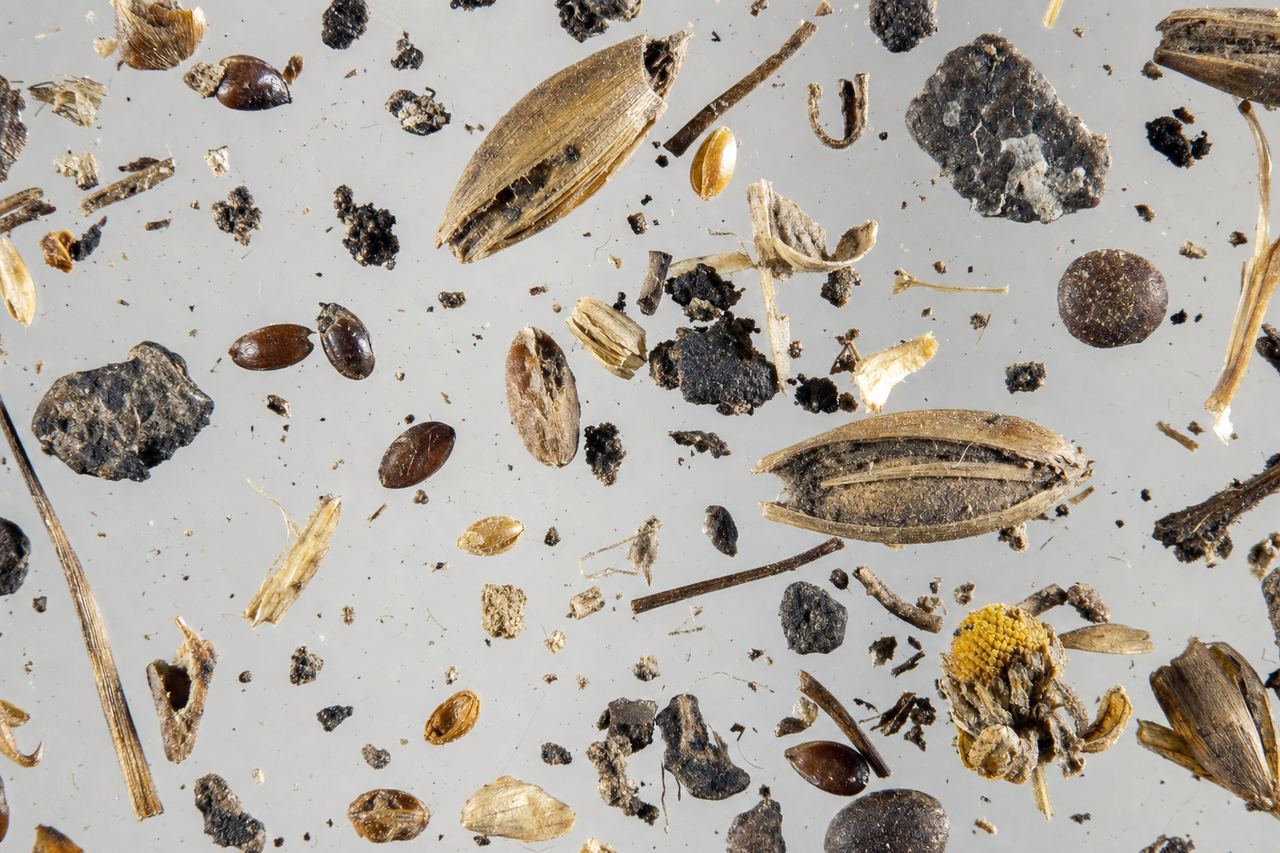
Stomach contents recovered from Tollund Man revealed a meal eaten 12 to 24 hours before death. It was a porridge of barley, linseed (flax seed), and the seeds of over a dozen wild plants including pale persicaria, black bindweed, and bristle grass — species associated with disturbed or waste ground rather than cultivated fields.
The composition is unusual. Wild seeds mixed into a cultivated-grain porridge suggests the meal was assembled from whatever could be gathered, possibly in winter or early spring when wild plants were scarce. Some researchers interpret the specific combination as ritual — a meal composed outside the normal diet, eaten in a liminal state before death. The 12-to-24-hour gap between eating and dying means Tollund Man knew what was coming. He had time to finish his porridge, and then wait.
Why the Bog Preserved Him
The Tollund Mose — the specific bog where Tollund Man was found — sits in central Jutland at an elevation that keeps it cold and waterlogged year-round. Its dominant plant, sphagnum moss, releases a compound called sphagnan as it decomposes. Sphagnan is strongly acidic and acts as a powerful preservative, binding to proteins in skin and effectively tanning them in the same way leather is cured.
Combined with near-freezing water temperatures and near-zero oxygen levels — conditions that prevent the bacteria responsible for decomposition from functioning — the bog preserved Tollund Man's soft tissue with extraordinary fidelity for over 2,300 years. The same conditions destroyed his bones: the acid leached calcium from his skeleton, leaving only faint impressions. His skin survived. His face survived. His skeleton, largely, did not.
His Face Today
When Tollund Man was excavated in 1950, preserving the entire body was beyond the technology of the time. Conservators made the difficult decision to preserve only his head — the most recognisable and scientifically valuable part. The head was treated through a years-long process of gradual fluid replacement with conservation wax, and the result is the best-preserved ancient human face in existence.
The Silkeborg Museum in Denmark displays the original head alongside a full-body reconstruction cast. The cast body is a faithful replica of his frame, but visitors standing before the display are looking at a genuine 2,400-year-old face — the stubble on his jaw, the furrow of his brow, the closed eyes and slightly open lips. Professor P.V. Glob, who oversaw the original excavation, wrote that the face wore "a look of composure so perfect that even now, after two thousand years, you feel he could open his eyes at any moment." That description remains accurate today.
Frequently Asked Questions
Where is Tollund Man's head kept?
Tollund Man's original head is preserved at the Silkeborg Museum in Denmark. The body on display alongside it is a modern cast — only the head is original. The head remains one of the most visited archaeological specimens in Scandinavia.
How old was Tollund Man when he died?
Tollund Man was between 30 and 40 years old at the time of his death, around 400 BCE. Modern CT scanning has confirmed his age range through analysis of bone density and dental wear. He was a mature adult — not elderly, not young.
Why was Tollund Man killed?
The most widely accepted interpretation is that Tollund Man was a ritual sacrifice — a human offering to the gods of the bog or the land. His careful positioning in the bog, the deliberate slipknot used in his hanging, and his unusual last meal of wild seeds all point to ceremony rather than punishment. He was placed, not dumped.
What did Tollund Man look like?
Tollund Man's face is the most recognisable of any ancient human being. His eyes are closed, his expression is calm — almost peaceful. The bog tanned his skin to dark leather, preserving fine wrinkles, stubble, and the contours of his face with uncanny fidelity. When found in 1950, the local police were called because he appeared to be a recent murder victim.