A High-Status Victim
Old Croghan Man was found in 2003 in a bog in County Offaly, Ireland — just three months after Clonycavan Man was found 25 miles away. Both appeared to be victims of ritual killing, and both were found near ancient tribal boundaries. Old Croghan Man's body from the neck up and legs below the hips had not survived, but what remained was extraordinary.
Who He Was
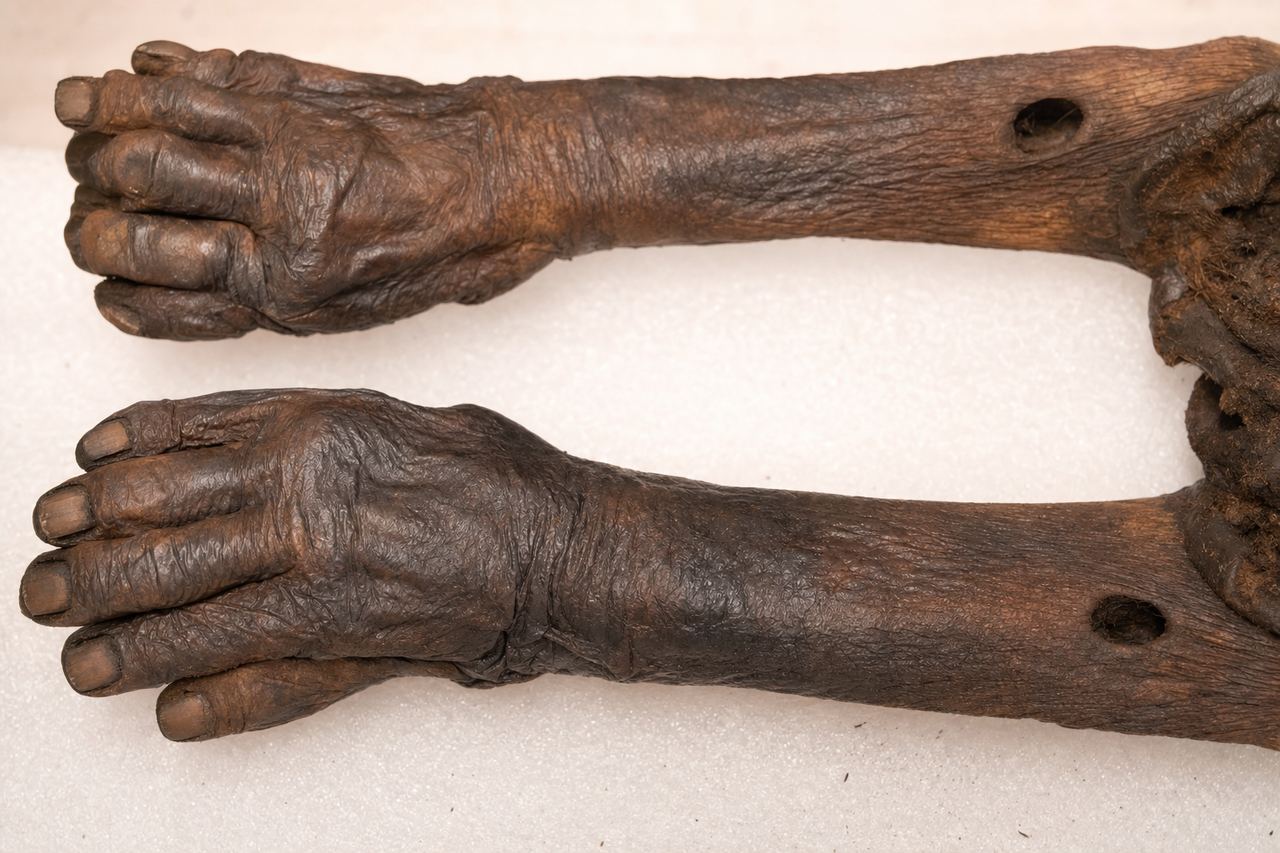
Old Croghan Man was tall — estimated at about 1.98 metres based on arm length — and powerfully built. His fingernails were carefully manicured and his hands showed no evidence of hard physical labour. He ate well: analysis revealed a diet rich in meat and dairy, consistent with elite status. He wore a decorated leather armband with tin and gold fittings.
How He Died
Old Croghan Man was tortured before death. His nipples had been cut — in ancient Irish tradition, a king was suckled by his subjects as a sign of submission, and mutilating the nipples symbolically deposed him. He was then stabbed in the chest, his arms were cut, and hazel withies were threaded through holes cut in his upper arms — possibly used to hold him down or hang him in the bog. He was then decapitated and cut in half.
His Size — A Giant by Iron Age Standards
Old Croghan Man's head and legs did not survive, but the torso and arms that remained were enough for forensic scientists to calculate his stature. Based on the length of his humerus and radius — the upper and lower arm bones — he is estimated to have stood approximately 1.98 metres tall, or about 6 feet 6 inches. In a period when the average Irish male was closer to 1.7 metres, this would have made him an exceptionally imposing figure.
His arms were not just long — they were powerful. The muscle attachment points on his bones show strong, well-developed arms consistent with regular physical activity, though his hands tell a different story entirely. His fingernails were carefully trimmed and well-manicured. He had not been digging, hauling, or fighting with his hands. Whatever physical work he did was chosen, not compelled. He was a man who exercised authority rather than labour.
The Ritual Violence — Symbol and Sequence
The injuries inflicted on Old Croghan Man followed a sequence that archaeologists read as deliberate and symbolic rather than frenzied. His nipples were cut off first — in early Irish law and mythology, the suckling of a king's nipples by his subjects was a formal act of submission. Cutting them away was a ritual dethronement: an erasure of his right to rule, performed on the body before it was killed.
After the nipples were removed, he was stabbed in the chest. Then hazel rods — thin, flexible switches from the hazel shrub — were threaded through cuts made in his upper arms, possibly used to bind him or anchor his body in the bog. Finally, he was beheaded and cut in half at the waist. Each step in this sequence has a parallel in Iron Age Irish ritual practice. Nothing about his death was random. It followed rules.
Scientific Findings — Diet, Status, and the Croghan Connection
Isotopic analysis of Old Croghan Man's arm bones revealed a diet dominated by meat and dairy — the food of the Irish elite in the Iron Age. Cereals, which formed the bulk of ordinary people's diet, were largely absent from his nutritional signature. This finding, combined with his manicured hands and decorated leather armband, places him unambiguously in the upper tier of Iron Age Irish society.
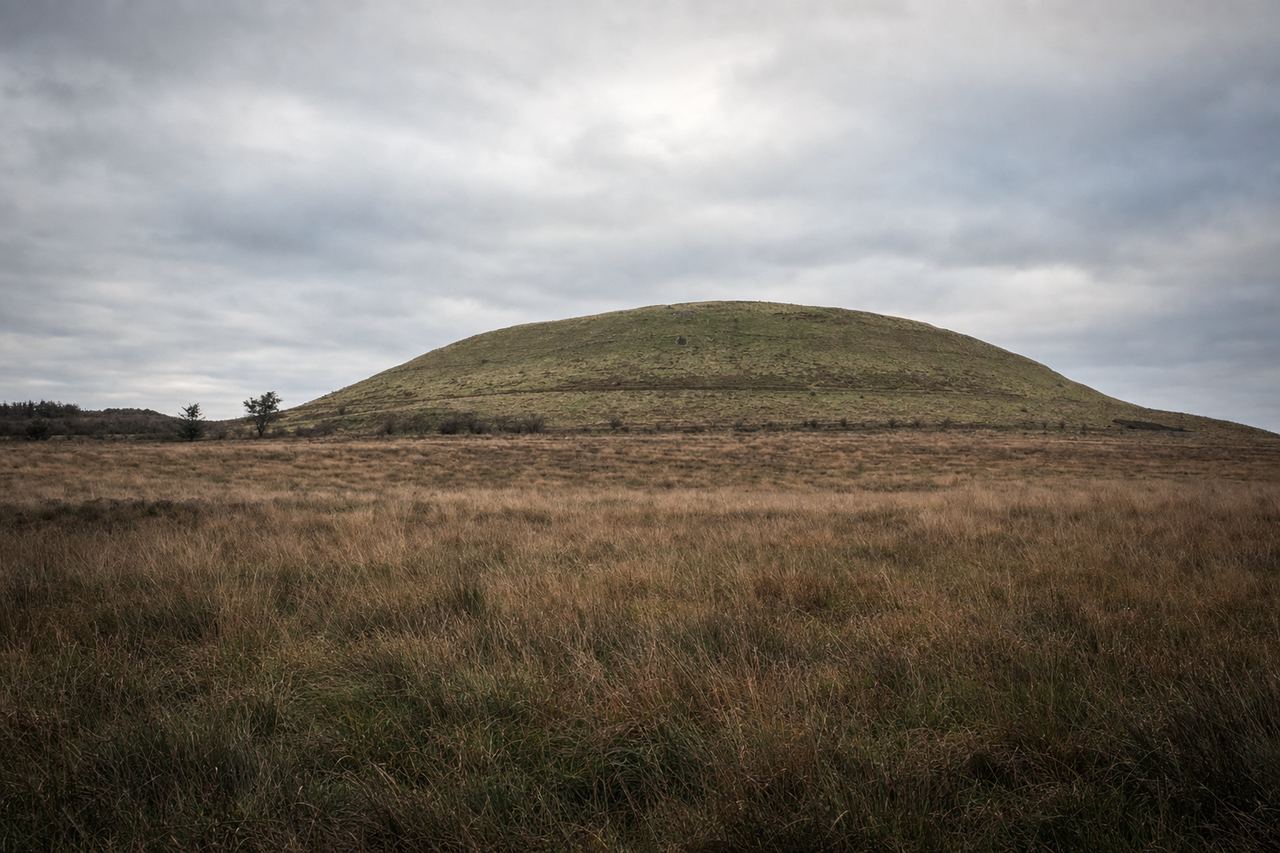
His discovery near Croghan Hill is significant. The hill was a royal inauguration site — a place where kings of the Uí Failghe were formally recognised in ceremonies that bound the ruler to the land. The bog that swallowed Old Croghan Man lay at the edge of this territory, near an ancient boundary. The same pattern appears at Clonycavan Man's findspot 25 miles north, and at many other Irish bog body sites. The boundary was not incidental. It was the point.
Where He Is Today
Old Croghan Man was found in May 2003 — just three months after Clonycavan Man emerged from a bog in County Meath — and both were handed to the National Museum of Ireland in Dublin. Conservators worked to stabilise the surviving tissue: the torso, arms, and hands. His well-preserved skin, the decorated armband with its tin and gold fittings, and the hazel rods still threaded through his arms are all conserved.
He has been displayed at the museum, sometimes alongside Clonycavan Man, in exhibitions on Irish bog bodies. Together they represent something archaeologists rarely encounter: two high-status individuals from the same era, the same region, and apparently the same ritual tradition — killed the same year they were found, separated by 25 miles and 2,365 years.
Frequently Asked Questions
How tall was Old Croghan Man?
Old Croghan Man is estimated to have stood approximately 1.98 metres tall — around 6 feet 6 inches — based on the length of his surviving arm bones. This would have made him exceptionally tall by Iron Age standards, when the average male height in Ireland was closer to 1.7 metres.
Why were Old Croghan Man's nipples cut?
In early Irish tradition, suckling a king's nipples was a gesture of submission and recognition of his sovereignty. Cutting them off was the symbolic inverse — a deliberate ritual act that stripped him of his claim to kingship. Many archaeologists believe Old Croghan Man was a king or king-candidate whose reign had ended, and whose body was then given to the bog as a territorial offering.
Where was Old Croghan Man found?
Old Croghan Man was found in 2003 in a bog near Croghan Hill in County Offaly, Ireland. He was discovered just three months after Clonycavan Man was found 25 miles away in County Meath — a striking coincidence that reinforced theories about ritual killings near tribal boundaries.
What does Old Croghan Man's diet tell us?
Isotopic analysis of his arm bones revealed a diet high in meat and dairy — consistent with elite status in Iron Age Ireland, where the majority of the population ate a more grain-heavy diet. His well-manicured fingernails and absence of hard-labour wear on his hands reinforce the picture of a man who had others working for him.