The Discovery
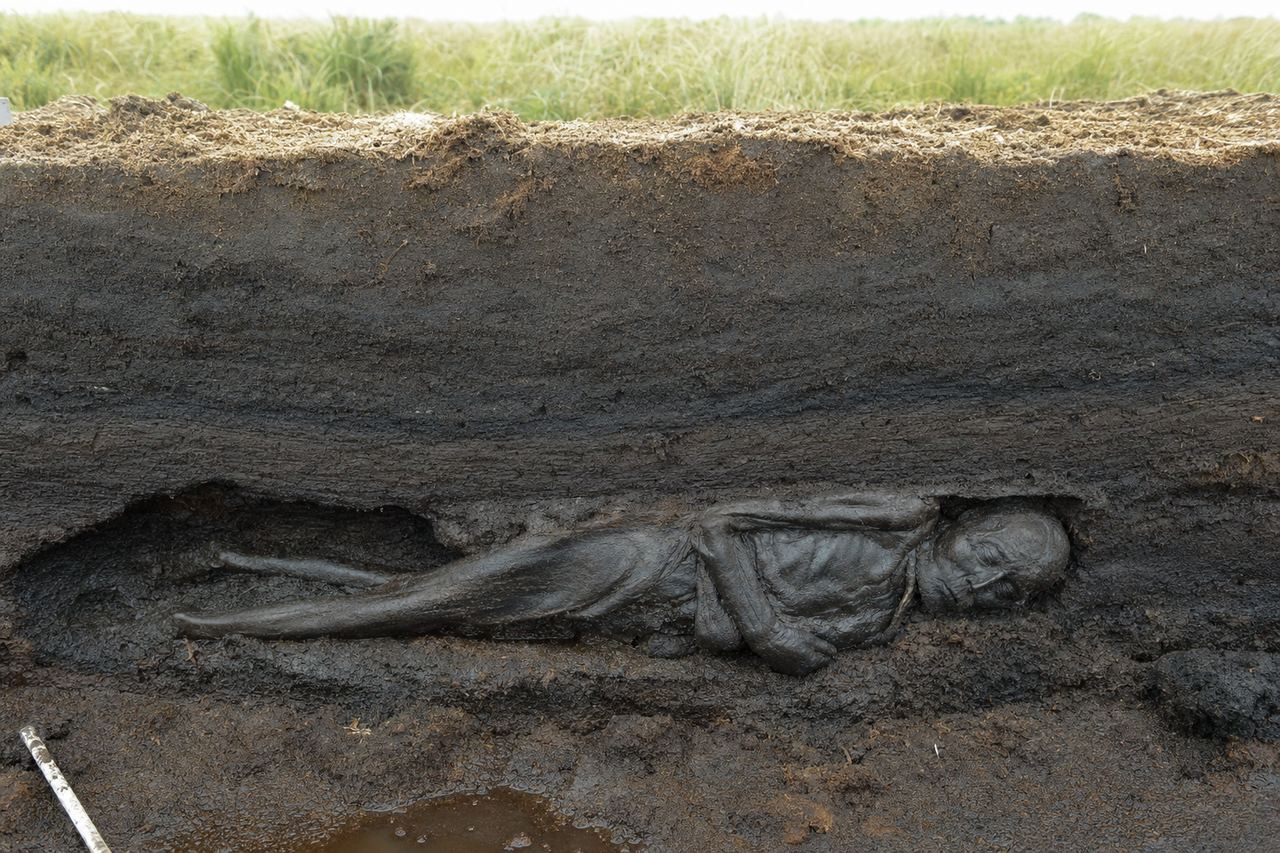
On 26 April 1952, a peat-cutter named Tage Busk Sørensen found a body in the Nebelgaard Moor near Grauballe, Denmark. Unlike Tollund Man, found two years earlier, Grauballe Man's identity was immediately suspected as ancient — the bog had turned his skin the colour of dark leather.
His Death
Grauballe Man's throat was cut so severely that the windpipe, gullet, and jugular vein were all severed — the head was nearly detached. He also had a fractured skull, possibly from a blow before or after death. He died around 310 BCE, aged between 30 and 35.
His Last Meal
The contents of Grauballe Man's stomach have been analysed in detail. His last meal was a gruel containing seeds and plant fragments from over 60 different species — grasses, herbs, weeds. It was not the meal of a well-fed man. Some researchers believe ritual fasting or a deliberately symbolic final meal preceded bog body sacrifices.
His Last Meal — Analysed in Detail
Grauballe Man's stomach contents have been subjected to some of the most exhaustive dietary analysis ever performed on a bog body. Scientists identified remains from over 70 plant species in his final meal — a thick gruel of cultivated grain mixed with seeds from wild herbs, grasses, and weeds collected from field margins and wasteland. Rye, barley, and spelt were present alongside plants such as gold of pleasure, lady's mantle, and knotgrass.
This was not a meal assembled from a larder. The sheer variety of species suggests the gruel was made with ritual intent — perhaps from plants gathered across an entire landscape as an offering. Forensic analysis showed he had consumed it 12 to 24 hours before death. His teeth, worn flat by a lifetime of chewing grain-heavy food, support the picture of a man whose diet was dominated by processed cereals rather than meat — a contrast with higher-status individuals of the same era.
Scientific Analysis — What CT Scanning Revealed
In 2001 and 2002, Grauballe Man underwent CT scanning and a full scientific re-examination at Aarhus University — the most thorough investigation of any bog body to that point. The scans confirmed his age at death: between 30 and 35, based on bone development and tooth wear. They also showed that the right leg had been broken, either perimortem or post-depositional as the bog compressed around him.
His skeleton told a story of physical imbalance. Arm muscles were well developed — consistent with repetitive manual work such as grinding or rowing — but his overall physique suggested a more sedentary existence than many of his contemporaries. There was no evidence of combat injuries, calluses from weapons-handling, or the bone remodelling typical of heavy agricultural labour. He was not a warrior. Whether he was a craftsman, a priest, or simply the wrong person at the wrong time, the bog does not say.
The CT data also confirmed the severity of the throat wound beyond doubt. The cut ran from ear to ear, severing every major structure in the anterior neck in a single determined stroke. Grauballe Man was not killed carelessly.
Current Location and Preservation
Grauballe Man has been on public display at the Moesgaard Museum in Aarhus, Denmark since 1955 — first in an older museum building, now in the purpose-built facility that opened in 2014. He lies in a specially designed climate-controlled case that maintains precise humidity and temperature to halt further deterioration.
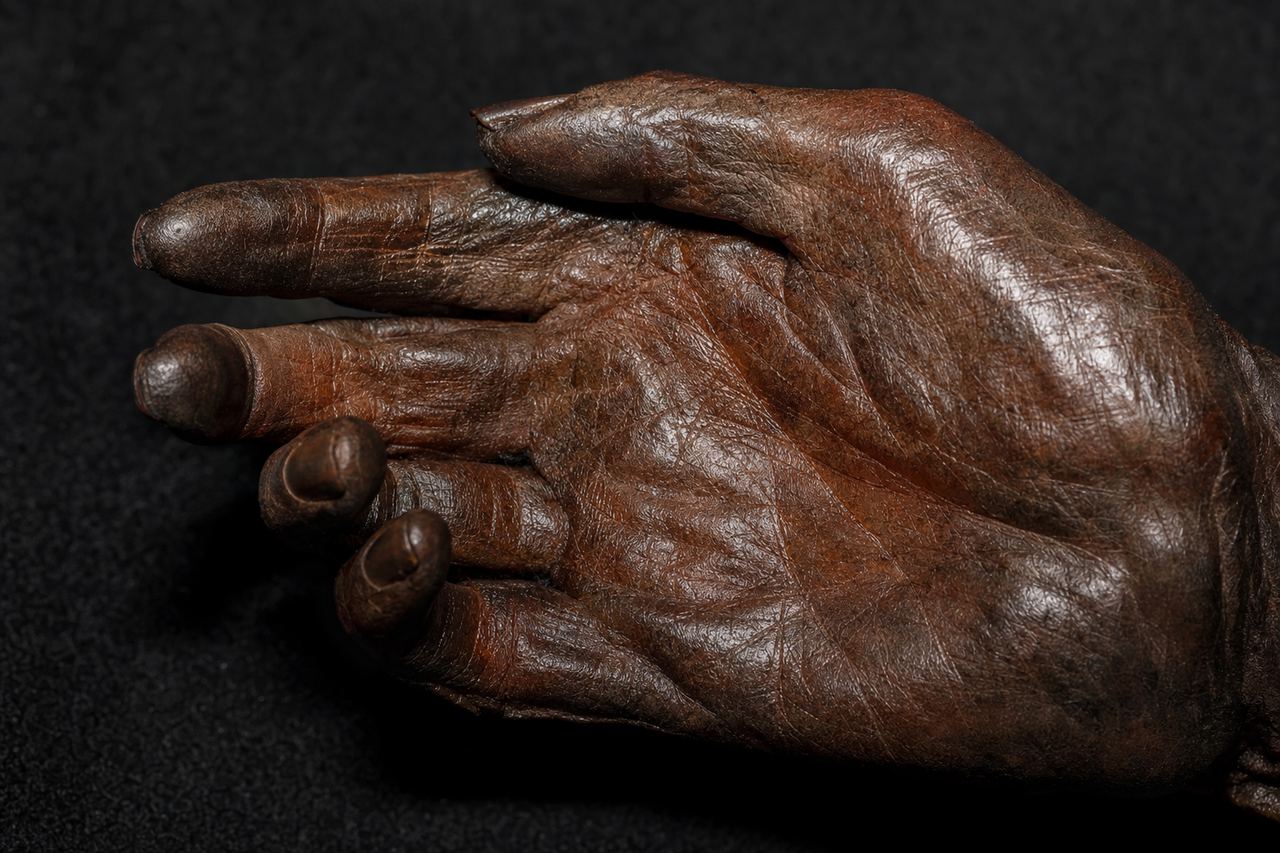
His preservation remains extraordinary. The reddish-brown skin — tanned to leather by the bog's acidity and sphagnum moss — is intact across most of his body. His fingerprints, toeprints, and the fine stubble across his jaw are visible to the naked eye. He is among the very few ancient individuals whose face can be studied in three dimensions, and in 2008 a facial reconstruction produced by forensic artists at the museum showed a man with strong features and a broad forehead. He looks, unmistakably, like a specific person.
Frequently Asked Questions
Where is Grauballe Man displayed today?
Grauballe Man is on permanent display at the Moesgaard Museum in Aarhus, Denmark. He is considered one of the best-preserved bog bodies in the world — his reddish-brown skin, fingerprints, and faint facial stubble are still visible to visitors.
How was Grauballe Man killed?
His throat was cut so deeply — from ear to ear — that the windpipe, gullet, and jugular vein were all severed. His head was nearly detached. He also had a fractured skull, suggesting a blow was delivered either before or immediately after the throat wound.
When did Grauballe Man live?
Grauballe Man died around 310 BCE, during the Pre-Roman Iron Age in Denmark. Radiocarbon dating and subsequent CT scanning in 2002 confirmed this date range. He was between 30 and 35 years old at the time of his death.
What did Grauballe Man eat?
His last meal was a porridge made from seeds and plant fragments of over 70 different species — grasses, herbs, cultivated grains, and wild weeds. It was a remarkably complex meal for someone who showed signs of a grain-heavy, sedentary lifestyle. Many researchers believe the meal had ritual significance rather than nutritional purpose.